
If a GPS tracker loses signal, live location updates usually pause but the device typically continues to record. The difference between a lost satellite fix and a lost mobile-data session matters most: one means the tracker cannot see the sky, the other means it cannot phone home. Most modern trackers buffer positions locally and backfill them once reconnected, so a gap in the map rarely means a gap in the record.
TL;DR:
- Modern GPS trackers buffer location data locally and backfill gaps once signal is restored, preventing significant data loss during short outages.
- Signal loss typically occurs in tunnels, underground garages, or urban canyons, and is worsened by poor antenna placement, device faults, or intentional interference.
- High-quality, multi-constellation receivers that combine GPS, Galileo, GLONASS, and BeiDou improve tracking reliability and reduce multipath errors.
- To restore tracking, move the vehicle to open sky, check device power and connectivity, and ensure the SIM plan and firmware are up to date.
- Concealed, professional installation with backup technology like VHF or inertial sensors is essential for reliable tracking in challenging environments and during tampering.
Table of Contents
- How GPS and mobile data work together to track your vehicle
- Why your GPS tracker keeps losing signal
- Does a lost signal mean you lose your tracking history?
- Step-by-step: getting your GPS tracker back online
- Reducing signal loss through better hardware and installation
- How LRD Track builds resilience against signal loss
- Where owners of high-value vehicles should focus first
- Protecting your Land Rover against signal loss
- FAQ
- Sources
How GPS and mobile data work together to track your vehicle
A GPS tracker needs two separate things to show you a live location: a satellite fix and a working data connection. The satellite side, known as GNSS, calculates position by measuring signals from orbiting satellites. More satellites in view means a stronger, faster fix, which is why modern trackers combine GPS with Galileo, GLONASS and BeiDou rather than relying on the American system alone.
The second half of the job falls to the mobile network. The device needs a SIM card, an active data session and a correctly configured APN to send that position to the app or server. A tracker can have a perfect satellite fix and still show nothing on your screen if the data session has dropped.
Cheaper units often struggle with a third problem: signal quality. Satellite signals bounce off buildings, bridges and even the vehicle’s own bodywork before reaching the antenna, a phenomenon called multipath. Combined with weak receivers, this shows up as low carrier-to-noise ratio, or C/N0, the measure of how clean a satellite signal actually is.
- GNSS calculates position from satellites; mobile data sends that position to you.
- Multi-constellation receivers see more satellites and recover faster after a blackout.
- Low C/N0 and multipath are the hidden reasons budget trackers fail in cities and car parks.
Why your GPS tracker keeps losing signal
Most signal loss falls into three categories: where the vehicle is, what the device is doing, and whether someone is interfering deliberately.
- Physical blockage. Tunnels, underground car parks, steel-framed garages, dense urban canyons between tall buildings, and thick foliage all block or scatter satellite signals.
- Device faults. Poor antenna placement, a draining battery, loose wiring, outdated firmware or a lapsed SIM plan can all interrupt tracking without any environmental cause.
- Deliberate interference. Jamming floods the receiver with noise and causes a total blackout; spoofing and meaconing feed the device false signals, which is more dangerous because the tracker reports a confident but wrong location.
You can usually tell these apart from the symptoms. A sudden “no fix” message that clears once you leave a car park points to the environment. Stale coordinates that never update, or identical pings repeating for hours, suggest a device or power problem. An immediate data-session error alongside a healthy GPS fix usually means the SIM or network is the culprit, not the satellites.
Does a lost signal mean you lose your tracking history?
A brief outage rarely means lost data. Most trackers store positions in onboard memory while disconnected and push the backlog to the server once the data link returns, a process called backfilling. The constraints are memory size and battery life: a long outage on a device with limited storage or a flat battery can eventually overwrite or lose the oldest points.
Data becomes permanently unrecoverable in a narrower set of cases: the device is physically removed before it reconnects, the battery is drained beyond its backup capacity, or internal memory corrupts during a fault. Dual-technology setups change this picture. A tracker with a VHF backup channel or inertial sensors can keep estimating position or maintain a locatable signal even when GPS and mobile data both fail.
- A short outage: signal drops in a car park, the device buffers, reconnects two minutes later, and the gap fills in automatically.
- A long outage: the vehicle sits in a steel container for days, battery reserves run low, and only the most recent positions survive.
Pro Tip: Check your tracker app’s history view after any reported outage. If the gap fills in with a smooth route rather than a single jump, backfilling worked as intended.
Step-by-step: getting your GPS tracker back online
Work through these checks in order before assuming the worst.
- Move to open sky. Drive or walk the vehicle away from garages, tunnels or tall buildings and wait two to three minutes for a fresh fix.
- Check power and LEDs. Confirm the tracker has power and that any status light matches the pattern described in its manual.
- Confirm app and server status. Rule out an outage on the provider’s side before troubleshooting the hardware.
- Restart the device where remote restart is supported, then recheck the app after a few minutes.
- Check SIM and data usage. A lapsed plan or exhausted data allowance will stop updates even with a perfect satellite fix.
- Verify firmware is current. Outdated firmware can mishandle certain satellite configurations or network changes.
- For fleets, correlate across vehicles. If several trackers in the same area lose signal simultaneously, suspect local interference rather than individual faults.
- Ask the monitoring centre to ping the device directly rather than relying on the app alone.
Jamming is not a theoretical risk. The government has proposed a ban on possessing GPS jamming devices used by car thieves, alongside the threat of a five-year prison sentence for possession. If several trackers near each other go dark at once, or coordinates suddenly jump to an implausible location, treat it as a possible theft attempt: note the time, location and last confirmed position, then contact your monitoring provider and the police before moving the vehicle.
Reducing signal loss through better hardware and installation
Prevention beats troubleshooting, and most of it comes down to where and how the tracker is fitted. Professional, concealed antenna placement reduces both multipath interference and the chance of a thief finding and removing the device.
Receiver quality matters just as much as placement, and choosing a high-quality GNSS-enabled automotive hardware can significantly improve tracking reliability. Multi-constellation receivers that combine GPS, Galileo, GLONASS and BeiDou see more satellites at once, and advanced multipath mitigation such as Trimble’s EVEREST Plus technology has been shown to cut multipath errors by around 31% on average while improving position accuracy by 15% to 30%. Research into fusing multi-constellation GNSS with cellular signals-of-opportunity found that GPS-only availability can fall below 10% in dense urban canyons, while fusing GPS, GLONASS and terrestrial signals raised availability to around 80% in the same tests.
- Roaming or multi-carrier SIMs reduce the chance of a dead zone in mobile coverage causing a data outage.
- Watchdog software that detects a dropped data session and retries automatically prevents silent gaps.
- Server-side retry and backfill logic recovers buffered positions the moment contact resumes.
- A VHF backup channel keeps a vehicle locatable underground where GPS and mobile signals cannot reach, as covered in our piece on finding cars underground.
Pro Tip: If your vehicle regularly spends time underground or in steel structures, ask whether the tracker has a non-GPS backup channel before you buy it.
High-value vehicles also carry insurance expectations. Thatcham-approved systems are built to a recognised UK standard for theft resistance and response, which is why many policies for premium models require one.
How LRD Track builds resilience against signal loss
LRD Track fits Thatcham-approved trackers for Land Rover models, with concealed, professional installation designed to put the antenna where reception is strongest and tampering is hardest. That matters because a well-placed antenna sees cleaner signals with less multipath than a dashboard-mounted DIY unit ever will.
Some providers state accuracy of 1.9 to 3.7 metres on their systems, alongside published battery-draw figures, and offer VHF-based underground tracking as a backup where GPS and mobile coverage cannot reach. Trained installers also test antenna placement and tamper resistance as part of fitting, something a self-install kit cannot replicate. Before choosing an installer or monitoring provider, ask what backup technology they use below ground, how quickly their monitoring centre responds to a dropped signal, and whether their trackers meet Thatcham approval standards.

Where owners of high-value vehicles should focus first
Concealment and redundancy matter more than any single spec sheet figure. A tracker with no backup technology leaves you blind the moment GPS or mobile coverage fails, so I would always prioritise a professionally fitted, multi-technology system over a cheaper single-channel unit. Keep a rough log of outages, test your monitoring service periodically, and treat professional installation and 24/7 monitoring as the two factors that most improve your chances of recovery if the worst happens.
— Will
Protecting your Land Rover against signal loss
A tracker that quietly drops signal in a car park is an inconvenience. One that drops signal because a thief has found and removed it is a different problem entirely, and that is the gap concealed, professional fitting is built to close.
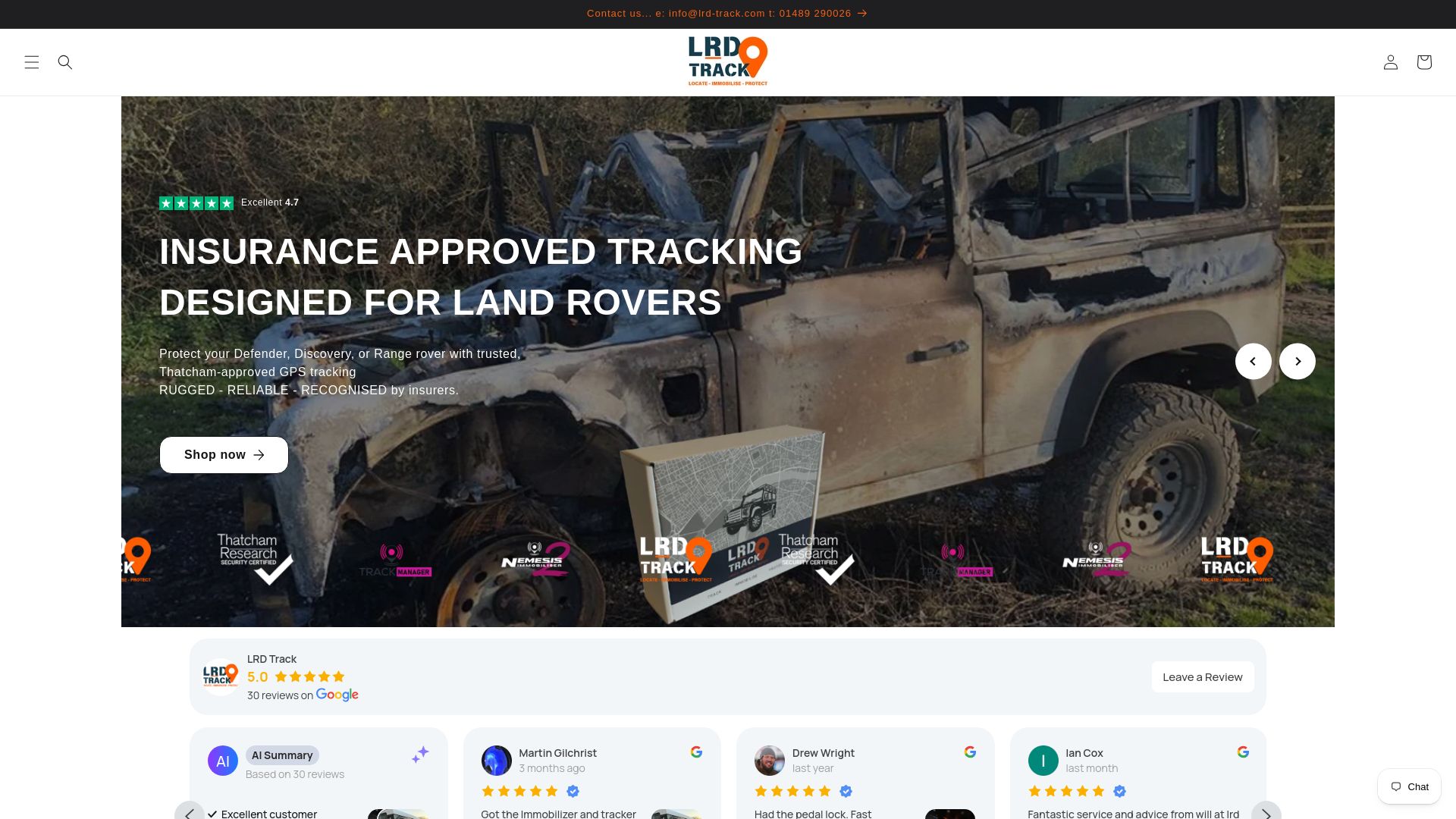
LRD Track’s range covers this from multiple angles:
- Thatcham-approved S7 and S5 trackers for everyday insurance-grade protection.
- S5 Plus Ultra Backup systems with VHF underground capability for vehicles that spend time out of mobile coverage.
- DEFEND and DEFEND-Plus subscriptions with monthly fees for ongoing monitoring once your tracker is fitted; current prices are on the pricing page.
Book a survey with LRD Track to see proof-of-fit testing and a live monitoring demonstration before you decide.
FAQ
Why does my GPS keep saying signal lost?
Your tracker most often loses signal because of physical blockage such as tunnels, underground car parks, metal garages or dense foliage, which stops satellite signals reaching the antenna. It can also happen if the mobile data session drops separately from the satellite fix, which is why checking both is worthwhile.
How do I get my GPS signal back?
Move the vehicle to open sky away from buildings, tunnels or garages and allow a couple of minutes for the receiver to reacquire satellites. If the fix returns but the app still shows nothing, check the SIM, data allowance and server status rather than the satellite link.
How do I turn off the “GPS signal lost” message?
This message reflects a genuine loss of fix or connection rather than a setting you can disable, so turning it off is not usually possible or advisable. Addressing the underlying cause, whether that is location, antenna placement or a lapsed data plan, is the only way to stop it appearing.
How do I fix poor GPS reception?
Poor reception is usually down to antenna placement, multipath interference from nearby structures, or a low-quality receiver, and Google Maps’ own guidance points to indoor locations and metallic window films as common causes. Professional, roof-mounted antenna installation and a multi-constellation receiver address most of these issues at the source.
What is the difference between GPS jamming and GPS spoofing?
Jamming floods the receiver with noise and causes a complete loss of signal, while spoofing feeds the device false signals so it reports an incorrect location with apparent confidence. Both are illegal in most contexts, and the government has proposed tougher penalties given the scale of disruption a jamming incident can cause.
Sources
- Gov
- EVEREST Plus: advanced multipath mitigation | Trimble Resource Center
- Ground vehicle navigation integrity monitoring for multi-constellation GNSS fused with cellular signals of opportunity