
VHF and hybrid VHF+GPS trackers are the only realistic answer to underground tracking, because radio waves punch through concrete and steel where satellite signals cannot. Standard GPS units go dark the moment your car disappears into a basement car park. If your Land Rover spends time underground, in a container, or in a steel-framed garage, get a professionally fitted, monitored VHF or hybrid tracker installed now, not after a theft.
TL;DR:
- VHF and hybrid VHF+GPS trackers are essential for underground detection because VHF signals penetrate concrete and steel much better than GPS alone.
- Proper installation, including hiding antennas away from metal shielding and adding backup power sources, significantly improves tracker survivability during theft attempts.
- Last known GPS location helps narrow search areas, but VHF homing is crucial for real-time recovery inside enclosed structures.
- Insurance-approved, professionally fitted trackers with Thatcham certification and police liaison substantially increase the chances of successful underground recovery.
- Covert, high-quality systems with VHF support, backup batteries, and immobiliser integration are the baseline for effective underground vehicle tracking.
Table of Contents
- Why does GPS car tracking fail underground?
- Why does the tracking app show the wrong location?
- Where should you fit a tracker for underground reliability?
- What features matter most in an underground-capable tracker?
- Is it legal to fit a tracker without the driver knowing?
- What does a real underground recovery actually look like?
- Why VHF should be your starting point, not an afterthought
- Get an insurance-approved tracker fitted properly, once
- Sources
- FAQ
Why does GPS car tracking fail underground?
Here’s the problem nobody tells you about when you buy a GPS-only tracker: it works brilliantly right up until your car goes somewhere that actually needs protecting. Underground car parks are effectively a Faraday cage. Reinforced concrete and structural steel absorb and scatter satellite signals before they ever reach your vehicle’s receiver, so a standard GPS unit simply has nothing to lock onto.
That’s precisely where VHF (Very High Frequency) tracking takes over. VHF signals behave differently to GPS. Rather than needing a clear line of sight to a satellite, VHF wavelengths are far better at bending around and pushing through solid materials, which is why the technology is specifically used for stolen vehicle recovery in garages, containers and underground car parks where GPS is blind.
A genuinely capable hybrid system doesn’t rely on one signal type. It switches between three:
- GPS establishes the vehicle’s last known open-air location before it disappears from view.
- VHF takes over once the car is underground or shielded, giving recovery teams a homing signal to follow on foot or by vehicle.
- GSM reports data back to the monitoring platform whenever a mobile signal is available, keeping your app updated in real time.
This mode switching matters because recovery is a race against the clock. When a monitoring centre picks up a VHF ping from inside a multi storey car park, that signal doesn’t give a neat pin on a map the way GPS does. It gives a directional bearing, which trained recovery agents and police liaison teams use to close in physically, sweeping floor by floor until the signal strengthens. Recovery teams commonly combine VHF radio homing with police liaison specifically because homing is a hands-on process, not a passive dot on a screen.
Pro Tip: Don’t judge a tracker on its GPS accuracy alone. Ask any provider directly whether the unit has genuine VHF homing capability, or whether it’s GPS-only with a marketing gloss. Those are two very different products with very different odds of finding your car once it’s underground.
Why does the tracking app show the wrong location?
If your tracker app shows your car parked outside a multi storey when it’s actually three floors down, that’s not a fault. It’s physics. Once your car crosses into a basement or enclosed structure, the GPS receiver loses its satellite fix, and most platforms will simply display the last known location before signal was lost rather than an estimated current position.
Three things are working against a GPS-only device the moment it goes underground:
- The Faraday cage effect — reinforced concrete and rebar form an effective shield around the vehicle, blocking satellite frequencies almost entirely.
- Multipath interference — even where some signal does creep in, it bounces off metal surfaces and arrives distorted, which satellite receivers struggle to interpret accurately.
- Attenuation through mass — thick concrete and steel simply absorb signal strength, so even a partial connection rarely holds long enough to be useful.
None of this means the last known fix is worthless. It still narrows the search radius considerably, since it tells a recovery team which entrance or level the car used before disappearing. Some trackers try to bridge the gap with accelerometers or basic dead-reckoning, estimating movement from onboard sensors when satellites drop out. Engineering research into underground vehicle tracking increasingly favours sensor fusion and infrastructure-based localisation, such as gateway anchors reading a vehicle’s position from fixed points within a car park, rather than expecting GNSS to work through several metres of concrete. For an owner-fitted tracker, though, dead-reckoning only holds for a short distance and time before drift makes it unreliable, which is exactly the gap VHF homing is designed to close.
Where should you fit a tracker for underground reliability?
Placement decides whether your tracker actually performs when it matters, and it’s a genuine balancing act. Put the antenna somewhere too shielded and you lose signal strength before you’ve even gone underground. Put the whole unit somewhere too obvious and a thief with five spare minutes will find it before it ever gets the chance to prove itself.
- Keep VHF and GSM antennas away from heavy metal shielding — behind plastic trim, under a dashboard, or within a wheel arch liner tends to perform better than deep inside a metal chassis cavity.
- Hide the main unit in a low-traffic void — under seats, within door cavities, or behind interior panelling that isn’t part of a thief’s typical strip-down routine.
- Wire it to a permanent power feed, not an accessory circuit — this keeps the unit live even when the ignition is off, which matters enormously if a car is stolen while parked.
- Add an independent backup battery — so the tracker keeps transmitting even if the main harness is cut, a common first move by experienced thieves.
- Integrate immobiliser functionality where available — remote engine disablement buys recovery teams time that a tracker alone cannot.
None of this is a weekend DIY job worth attempting on a vehicle you actually want protected. Professional fitters know where tamper sensors need to sit, how to route wiring so it survives a strip search, and how to hide a unit without compromising its own signal. Practical testing on Land Rovers has shown that professional fitting, backup batteries and immobiliser integration meaningfully increase the odds of a device surviving long enough to be useful, precisely because thieves target visible or amateur installs first.
Pro Tip: Once fitted, run a controlled test before you trust the system. Drive into a basement car park you use regularly, note what the app shows while you’re down there, then check again once you’ve driven back out. Comparing behaviour before, during and after underground entry tells you whether any gaps are down to the building’s structure or a genuine fault with the device.
What features matter most in an underground-capable tracker?
Not every tracker sold as “advanced” will actually help you if your car ends up hidden in a lock-up or basement. Four things separate a genuinely useful system from one that only performs well in open air.
- VHF or hybrid VHF+GPS support — this is non-negotiable for underground recovery; GPS-only units have no answer once satellite signal drops.
- An independent power source — a backup battery keeps the unit transmitting after the main circuit is cut, extending the recovery window significantly.
- Tamper detection and immobiliser integration — an alert the moment someone interferes with the device, paired with the ability to disable the engine remotely.
- Monitored recovery with police liaison — a 24/7 centre that can interpret a VHF ping and coordinate with police, rather than leaving you to chase a signal alone.
Trust signals are worth checking before you buy, not after. Thatcham Research is the UK body that certifies vehicle security products, and its S5 and S7 approval classes are what most UK insurers recognise when assessing whether a tracker qualifies for a premium discount or policy requirement. A device without that certification might still work technically, but it won’t satisfy an insurer asking for proof of an approved system. Beyond certification, look for documented case studies rather than vague promises, and check whether the range of Thatcham-approved trackers you’re considering actually names its approval class.
On the service side, three practical questions decide whether a tracker earns its keep: what’s the subscription model, what does professional installation actually cost, and what response time does the monitoring centre commit to when an alert fires? A cheap unit with no ongoing monitoring is, in practice, a GPS logger, not a recovery tool.
Is it legal to fit a tracker without the driver knowing?
Fitting a tracker to a vehicle you own is generally lawful in the UK, but the moment someone else drives that car regularly, consent becomes the deciding factor. Covertly tracking another adult’s movements without a legitimate reason, such as monitoring an employee’s assigned company vehicle with proper notice, can cross into harassment or data protection territory. If you’re unsure whether your situation needs explicit consent, a quick conversation with a solicitor is far cheaper than a legal dispute later.
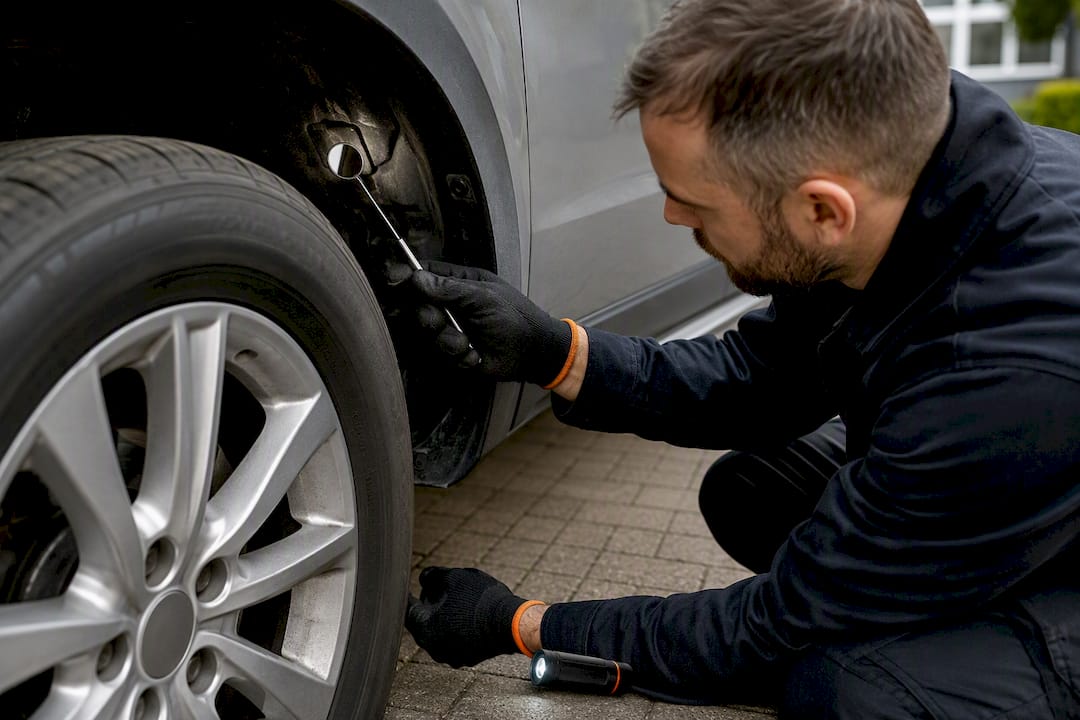
If you suspect an unauthorised tracker has been fitted to your own car, start with a visual check under the wheel arches, inside the bumpers, and around the OBD port, since cheap devices are often plugged straight in rather than hardwired. A professional auto electrician can run a proper sweep if you want certainty. Where you find a device you didn’t authorise, or suspect stalking rather than a legitimate business reason, contact the police rather than removing it yourself, since it may be evidence.
What does a real underground recovery actually look like?
LRD Track builds its tracker range specifically around Land Rover models, with Thatcham-approved product lines fitted by UK-wide professional installers rather than sold as a DIY kit. That distinction matters for underground performance specifically, because a poorly hidden or badly wired tracker is the most common reason recovery fails, regardless of how good the underlying technology is.
A monitored subscription changes what happens in the hours after a theft alert. Here’s the practical sequence most owners can expect once a monitoring centre receives an unauthorised movement alert:
- 0 to 15 minutes — the monitoring centre confirms the alert isn’t a false trigger and attempts contact with the registered owner.
- 15 minutes to a few hours — GPS data tracks the vehicle’s route in real time for as long as open-air signal holds.
- On entering an enclosed structure — the platform flags signal loss and switches to VHF homing, working with police recovery protocols to close in on the last confirmed area.
- Within 48 to 72 hours — most successful recoveries in enclosed locations are resolved in this window, provided the device survived tamper attempts and kept transmitting.
Why VHF should be your starting point, not an afterthought
Most advice on car security treats tracking as an afterthought bolted onto insurance paperwork, and that’s backwards. The technology decision comes first, because a GPS-only tracker gives you a false sense of security that evaporates the moment your car goes somewhere genuinely worth stealing it from, a lock-up, a basement, a shipping container.
What the evidence actually supports is a narrower recommendation than most buying guides admit: if underground or enclosed recovery matters to you, VHF or hybrid capability isn’t a premium extra, it’s the baseline requirement. Everything else, GPS accuracy, app polish, subscription price, is secondary until that box is ticked. Conventional advice tends to lead with app features and price comparisons, which is exactly the wrong order for anyone actually worried about theft from a garage or car park.
The other thing owners consistently underestimate is installation quality. A brilliant VHF chipset wired in badly, or hidden somewhere a thief checks first, performs no better than no tracker at all. Prioritise the technology, then prioritise the fitter.
— Will
Get an insurance-approved tracker fitted properly, once
An alternative to fitting a generic GPS tracker and hoping it copes underground is to choose a service offering Thatcham-approved product lines, professional fitting, and 24/7 monitoring, providing VHF homing and recovery support rather than just GPS location data.
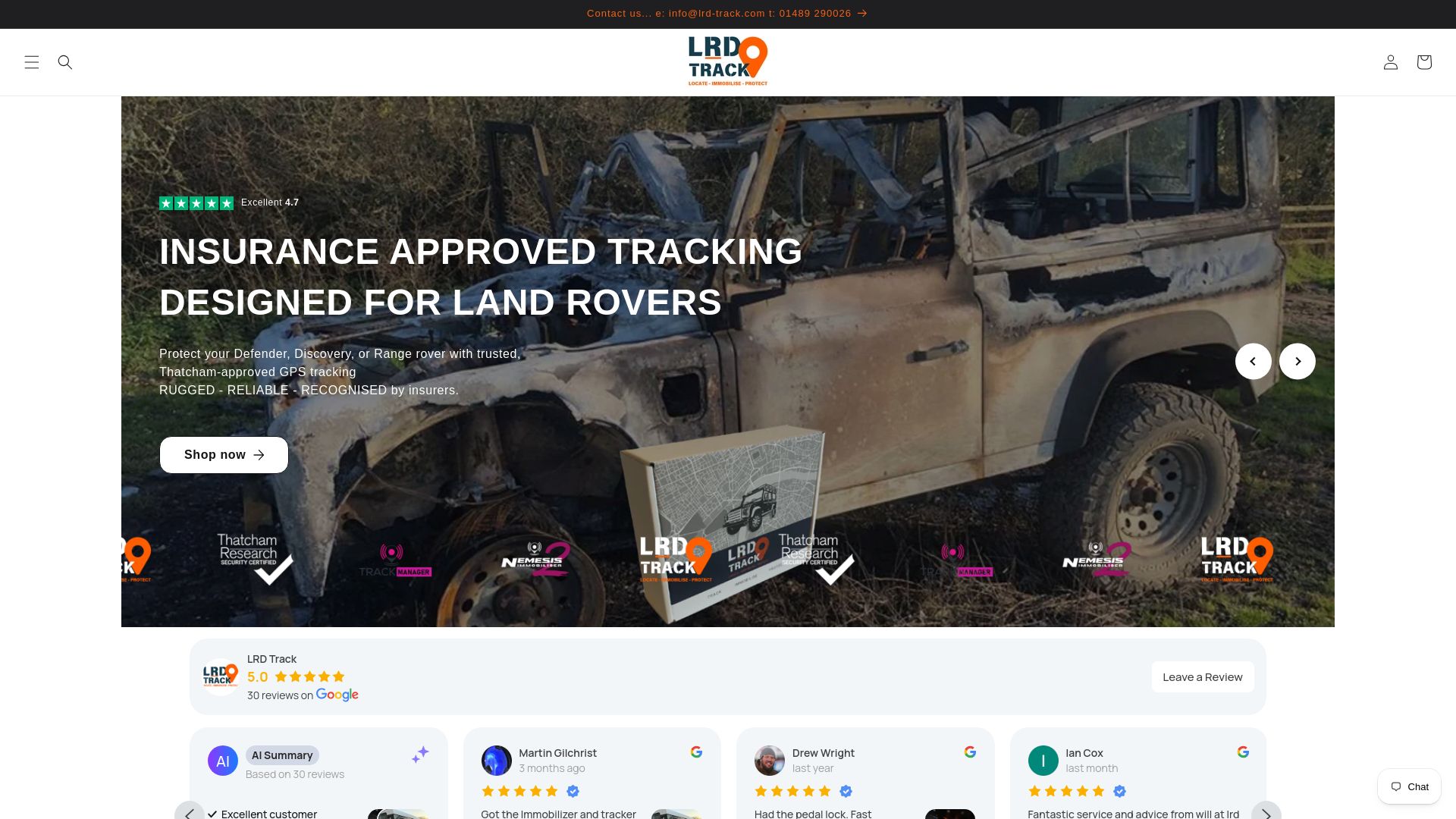
For hybrid protection with a genuine backup power source, the S5 Plus Ultra Backup Insurance Approved Tracker pairs VHF homing with immobiliser integration, at £699 one-off. If you want the full range of Thatcham-approved options to compare, from the entry-level S7 tracker at £179 up to the S5 Plus with immobiliser from £449, the collection page runs through each package clearly. Defender owners looking specifically at DEFEND and DEFEND-Plus subscriptions, from £6 to £10 a month, will find the full lineup on the LRD Track product overview. Book a survey and installation slot through the site, and a fitter will confirm the right package for your model before anything’s ordered.
Sources
Technical grounding for underground tracking behaviour comes from engineering research into indoor vehicle localisation, practical testing on GPS performance in basement car parks, Thatcham’s own approval standards, and facility-level context from underground car park management systems. Broader automotive context is also available via CarPulse Albania.
- Tracking devices — Direct Line magazine
- Can a GPS tracker work in underground parking or inside a basement? — Finatrack
- Vehicle tracking system in underground parking lots — IEEE Xplore
- Thatcham Research
FAQ
What is the best hidden car tracking device for underground use?
The most reliable option is a hybrid VHF and GPS tracker professionally fitted and hidden away from obvious strip-down points, since VHF signals penetrate concrete and steel where GPS-only devices cannot. Lrd-track’s Thatcham-approved lines, such as the S5 Plus Ultra Backup, are built specifically around this combination for Land Rover models.
Is it illegal to put a tracker on a vehicle in the UK?
Fitting a tracker to your own vehicle is generally lawful, but tracking a car someone else drives without their knowledge can breach consent and data protection rules depending on the circumstances. If in doubt, particularly for shared or company vehicles, get advice from a solicitor before fitting anything covertly.
How can you tell if someone has put a tracker under your car?
Check under the wheel arches, inside bumpers, and around the OBD port for anything that looks plugged in rather than wired into the vehicle’s own electronics. A professional auto electrician can carry out a full sweep if a visual check doesn’t settle it.
Can someone track my car without me knowing?
Yes, if a covert device has been fitted, particularly a cheap OBD plug-in unit that doesn’t require any wiring changes. A visual inspection of common concealment points, or a professional inspection, is the quickest way to confirm or rule this out.
What does an LRD Track subscription cost?
Pricing depends on the model and package chosen: DEFEND tracker subscriptions start at £6 per month, while DEFEND-Plus subscriptions with immobiliser integration are £10 per month. Hardware for insurance-approved trackers ranges from £179 for the S7 up to £699 for the S5 Plus Ultra Backup, viewable on the Thatcham-approved tracker collection.