
For most UK car owners, the best GPS car tracker is generally considered to be a Thatcham-approved, professionally installed unit with 24/7 monitored recovery. It gives you the strongest chance of getting your vehicle back after theft, and it’s the type most insurers recognise for premium reduction. If you own a Land Rover, the LRD Track S5 or S7 are the recommended starting points.
Before you buy, do three things:
- ✅ Check your insurer’s policy wording for the required Thatcham level (S5 or S7)
- ✅ Confirm the monitoring centre offers direct police liaison, not just app alerts
- ✅ Book professional installation — concealment matters as much as the device itself
Key takeaways
For UK car owners, a Thatcham-approved, professionally installed tracker with 24/7 monitored recovery is the most effective combination of insurance compliance, police liaison, and theft recovery.
| Point | Details |
|---|---|
| Thatcham level matters | Confirm S5 or S7 with your insurer before buying — the wrong level can void theft cover. |
| Professional installation is non-negotiable | Concealment behind panels requires a trained technician; DIY fit is only suitable for supplementary devices. |
| Monitored recovery beats app alerts | A 24/7 control room with police liaison acts immediately; a self-monitored app alert relies on you being awake and available. |
| Layered tracking improves odds | An active GPS tracker plus a concealed backup device covers different failure modes and increases recovery chances. |
| Lrd-track S5/S7 for Land Rovers | Both devices are Thatcham-approved, professionally installed, and built specifically for Defender, Discovery, and Range Rover models. |
Table of Contents
- Why does Thatcham approval change your insurance and recovery odds?
- Which tracker type suits your car and situation?
- How to pick the best GPS car tracker for your vehicle
- Which Lrd-track product suits which owner?
- What does professional installation involve?
- Quick buying checklist before you pay
- What support and warranty should you expect from a UK supplier?
- How do popular UK GPS tracker models compare?
- Why Thatcham-approved trackers are worth the investment
- Lrd-track: Thatcham-approved trackers for Land Rover owners
- Sources
Why does Thatcham approval change your insurance and recovery odds?
Thatcham approval is widely regarded as the UK’s benchmark for vehicle security products. A Thatcham S5 device uses GPS and a monitored control room; both S5 and S7 include 24/7 monitoring and direct police liaison. The S7 may also feature VHF tracking, which is thought to be more resistant to jamming and can help locate a vehicle even inside a container or underground, though this is not present in all S7 models. Confirm with your provider whether VHF is included if underground or container tracking is a priority.
According to Parkers, Thatcham-approved monitored trackers provide police liaison and can reduce insurance premiums, while basic magnetic units cannot. Expertsure’s 2026 comparison confirms that some insurers require an approved device for high-value vehicles and that monitored systems can reduce premiums by a notable amount for qualifying vehicles.
💡 Key point: VHF recovery is used by police forces for vehicle recovery and typically appears only in professionally monitored security trackers, making it the preferred option for extremely high-value cars.
- Police liaison means the control room contacts officers directly, cutting response time
- Monitored recovery means someone acts on your behalf even if you’re asleep or abroad
- Insurer recognition means your policy may stay valid after a theft claim
Always confirm whether your policy requires S5 or S7 before purchasing. Fitting the wrong level can invalidate your theft cover entirely, as Expertsure notes.
Which tracker type suits your car and situation?
Not every tracker is built for the same job. Here’s how the main types compare for UK needs.
Magnetic (portable): Attaches with magnets, no wiring needed. Convenient, but Parkers’ testing found them bulky and difficult to hide properly. Standby battery varies widely, from a few weeks to several months. No police liaison. Best as a secondary device.
OBD plug-in: Slots into the diagnostic port under the dashboard. Fast to fit, but the location is predictable and easy for a thief to find and remove. Good for fleet monitoring or low-risk vehicles.
Hardwired Thatcham (S5/S7): Professionally installed, concealed behind panels. Includes monitored recovery, police liaison, and insurer recognition. The right choice for any high-value or insured vehicle. What Car? Recommends this as the practical balance between cost and recovery probability for most UK drivers.
Dashcam-hybrid: Combines a dashcam with basic GPS logging. Useful for evidence after an incident, but not a theft-recovery tool on its own.
Key-finder (AirTag style): Bluetooth-dependent and only updates location when a nearby device pings it. Dual Action Roadside explains that active GPS trackers with their own SIMs provide reliable, near real-time location without depending on nearby devices. An AirTag is a useful backup, not a primary tracker.
How to pick the best GPS car tracker for your vehicle
Start with your insurer. Many policies for Land Rovers, Range Rovers, and other high-value 4x4s now require a specific Thatcham level. Getting that wrong costs more than the tracker itself.
Core criteria to compare:
- Thatcham approval and police support: S5 or S7? Does the monitoring centre have a direct police liaison protocol?
- Installation type: Professional hardwire for Thatcham units; DIY only for supplementary devices
- Subscription and monitoring cost: Auto Express notes that most DIY trackers require a recurring subscription for live tracking; monitored security systems cost more but include control room fees
- Battery life: Relevant for magnetic units; Car Magazine reports standby figures of 30–180 days across reviewed magnetic devices, with some offering up to 365 days of route history
- Update frequency: What Car? highlights that live-tracking units refresh multiple times per second, while lower-cost units may report only every 15–30 seconds or hourly
- Additional features: Geofence alerts, driver ID, immobilisation, tow-away alerts
Red flags to avoid:
- No professional installation offered for a Thatcham-rated device
- Subscription terms that aren’t clearly stated before purchase
- No named monitoring centre or police liaison process
Typical cost ranges (UK market):
Pro Tip: Combining an active GPS tracker with a concealed backup device improves recovery odds. If a thief finds and removes one device, the second still reports location. For Land Rovers, which are a known target, this layered approach is worth the extra cost.
Pair your tracker with number plate protection to guard against cloning, which is a common precursor to targeted theft.
Which Lrd-track product suits which owner?
Lrd-track builds Thatcham-approved trackers specifically for Land Rover models, including the Defender, Discovery, Range Rover, and Grenadier. Every device is professionally installed and comes with 24/7 monitored recovery and direct police liaison.
LRD Track S5 Car Tracker & Driver ID
The S5 is a Thatcham S5-approved device with driver identification built in. It recognises authorised drivers via a key fob or tag, so the monitoring centre knows immediately if an unrecognised driver is moving your vehicle. Real-time GPS tracking, geofence alerts, and tow-away detection are included. Suited to Discovery and Range Rover owners whose insurers require S5 approval.
LRD Track S7 Classic Defender Tracker
The S7 adds VHF tracking to the GPS layer, giving it police-grade resilience to jamming and the ability to locate a vehicle even when GPS is blocked. Built for classic Defenders, which are among the most targeted vehicles in the UK. If your insurer requires S7 or your vehicle is stored in a rural or high-risk area, this is the right choice.
Professional installation and 24/7 monitoring
Every Lrd-track device is fitted by approved technicians who conceal the unit behind panels, programme driver ID tags, and activate the monitoring subscription. The 24/7 control room handles police liaison directly. You don’t need to call 999 and wait; the team acts on your behalf the moment an alert triggers.
Subscription covers: real-time tracking, monitored recovery, police liaison, geofence and tow-away alerts, and app access.
What does professional installation involve?
Professional fitting for a Thatcham-approved tracker typically takes 1–2 hours at a registered installation centre. The technician hardwires the unit to the vehicle’s power supply, conceals it behind trim panels, and programmes any driver ID tags or fobs.
What to expect at your appointment:
- Vehicle check and concealment planning
- Hardwire installation behind panels
- Driver ID tag programming
- Immobiliser activation (where included)
- Subscription activation and app setup
- Test alert to confirm monitoring centre connection
DIY magnetic or OBD units can be self-fitted in minutes, but Parkers warns that finding a secure, non-obvious location often requires professional installation to avoid easy discovery by thieves. A poorly hidden tracker is almost as bad as no tracker.
Pro Tip: Ask your installer to confirm the exact concealment location in writing. If you ever sell the vehicle, the new owner needs to know where the device is fitted.
- ✅ Professional fit: required for Thatcham S5/S7 approval
- ✅ DIY fit: acceptable only for supplementary magnetic or OBD devices
- ✅ Warranty: confirm the installation warranty covers wiring and device faults separately
Quick buying checklist before you pay
Five things to confirm before purchase:
- ✅ Insurer compatibility: does your policy accept this specific Thatcham level?
- ✅ Thatcham level: S5 or S7 as required by your insurer
- ✅ Monitoring centre: named UK control room with 24/7 police liaison
- ✅ Concealment plan: professional installation confirmed
- ✅ Warranty and support: device and installation both covered
Three questions to ask your seller or installer:
- “Does your monitoring centre have a direct police liaison protocol, and which forces do you work with?”
- “Is immobilisation included, and is it safe to activate remotely at speed?”
- “What are the terms for cancelling or transferring the monitoring subscription if I sell the vehicle?”
Final sanity check: confirm the device’s certificate number is listed on the Thatcham Research website before you pay.
What support and warranty should you expect from a UK supplier?
A reputable UK tracker supplier should offer a minimum 12-month device warranty covering hardware faults, a separate installation warranty covering wiring and fitment, and a UK-based customer support line. For Thatcham-approved systems, the monitoring centre should be reachable 24/7, not just during office hours.
Ask specifically whether the warranty is voided if you move the device or have it reinstalled in a different vehicle. Some suppliers tie the warranty to the original installation address. Subscription transfers on vehicle sale are also worth confirming in writing before you commit.
How do popular UK GPS tracker models compare?
The UK market broadly splits into three tiers. Entry-level consumer GPS devices, typically magnetic or OBD, suit drivers who want basic location history and geofence alerts without insurer requirements. Mid-range hardwired units offer real-time tracking and app control but may lack a monitored control room. At the top, Thatcham S5 and S7 systems include professional installation, monitored recovery, and police liaison.
For Land Rover owners specifically, the theft risk profile is high enough that the top tier is the practical choice, not a luxury. Lrd-track’s S5 and S7 sit firmly in this category, with the added advantage of being engineered specifically for Land Rover models rather than adapted from a generic platform. Learn how the LRD Track system works in detail, including geofencing, route history, and app functionality.
Why Thatcham-approved trackers are worth the investment
Most people shopping for a vehicle tracker focus on price per month. That’s the wrong lens. The question is: if your Land Rover disappears at 2am, what happens next? A basic magnetic tracker sends you an app notification. A Thatcham S5 or S7 triggers a monitored control room that contacts police directly, with your vehicle’s live location already in hand.
The cost difference between a DIY device and a professionally monitored Thatcham system is real, but so is the gap in what they actually do when it counts. For a high-value Land Rover, the monitored system isn’t a premium option. It’s the baseline.
Lrd-track: Thatcham-approved trackers for Land Rover owners
Your Land Rover is a target. Lrd-track exists specifically to protect it, with Thatcham S5 and S7 devices built for Defender, Discovery, Range Rover, and Grenadier models, professionally installed and backed by a 24/7 monitored control room with direct police liaison.
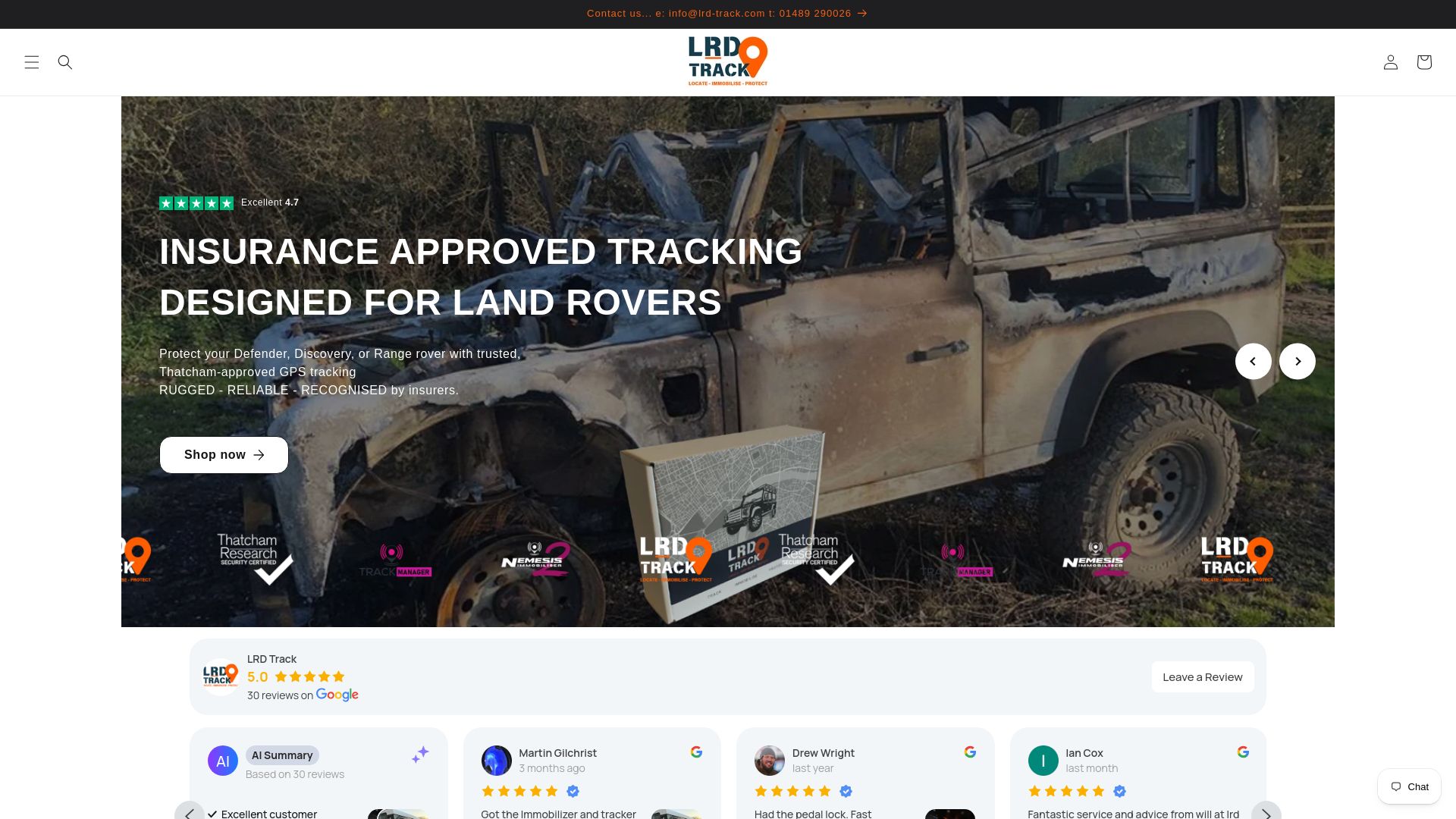
Unlike generic tracker brands, every Lrd-track device is engineered for Land Rover architecture, concealed by approved technicians, and activated with driver ID and geofence alerts from day one. The monitoring subscription covers police liaison, tow-away alerts, and real-time tracking, so you’re protected whether you’re at home or abroad.
Use the LRD Track product finder to match your vehicle and insurer requirements to the right device. Or go straight to the S7 Classic Defender Tracker or S5 Car Tracker & Driver ID product pages to check specifications and book installation.
What happens after you order:
- Site survey and installation booking confirmed within 48 hours
- Professional fit completed in 1–2 hours at your location
- Monitoring subscription activated and tested before the technician leaves
- UK support line and 24/7 control room contact details provided
Sources
- The best car trackers for extra car security tried and tested 2026
- Best GPS car trackers | What Car?
- Best car GPS trackers 2024 | Auto Express
- 7 Best Car Trackers UK 2026: Security & Fleet GPS Trackers Compared
- Best magnetic car trackers | Car Magazine
- Vehicle tracking explained, GPS trackers, AirTags & what actually works | Dual Action Roadside
Reminder: always check your insurer’s policy wording for the exact approved tracker type and Thatcham level required before purchasing any device.