
Control the keys and the handover, supervise the drive and layer your security, and you stop most test-drive and keyless-car thefts before they start. That means verifying identity before anyone sits in the driver’s seat, keeping a salesperson present throughout, setting a fixed route and return time, and backing it all with a Faraday pouch, a steering lock and a Thatcham-rated tracker. Dealers should log every handover under RVSS guidance. If a car does go missing, call the police immediately, pass on tracker alerts, and follow your insurer’s process.
TL;DR:
- Verifying driver identity with a DVLA share code and securing spare keys out of sight can significantly reduce the risk of test-drive thefts.
- Keeping the key in view during handover, releasing only one key, and ensuring the driver follows a pre-agreed route minimizes opportunities for theft during the drive.
- Using layered security measures such as Faraday pouches, OBD port covers, disabled fob functions overnight, and Thatcham-rated trackers enhances protection against keyless relay attacks.
- Consistent staff adherence to a concise, regularly refreshed checklist ensures every test drive follows best security practices, regardless of the day or pressure.
- Professional installation of Thatcham-approved trackers and immediate police notification improve recovery chances and strengthen theft prevention for Land Rover vehicles.
Table of Contents
- Step-by-step actions for owners and private sellers during a test drive
- A compact dealer test-drive checklist that meets RVSS-style requirements
- Stopping keyless theft: Faraday pouches, disabled fobs and locked doors
- Why layered security works and what a Thatcham-rated tracker adds
- What to do if a test drive turns into a theft
- Smart sensors and mobile alerts changing how test-drive theft gets caught
- Why most dealers fail at this, and it’s never the technology
- How a Thatcham-approved tracker cuts test-drive risk for Land Rover owners
- Sources
- FAQ
Step-by-step actions for owners and private sellers during a test drive
Most test-drive thefts happen because something ordinary got skipped: nobody checked a licence properly, a spare key sat on a hook by the door, or the car came back and nobody actually tried the key again. None of that takes long to fix.
Before you hand over the keys, verify the driver is who they say they are. A photo driving licence paired with a DVLA share code confirms entitlement to drive without you needing to store more personal data than necessary. If your dealership policy allows it, photograph the licence for your records, then store that image securely and delete it once your retention period expires. Spare keys should live somewhere out of sight and away from the viewing area, not in a drawer behind reception where a confident stranger could lift them; see this practical guide on how to secure a storage trailer for useful secure-storage recommendations applicable to vehicle key safes.
During the drive itself:
- Keep the key in view at every stage of the handover, never leaving it unattended on a desk or counter.
- Release only one key per test drive. A second fob in someone’s pocket is a second route to stealing the car later.
- Stay in the vehicle where practical. A salesperson in the passenger seat removes almost every opportunity for a quick disappearance.
- Agree a specific route and a return time before the car leaves the forecourt or driveway.
- Call or message if the driver is overdue, and treat a non-response as an immediate concern rather than a minor delay.
Once the car is back, don’t just take the key and wave the customer off. Check that the returned key actually starts the car. Key substitution during a drive is a known tactic: a duplicate or blank is handed back while the real fob leaves with the thief, ready to collect the car later. Glance around the cabin and the OBD port area under the dashboard for anything that looks out of place, and physically test that the doors lock rather than assuming the central locking worked.
Pro Tip: Keep a simple handover log, even a notebook entry with the date, licence check and return time, so you have a record if anything goes wrong later.
A compact dealer test-drive checklist that meets RVSS-style requirements
The RVSS code of practice sets out identity verification, staff training, security technology and data protection as the pillars of a safe vehicle handover. You don’t need a legal team to turn that into something your sales floor can follow every single day.
For identity and records:
- Verify new customers with a DVLA share code or a selfie matched against their photo licence.
- Record only what you need: name, licence check result, and vehicle registration, not a full photocopy of every document shown.
- Set a retention period, delete records after it passes, and tell staff why that matters.
For the drive itself:
- Use a short written test-drive agreement that states the route, the return time and who’s liable for the vehicle during the drive.
- Release a single key, log its return, and never let a second fob leave the building.
- Keep a salesperson with the vehicle for every drive, particularly for demonstrator stock.
- Fit OBD port covers on demonstrators so reprogramming tools can’t be plugged in during an unsupervised moment.
- Run short refresher training on identity fraud and social engineering tactics, since confident, well-dressed thieves rarely look the part.
Regional theft patterns shift, and dealers holding Land Rovers should take that seriously. The West Midlands PCC recorded 483 Land Rovers stolen across the force area in 2025, a figure that supports tighter handover controls for dealers holding high-value stock rather than relying on national headlines alone.
When something does go wrong, have an overdue-vehicle process ready before you need it: a set time after which you call the customer, a second call to the monitoring provider for the vehicle’s live location, and a direct line to the local police non-emergency number. Keep your handover logs, ID checks and tracker data together, because insurers will ask for exactly that evidence if a claim follows.
Pro Tip: Print your test-drive checklist on a single card at reception. Staff follow a process far more consistently when it’s visible rather than buried in a policy document nobody reopens.
Stopping keyless theft: Faraday pouches, disabled fobs and locked doors
Relay theft works by picking up your key fob’s signal from inside your house and relaying it to a device near the car, tricking the vehicle into thinking the key is right outside. Metropolitan Police guidance notes that thieves carrying out this attack can be working from only a few metres away, often without you noticing anything at all.
The fixes are mostly cheap and immediate:
- Store keys in a tested signal-blocking Faraday pouch, and check it periodically, since cheap pouches can degrade or stop blocking signal reliably.
- Keep keys away from doors, windows and hallways, where a relay device can pick up the signal more easily from outside.
- Disable the fob’s wireless function overnight where your vehicle supports it, as West Yorkshire Police and several other regional forces recommend.
- Fit a steering-wheel lock rated by Sold Secure. A visible lock is often enough to make a thief move on to an easier target.
- Add a pedal or gear lock as a second physical barrier, particularly for vehicles parked on driveways.
Thieves don’t need to touch your key to start your car. West Yorkshire Police guidance describes relay attacks as a technique that captures a signal rather than the key itself, which is why signal-blocking storage matters as much as where you physically keep the fob.
The OBD port under the dashboard is another weak point, since it lets a thief plug in a device and programme a blank key to start the car once inside. A lockable OBD cover closes that gap cheaply. For higher-value vehicles, a qualified technician can relocate the port, though you should check with your insurer and manufacturer first, since altering factory wiring can affect warranty cover or invalidate a policy if not done correctly.

Why layered security works and what a Thatcham-rated tracker adds
No single device stops every theft method. A steering lock does nothing against a relay attack. A Faraday pouch does nothing if someone copies a key during a test drive. That’s the entire logic behind layered security: each control closes a different gap, and together they cover far more of the attack surface than any one measure alone.
A practical layered setup looks like this:
- Physical deterrent: steering-wheel lock or pedal lock, visible from outside the car.
- Entry protection: Faraday storage for keys, OBD port cover, and disabled wireless fob functions overnight.
- Recovery and response: a Thatcham-rated tracker with movement, tamper and immobilise alerts.
- Process: identity checks, single-key handovers and documented return times for every test drive.
GOV.UK and Metropolitan Police guidance both frame security this way, treating staff training and data-minimised identity checks as equally important to any single piece of hardware. A Thatcham-rated tracker matters because insurers recognise the category, and because it gives a monitoring centre a live location and tamper alert the moment something unusual happens, rather than relying on you noticing the car is gone.
Professional fitting beats thieves’ usual 48 to 72 hour window for finding and disabling a tracker on a Land Rover.
Thatcham approval tells an insurer the device meets a recognised security standard, covering movement detection, tamper alerts and, for higher categories, remote immobilisation. For dealers running demonstrator fleets and for owners of models that attract regional theft interest, a tracker fitted by a professional rather than self-installed closes one more gap that a determined thief might otherwise exploit.
What to do if a test drive turns into a theft
Act fast and in this order:
- Call 999 immediately if the theft is happening or has just happened and the vehicle is still in sight.
- Call 101 to report a theft that’s already concluded, and have the registration, VIN and last known location ready.
- Pass on any tracker alert data straight away, including the last confirmed GPS position and any movement after the alert triggered.
- Only activate remote immobilisation if police advise it, since stopping a moving vehicle remotely can create a safety risk if handled at the wrong moment.
- Preserve every piece of documentation: the handover log, the licence check, CCTV footage if you have it, and witness names and contact details.
Your insurer will expect a full paper trail covering the identity check, the agreed route and return time, and the tracker’s recorded movements. A gap in any of those makes a claim slower and harder to settle, so treat your handover records as part of your theft response from day one, not an afterthought you compile after the fact.
Smart sensors and mobile alerts changing how test-drive theft gets caught
Theft detection has moved well past a simple alarm that makes noise after the fact. Modern trackers now pair GPS positioning with tamper sensors that detect when a device is being interfered with, sending a mobile alert the moment movement, disconnection or an unusual signal pattern is detected, rather than waiting for a human to notice the car is missing.
For dealers, this closes the gap between a test drive going overdue and actually knowing something is wrong. A tracker with live movement alerts flags an unexpected direction change or an unscheduled stop long before a customer fails to answer their phone. For owners, the same technology means a notification reaches your phone the instant your parked car moves without the correct key cycle, giving you and the police a head start that simply didn’t exist with older alarm-only systems.
None of this replaces the basics. A mobile alert tells you something is wrong, but it’s the combination with physical locks, Faraday storage and documented handover procedures that actually stops the theft from succeeding in the first place. Treat smart alerts as the layer that buys you time and evidence, not the layer that does the whole job alone.

Why most dealers fail at this, and it’s never the technology
The dealerships that avoid test-drive theft aren’t the ones with the fanciest tech. They’re the ones where every single member of staff follows the same checklist on every single drive, including the quiet Tuesday afternoon when nobody’s watching and a confident customer seems perfectly genuine.
A code of practice only works if nobody skips it under pressure. Short, regular refreshers beat a thick policy document nobody rereads, and spot checks catch the moment a busy salesperson starts cutting corners. Build the habit before you need it.
— Will
How a Thatcham-approved tracker cuts test-drive risk for Land Rover owners
If your test drive involves a Land Rover demonstrator or your own Defender, Discovery or Range Rover, the controls above do most of the work, and a professionally fitted tracker closes the gap they can’t.
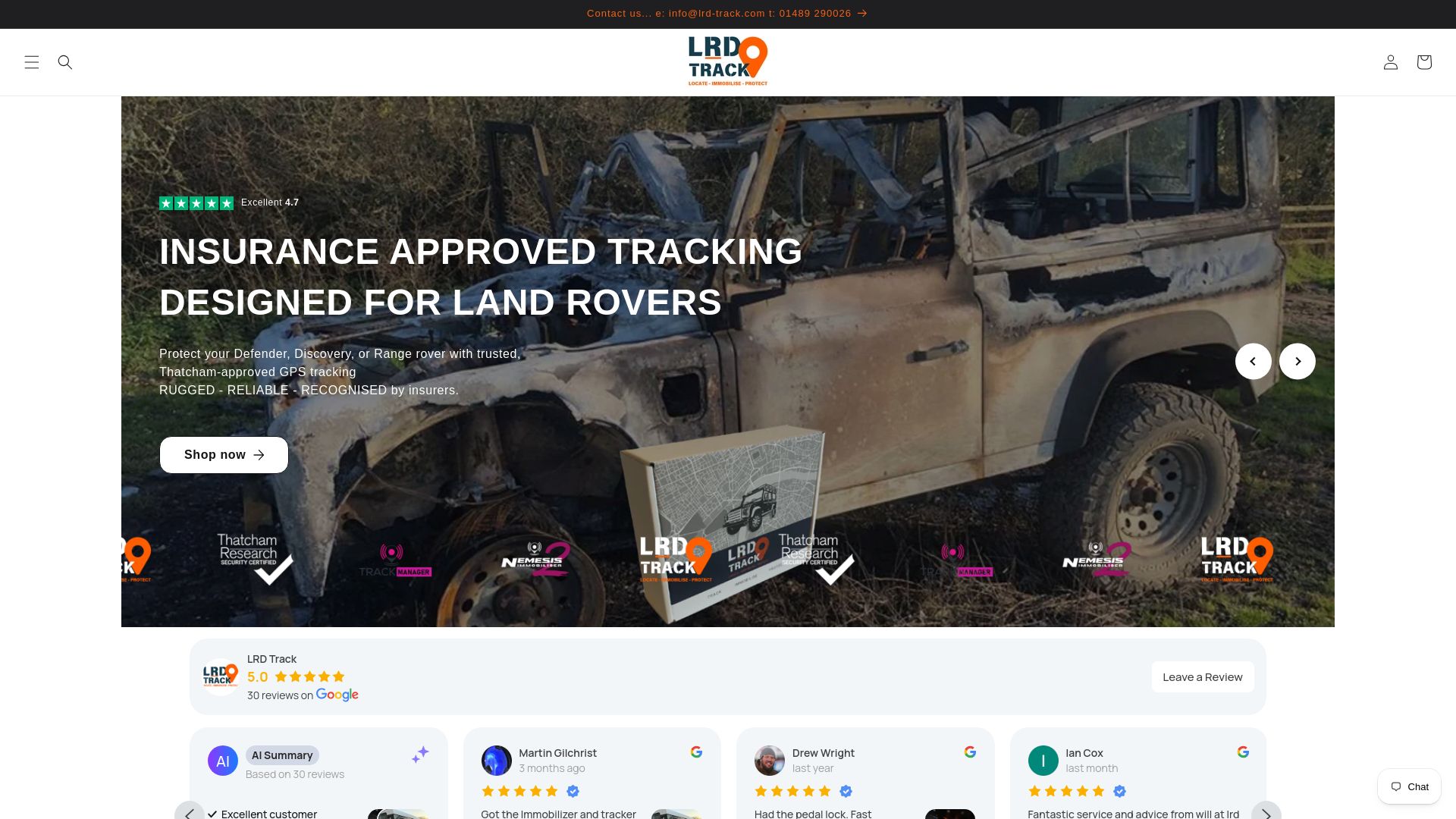
Thatcham-approved trackers built specifically for Land Rover models, with professional installation, 24/7 monitoring and a mobile app that shows your vehicle’s location in real time.
- Dealers running demonstrator fleets can get consistent protection across every vehicle on the forecourt.
- Owners meeting insurer requirements can get a recognised Thatcham category tracker fitted properly, not self-installed.
- Remote alerts notify the moment something looks wrong, not after the fact.
Check your insurer’s specific Thatcham category requirement before you buy, and browse the Thatcham-approved tracker range to find the right fit for your vehicle.
Sources
- The rental vehicle security scheme (RVSS) code of practice
- Preventing car and vehicle theft | Metropolitan Police
- Keyless theft guidance | West Yorkshire Police
- West Midlands PCC vehicle theft figures and commentary
FAQ
Which car is most stolen in the UK?
National theft data from the ONS does not publish a UK-wide ranking by make or model, so any “most stolen car” list you see is based on regional or insurer figures rather than an official national total. Regional data, such as the West Midlands PCC’s figures, can differ significantly from other areas, so treat any single ranking with caution.
Which car is the most difficult to steal in 2026?
There’s no official list ranking vehicles by theft difficulty, since resistance depends on the specific security fitted rather than the model alone. A car with a Thatcham-rated tracker, a disabled keyless fob overnight and a steering lock fitted is far harder to steal than the same model with none of those measures.
What is the best car theft deterrent in the UK?
No single deterrent covers every theft method, which is why Metropolitan Police guidance recommends combining a visible steering lock, Faraday key storage and a Thatcham-rated tracker rather than relying on one device. Layering physical and electronic controls closes more routes for a thief than any single product can on its own.
Which cars are least likely to be stolen in the UK?
There’s no published national ranking of least-stolen models, since theft data doesn’t break down by make or model at a UK-wide level according to the ONS. What consistently reduces a vehicle’s chances of being stolen is the security fitted to it, including a tested Faraday pouch, a steering lock and a Thatcham-approved tracker.
How does a Thatcham-approved tracker help if my car is stolen?
A Thatcham-approved tracker gives a monitoring centre a live location the moment unusual movement or tampering is detected, rather than relying on you noticing the car is gone. These trackers are fitted specifically for Land Rover models with professional installation and monitoring support.