
Your Range Rover needs a Thatcham-certified GPS tracker fitted by an approved installer — and Lrd-track’s S5 or S7 is the fastest route to getting your insurer satisfied and your vehicle protected. A typical mobile installation takes a few hours at your home or workplace. The full package, covering device, professional fitting, and first-year monitoring, generally costs several hundred pounds depending on the model you choose. Book directly through the Lrd-track product finder and most owners secure an appointment within a few days.
Range Rovers are among the most stolen vehicles in the UK. A Thatcham-rated tracker is no longer just a nice extra — many insurers now require one as a condition of cover, particularly for Sport, Vogue, and Evoque models parked in urban areas.
Key takeaways
A Thatcham S5 or S7 tracker fitted by a specialist Land Rover installer is the fastest, most insurer-accepted route to protecting your Range Rover and satisfying your policy conditions.
| Point | Details |
|---|---|
| Choose the right Thatcham tier | S5 covers most policies; S7 is required for high-value vehicles, urban parking, or where VHF backup is specified. |
| Confirm certificate details | Your installer must supply a signed certificate with device serial, IMEI, and Thatcham category on the day of fitting. |
| Notify your insurer promptly | Send the certificate within 14 days and get written confirmation that your policy reflects the tracker fitment. |
| Budget realistically | A full package (device, mobile install, first-year monitoring) typically costs £400–£600; lifetime options exist around £499. |
| Lrd-track for Range Rovers | Lrd-track supplies Thatcham S5 and S7 trackers with UK-wide mobile installation, 24/7 monitoring, and insurer-ready paperwork. |
Table of Contents
- Why Lrd-track’s Thatcham-rated Range Rover tracker is the practical choice
- What a professional tracker installation looks like
- What insurers expect: Thatcham ratings and how to notify them
- What it costs: device, installation, and subscription options
- How to pick an insurer-acceptable installer
- Key tracker features that protect Range Rovers
- Why Lrd-track specialises in Range Rovers
- When a professional Thatcham install is non-negotiable
- Lrd-track: book your Range Rover tracker installation today
- Sources
Why Lrd-track’s Thatcham-rated Range Rover tracker is the practical choice
Lrd-track builds its tracking systems specifically for Land Rover vehicles, which matters more than it sounds. Generic trackers are often fitted without the wiring knowledge needed for a Defender or a late-plate Range Rover Sport, and a poorly routed cable can be found and cut. Lrd-track’s engineers know these vehicles.
The S5 and S7 at a glance:
- ✅ S5 (Driver ID): Thatcham S5-rated, driver identification via a personal tag or fob, remote immobilisation, tamper and tow-away alerts, 24/7 monitoring, geofencing, and real-time GPS tracking via a dedicated mobile app
- ✅ S7 (Classic / Certified): Thatcham S7-rated, adds VHF backup tracking and anti-jamming technology for police-linked recovery, plus the full S5 feature set — the tier most insurers specify for high-value vehicles
Every installation package includes a mobile or dealer fitting, a signed installation certificate, device activation, app access, and connection to a 24/7 monitoring centre. After fitting, you receive login details for the tracking portal — mobile app access is standard practice across the industry, and Lrd-track supplies this at handover.
Land Rover does offer its own Secure Tracker service, which links to a Stolen Vehicle Tracking Centre via the Remote app and requires an active InControl account and subscription. That factory route suits some owners, but it does not carry an independent Thatcham rating that insurers can verify against their own requirements. Where your insurer specifies a Thatcham S5 or S7 certificate from an independent provider, an aftermarket solution from Lrd-track is the correct path.
Pro Tip: If your insurer’s policy schedule says “Thatcham Category S7” or simply “S7 approved tracker required”, go straight to the S7. If it says “S5” or “driver ID required”, the S5 covers you. When in doubt, call your insurer before ordering — ask for the exact Thatcham category they require and get the answer in writing.
What a professional tracker installation looks like
A professional Range Rover tracker installation follows a clear sequence. Knowing what to expect means you can prepare your vehicle, ask the right questions, and leave with every document your insurer needs.
For a mobile install, the engineer arrives at your home or workplace within an agreed window. Dealer and specialist workshop installs follow the same sequence but may involve leaving the vehicle for a half-day slot.
Evoque owners on the Evoque Owners Club forum report next-day local engineer visits, activation emails arriving within an hour of fitting, and invoices plus certificates supplied on the day — all accepted by their insurers without question. That experience is consistent with what Lrd-track owners describe: fast, clean, and fully documented.
After installation, you will receive an activation email with your portal login. The tracking app lets you view your vehicle’s live position, set geofence alerts, and check device status. Confirm the app name and your login credentials with the engineer before they leave.
What insurers expect: Thatcham ratings and how to notify them
Thatcham Research is the UK’s independent automotive security body. Its S5 and S7 categories are the two ratings insurers most commonly specify for high-value vehicles.
| Feature | S5 (Driver ID) | S7 (Certified) |
|---|---|---|
| Thatcham rating | Category S5 | Category S7 |
| GPS tracking | ✅ | ✅ |
| 24/7 monitoring | ✅ | ✅ |
| Driver identification | ✅ (tag/fob) | ✅ |
| Remote immobilisation | ✅ | ✅ |
| VHF backup tracking | ❌ | ✅ |
| Anti-jamming technology | ❌ | ✅ |
| Police-linked recovery | Monitoring centre | Direct police liaison |
| Insurer acceptance | Most standard policies | High-value and specialist policies |
The S7’s VHF backup is the critical difference. If a thief deploys a GPS jammer — a known tactic used against Range Rovers — the S7 continues transmitting on a separate frequency that police recovery units can track. For a vehicle parked regularly in London or another high-risk area, that backup layer is not optional.
What your insurer will ask for after installation:
- The Thatcham certificate, showing the category, device serial number, and IMEI
- Proof of an active monitoring contract (a subscription confirmation or monitoring agreement)
- The installer’s name and, in some cases, their Thatcham installer reference
Land Rover’s own connected security features also require an active account and subscription to function — a useful reminder that any tracking system, factory or aftermarket, needs an active service behind it to deliver recovery support.
Pro Tip: Notify your insurer within 14 days of installation. Send them the certificate by email and ask for written confirmation that the tracker satisfies their requirement. Keep that confirmation with your policy documents.
Steps to notify your insurer:
- Locate your certificate (device serial, IMEI, Thatcham category, installer details)
- Call or email your insurer’s mid-term adjustment line
- Confirm the exact Thatcham category they require matches your certificate
- Request written confirmation that your policy now reflects the tracker fitment
- Store the certificate and insurer confirmation together
What it costs: device, installation, and subscription options
Pricing for a Range Rover tracker installation varies by model and monitoring choice. Here is a realistic breakdown of what to budget.
Evoque Owners Club members report that lifetime purchase options have been offered at around £499 in some cases, which remove the annual renewal cost entirely. Whether that suits you depends on how long you plan to keep the vehicle.
Subscription models explained:
- Monthly rolling: Flexible, no long-term commitment, slightly higher per-month cost
- Annual: Most common; typically discounted versus monthly and aligns with your insurance renewal
- Multi-year or lifetime: Highest upfront cost, lowest total cost over three or more years
Before you confirm any quote, check these items:
- ✅ VAT included or added on top?
- ✅ Is the installation fee separate from the device price?
- ✅ Does the monitoring fee include police-linked recovery or just GPS alerts?
- ✅ What are the cancellation terms if you sell the vehicle?
- ✅ Is there a callout fee if the monitoring centre responds to a theft alert?
- ✅ Does the subscription auto-renew, and at what rate?
A quote that looks cheap at headline level can carry a higher annual monitoring fee or an additional callout charge. Get the full cost in writing before booking.
How to pick an insurer-acceptable installer
Not every engineer who claims to fit trackers will supply the documentation your insurer needs. Here is how to separate a credible installer from one who will leave you with a device but no paperwork.
Questions to ask before booking:
- ✅ Which Thatcham category does the device carry — S5 or S7?
- ✅ Who is the monitoring partner, and do they operate 24/7?
- ✅ Can you provide a sample installation certificate before I book?
- ✅ Is the installation mobile, and what is your coverage area?
- ✅ What warranty covers the device and the installation?
- ✅ Are your engineers identifiable and traceable (name, company, contact number)?
Red flags to walk away from:
- ❌ No certificate offered, or “we can sort that later”
- ❌ Monitoring described vaguely (“we’ll track it if needed”)
- ❌ Cash-only payment with no invoice
- ❌ Engineer cannot name the monitoring centre or provide a contact number for it
- ❌ No mention of Thatcham certification at all
Specialist Land Rover installers carry a distinct advantage here. A generic installer may fit the device correctly but lack the vehicle-specific knowledge to conceal it properly in a Range Rover’s body. Lrd-track’s engineers work exclusively on Land Rover models, which means the cable routing and mounting position are chosen with that vehicle’s architecture in mind.
Key tracker features that protect Range Rovers
Range Rovers face specific theft techniques that a well-specified tracker must address. Understanding what each feature does helps you choose the right tier.
Feature explainers:
- Driver ID: A personal tag or fob that must be present for the vehicle to operate normally. If the car moves without the tag, the monitoring centre receives an immediate alert. This counters keyless relay theft, where thieves amplify your key signal to unlock and start the car without the physical key.
- Remote immobilisation: Allows the monitoring centre to cut the engine remotely once theft is confirmed and police are engaged. Not all insurers permit immobilisation while the vehicle is moving, so this typically activates when the vehicle stops.
- Geofencing: You define a zone around your home or regular parking area. Any movement outside that zone triggers an alert to your app and the monitoring centre.
- VHF backup (S7): A secondary radio frequency transmission that operates independently of GPS and mobile networks. Police recovery units carry VHF receivers, so a jammed or signal-blocked vehicle can still be located.
Common attack vectors against Range Rovers:
- Relay theft: Thieves use signal amplifiers to clone the proximity key signal through walls. Driver ID and immobilisation are the primary countermeasures.
- Key cloning: A more sophisticated attack that copies the key’s digital signature. A tracker does not prevent entry but ensures recovery once the vehicle moves.
- Tow-away: The vehicle is loaded onto a flatbed and driven away before GPS can register movement. Tow-away alerts detect the angle change and trigger an immediate notification.
Trackers do not prevent theft. They maximise recovery speed and give police the evidence they need to act. That distinction matters when you are setting expectations with your insurer.
Pro Tip: Pair your tracker with a physical deterrent — a steering wheel lock or a set of security deadlocks — to slow a thief down long enough for the monitoring centre to respond. Layers of security work together; a tracker alone is not a complete answer.
Why Lrd-track specialises in Range Rovers
Lrd-track focuses exclusively on Land Rover vehicles: Defender, Discovery, Range Rover, and Grenadier. That focus shapes everything from the installation approach to the aftercare.
What you get with Lrd-track:
- ✅ Thatcham S5 and S7 certified devices, both insurance-approved
- ✅ Mobile installation across the UK, at your home or workplace
- ✅ Signed installation certificate supplied on the day, ready for your insurer
- ✅ 24/7 monitoring with police-linked recovery on S7
- ✅ Real-time GPS tracking via a dedicated mobile app
- ✅ Tow-away and tamper alerts active from the moment of installation
- ✅ Driver ID on S5 and S7 to counter relay theft
- ✅ Datatag Security ID System available as an additional security layer
Owners often highlight the speed of the mobile install and the quality of the paperwork. Getting an activation email and a clean certificate on the same day removes the back-and-forth with insurers that a poorly documented install creates. Lrd-track’s customer reviews reflect that pattern — fast appointments, clear communication, and documentation that insurers accept without query.
The support process after activation is straightforward. If the monitoring centre detects a theft event, they contact you first to confirm it is not an authorised movement, then engage the police with live location data. You do not need to manage the recovery yourself.
When a professional Thatcham install is non-negotiable
Most owners arrive at this decision because their insurer told them to. That is a reasonable prompt, but it undersells the real case for a professional, certified install.
The owners who genuinely need an S7 — not just an S5 — are those parking regularly in London or other high-theft postcodes, those with a vehicle worth over £50,000, and commercial drivers whose Range Rover is also a business asset. For those owners, the VHF backup and direct police liaison that the S7 provides are the difference between a recovered vehicle and a total loss claim. An S5 is a strong deterrent; an S7 is a recovery tool.
There is also a subtler point about DIY installs. Some owners are tempted by self-fit OBD trackers. These are not Thatcham-rated, they are trivially easy to locate and remove, and no insurer will accept them as a condition of cover. A professional install, hidden by an engineer who knows the vehicle, is a fundamentally different proposition. The certificate is not just paperwork — it is evidence that the device is installed to a standard a thief cannot easily defeat.
Lrd-track: book your Range Rover tracker installation today
Your Range Rover deserves more than a generic solution. Lrd-track covers the full package: a Thatcham-certified S5 or S7 device, a mobile installation at your home or workplace, a signed certificate for your insurer, and immediate access to 24/7 monitoring from the moment the engineer leaves.
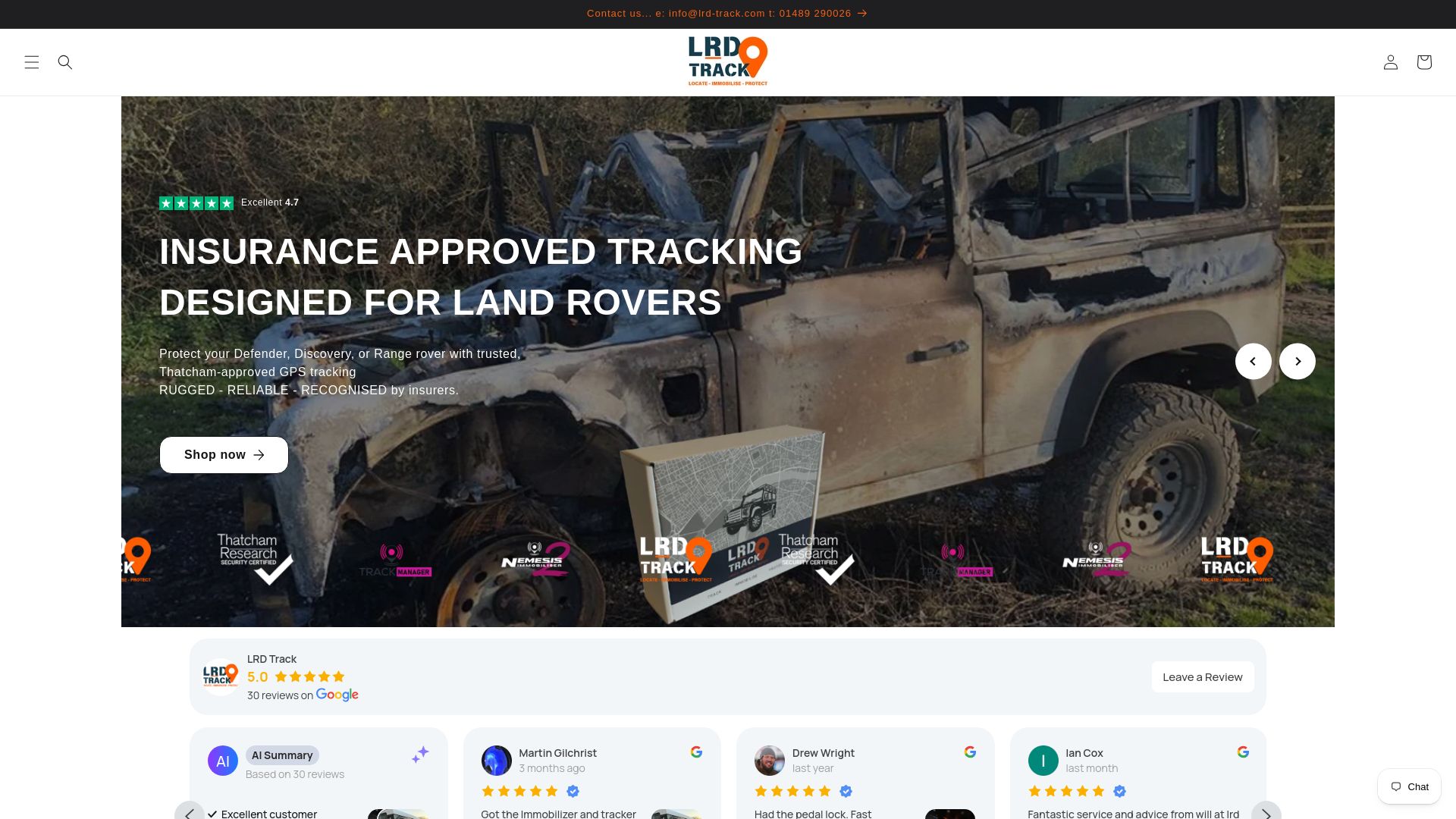
Lead times are generally short. Many owners book within a few days and have their vehicle protected and their insurer notified relatively quickly. The S7 tracker page and the S5 with Driver ID both include full installation and certificate. Use the product finder if you want to match your specific model and insurer requirement to the right tier before ordering.
Sources
- Protect Your Vehicle with Our Secure Tracker
- Using Your Emergency and Security Features | Guideline | Land Rover
- Tracker Install | Evoque Owners Club
- Apps