
The most effective protection is layered, not single-point: enable factory updates (InControl, UWB where fitted), store your key fob in Faraday storage every night, and fit an insurance-approved tracker with professional installation. Insurers look for Thatcham S5 or S7 accreditation and Land Rover’s own Secure Tracker as the clearest signals your car is properly protected. LRD Track handles the tracking and installation side of that equation.
TL;DR:
- Checking whether your key uses Ultra-Wideband technology can significantly increase protection against relay attacks, as UWB detects proximity more accurately.
- Enabling Land Rover’s Guardian Mode and storing your key in a Faraday pouch every night are simple, routine measures that help prevent relay thefts.
- Thatcham S5 tracking devices with remote immobilisation are preferred by insurers for high-value models and provide both deterrence and recovery capabilities.
- Professional, OEM-safe installation of tracking and immobiliser systems ensures they are concealed and correctly wired to prevent CAN bus hacking and bypasses.
- Regularly updating your vehicle’s security software and keeping documentation ready can help maximize insurance discounts and improve theft recovery chances.
Table of Contents
- Why thieves target Range Rover Sport and how they attack keyless systems
- What Land Rover’s factory features and updates actually do
- Defence-in-depth checklist: today, this week, this month
- Approved device categories and what insurers expect
- How to check your Range Rover Sport’s security status
- How professional fitting stops CAN bus and relay theft
- Frontline lessons from securing Range Rover Sport
- LRD Track: Thatcham-approved tracking built specifically for Land Rover
- Sources
Why thieves target Range Rover Sport and how they attack keyless systems
Range Rover Sport sits high on theft lists for a simple reason: strong resale value at home and even stronger demand abroad. Parts and whole vehicles move fast through export channels, which makes every model year a target regardless of age.
Most driveway thefts now happen through relay attacks. A thief uses two linked devices, one near your front door to pick up the signal from your key fob sitting on a hallway table, the other next to the car. The signal gets relayed as if the key were present, the doors unlock, and the car starts. Carcode Secure’s analysis of Range Rover thefts documents cases where the entire process, from a thief approaching the house to driving away, takes well under a minute.
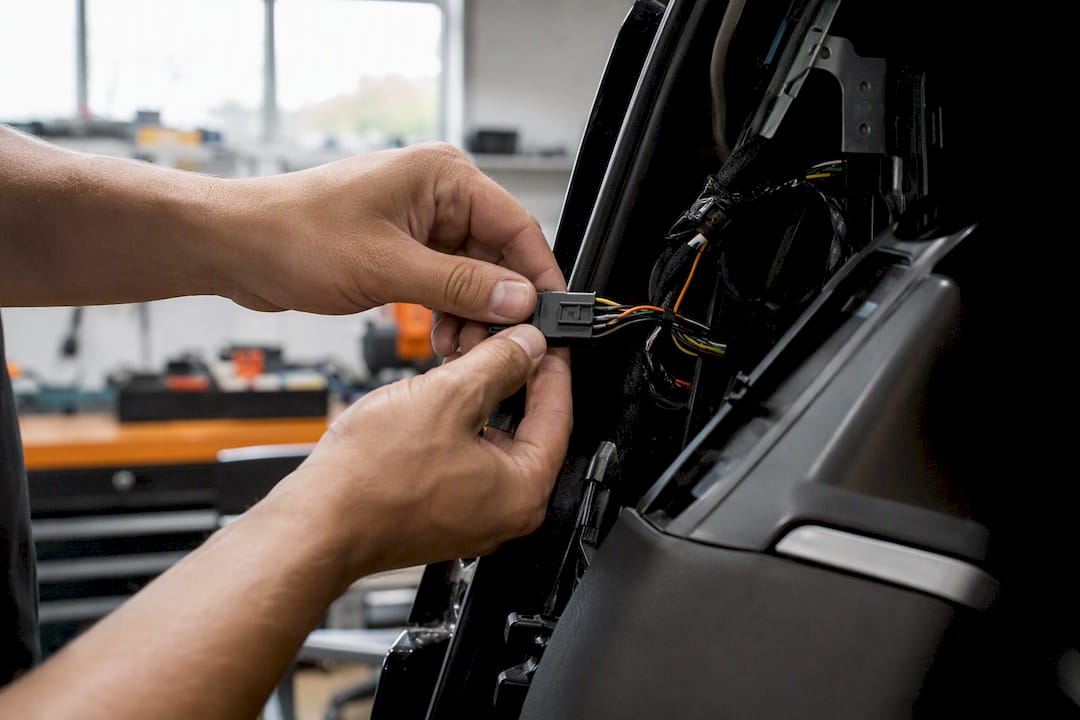
CAN bus injection is the more technical route in. Rather than cloning the key signal, thieves plug directly into the vehicle’s internal wiring, often through a headlight or bumper access point, and send fake “key present” commands straight to the network that controls locks and ignition. This bypasses the alarm and factory immobiliser entirely, because as far as the car’s electronics are concerned, the correct key was just used.
Key cloning using older, weaker cryptographic protocols on early Range Rover Sport model years adds a third route, though it’s less common now as JLR has tightened key encryption on newer vehicles.
A standard factory alarm alone won’t stop any of these methods:
- Alarms react to broken glass or forced doors, not a correctly unlocked car
- Immobilisers can be defeated once CAN bus access is gained
- A single security layer gives thieves one obstacle to clear, not several
What Land Rover’s factory features and updates actually do
JLR announced a significant investment in vehicle security that strengthened the security architecture on newer vehicles and expanded Ultra-Wideband (UWB) key technology across the range. UWB measures the precise distance and angle between key and car, which makes the classic relay attack far harder to pull off because the system can tell the key isn’t actually nearby.
Here’s what that means in practice for your Range Rover Sport:
- Check whether your key uses UWB. Not every model year benefits, so this matters more than most owners realise.
- Use the InControl Remote app to enable lock reminders and Guardian Mode, which flags unusual access attempts and vehicle movement.
- Understand what Secure Tracker offers. According to Land Rover’s own security pages, Secure Tracker Pro meets Thatcham Category S5, while standard Secure Tracker meets S7, with availability varying by model.
- Put older fobs into sleep mode when not in use, cutting off the constant signal a relay device needs to capture.
- Book the complimentary security update through a retailer if your model qualifies.
None of this replaces independent tracking. Factory updates raise the bar against relay attacks specifically, but a determined CAN bus attack or a professional theft ring targeting export demand still calls for a monitored, insurance-approved tracker underneath the factory layer.
Defence-in-depth checklist: today, this week, this month
Security doesn’t need to happen all at once, but it does need to happen in the right order. Spread across three timeframes, it stops being overwhelming and starts being manageable.
Today:
- Store your key fob in a Faraday pouch or box overnight, every night, not just when you remember
- Confirm whether sleep mode or UWB is active on your key
- Park under a light, on a camera-covered driveway, or nose-in against a wall where a relay device has less room to work
This week:
- Fit a visible steering lock. Thieves who see one often move to an easier target rather than risk the extra time
- Enable every InControl protection available for your model year, including Guardian Mode
- Request proof-of-fitment documentation for any security device you already have, since insurers will ask for it later
This month:
- Fit an insurance-approved monitored tracker or immobiliser through professional installation
- Arrange monitoring activation so the device is actually live, not just fitted
- Keep every receipt, activation date and monitoring contract together in one folder
Pro Tip: Take a dated photo of your key fob in its Faraday pouch each night for a fortnight. Insurers occasionally query whether a “Faraday storage” claim on a form was habitual or a one-off, and a simple photo trail settles that question instantly.
The paperwork stage catches people out more than any other step. An insurer that asks for proof of a Thatcham-approved device wants installation dates, the device’s Thatcham certificate number, and confirmation the monitoring subscription is active, not lapsed. Losing a discount over a missing receipt is entirely avoidable.
Approved device categories and what insurers expect
Thatcham categories exist because “I have a tracker” means different things depending on what’s actually fitted. Two categories matter most for Range Rover Sport owners.
Thatcham S5 covers a monitored tracking device combined with remote immobilisation. If the vehicle moves without authorisation, a monitoring centre can act to stop it moving further. This is the higher tier, and it’s what many insurers now expect on high-value, high-theft-risk models.
Thatcham S7 covers a passive, monitored tracking device without the immobilisation element. It still gets a stolen vehicle located and helps with recovery, but it doesn’t stop the car being driven in the first place.
The practical difference matters more than the label:
- S5 gives you prevention and recovery together, since a car that can be immobilised remotely is a car that’s harder to steal in the first place
- S7-only devices help police and monitoring centres locate a car after it’s gone, which is valuable, but the theft has already happened
- Combining a physical deterrent (steering lock, deadlock) with an S5-rated device covers both ends of the problem
- Insurers commonly ask for the Thatcham certificate, an installer’s fitment certificate, and proof of an active monitoring subscription before applying any discount
A Car magazine security roundup reinforces this same layered logic for owners weighing up which products to prioritise: no single device does everything, but the right combination covers the gaps each one leaves.
How to check your Range Rover Sport’s security status
A few checks take fifteen minutes and tell you exactly where you stand.
- Confirm your model year and key type. UWB-equipped keys typically carry a small badge or marking distinguishing them from older fobs; your retailer can confirm this from the VIN if you’re unsure.
- Test sleep mode. Most UWB and recent fobs support a manual sleep function, usually triggered by a button sequence detailed in the owner’s handbook.
- Register for Land Rover InControl through the Remote app on iOS or Android, then enable Guardian Mode and check whether Secure Tracker or Secure Tracker Pro is available for your model.
- Book the security update via a Land Rover retailer if JLR’s update programme covers your vehicle. Ask specifically whether the update includes UWB activation or just software patching.
- Bring your VIN and service history to any installer or retailer visit. This speeds up eligibility checks and avoids a second appointment.
Doing this once and recording the results (in the same folder as your insurance paperwork) means you never have to repeat the exercise unless you change vehicles.
How professional fitting stops CAN bus and relay theft
Installation quality is where a lot of “approved” security quietly fails. A tracker or immobiliser fitted badly can throw fault codes, void warranty conditions, or sit in a location a thief locates in minutes once they know where to look.
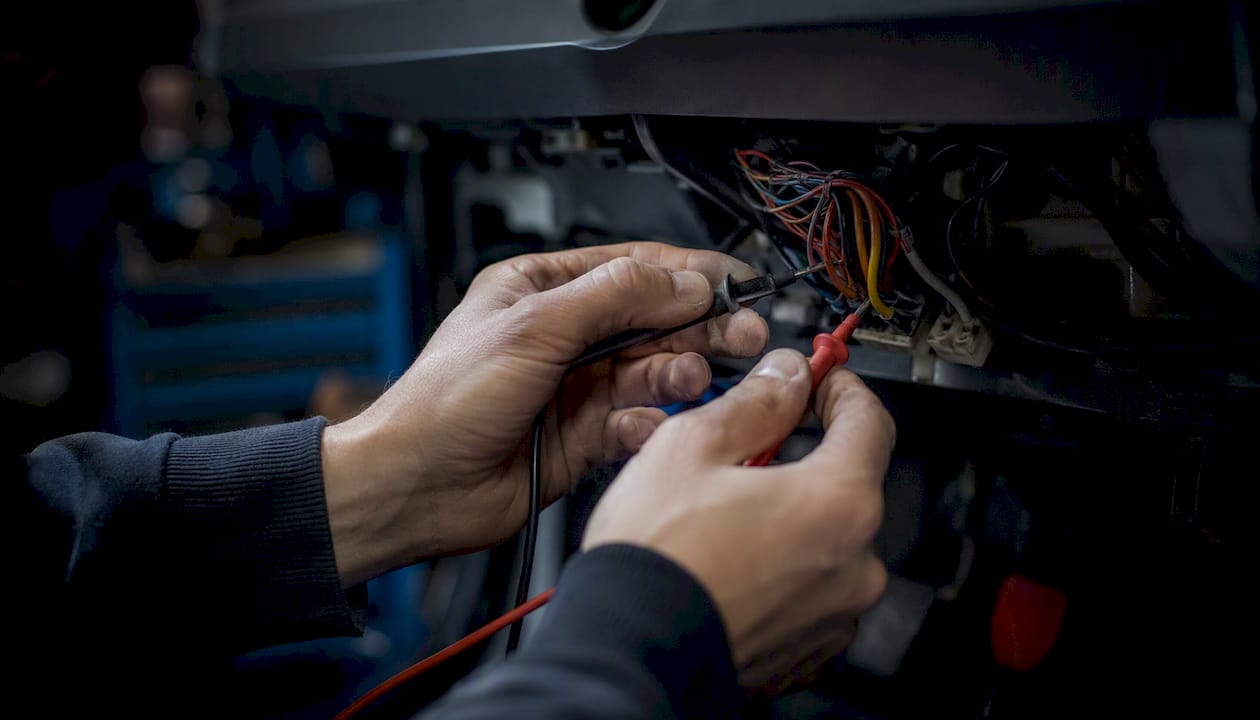
OEM-safe fitting means the installer works within Land Rover’s existing wiring architecture rather than forcing connections that trigger dashboard warnings. Hidden placement matters just as much: a device that’s easy to find is a device that’s easy to cut out.
On the technical side, mitigating CAN bus attacks means restricting physical access to the points thieves exploit and adding a concealed immobilisation layer that intercepts engine-start commands independently of the factory system. Driver identification tags, tow-away detection, and backup tracking add further mitigation, catching movement even if a primary device is somehow found and disabled.
A vehicle isn’t properly protected until the installer has shown you, in person, exactly what was fitted, where, and how the monitoring centre responds if it triggers. Anything less than a full handover and activation record isn’t worth calling insurance-approved.
LRD Track’s installers demonstrate every fitted device before handover and provide activation paperwork the same day, which is precisely the documentation insurers ask for later.
Frontline lessons from securing Range Rover Sport
The single biggest mistake owners make is treating one measure as the whole solution. Faraday pouches get bought, used for a fortnight, then forgotten on the hallway table exactly where a relay device can reach them. A steering lock gets left in the boot “for emergencies” instead of on the wheel every night.
Security works when it becomes routine, not when it becomes a one-off purchase. The owners who avoid trouble are the ones who pouch the fob automatically, park thoughtfully without thinking about it, and treat a monitored tracker as the backstop rather than the only line of defence.
None of the individual layers here are complicated. Stacked together, factory updates, physical habits, and professional monitored tracking, they’re what actually keeps a Range Rover Sport off the theft statistics.
— Will
LRD Track: Thatcham-approved tracking built specifically for Land Rover
Generic trackers get fitted to Range Rovers every day, and they miss the model-specific wiring points thieves actually exploit. LRD Track specialises exclusively in Land Rover vehicles, which means installers already know where a Range Rover Sport’s CAN bus access points are and how to protect them properly.
The range covers both approved categories discussed above. The S5 tracker and driver ID system gives you monitored recovery with driver identification, while the S5 Plus tracker and immobiliser adds remote immobilisation on top, the combination most insurers now expect for a high-value model like the Sport. Every installation is UK-based, OEM-safe, and backed by 24/7 monitoring, with activation paperwork handed over the same day for your insurer’s records. Owners weighing up airbag or crash-related electronics after a repair can also check Airbag Reset UK for postal module reset services that complement OEM-safe security work.
Not sure which category fits your vehicle and risk profile? Use the LRD Track product finder to compare features and pricing, then book professional installation directly.
Sources
- JLR invests in vehicle security to reduce thefts
- Land Rover security and protection
- Range Rover car security in the UK: How to stop CAN bus & relay theft for good
- How to keep your Range Rover secure: the best security products to defeat criminals