
An anti hijack tracker pairs covert GPS tracking with remote immobilisation and tamper alerts, and it works. Professionally hardwired, Thatcham-approved installations backed by 24/7 monitoring give you a genuine recovery advantage over a passive tracker or none at all. It won’t guarantee your Land Rover never gets taken, but it puts the odds firmly back in your favour.
TL;DR:
- Hardwired anti hijack trackers with concealed backup units significantly outlast the average 48 to 72-hour theft window, increasing recovery chances.
- Key features to verify include remote immobilisation, tamper alerts, jamming detection, live tracking, driver ID, and clear cost structures.
- Professional installation and tamper testing extend device survivability, especially when wiring and backup units are carefully hidden from thieves.
- Thatcham approval and 24/7 monitored response are essential for high-value vehicles, with hardwired systems costing more upfront but offering stronger protection.
- In the first 72 hours after theft, immediate police escalation and continuous location updates dramatically improve recovery prospects.
Table of Contents
- What is an anti hijack tracker, and how is it different from a standard GPS tracker?
- Core anti hijack tracker features that matter (what to check before you buy)
- Hardwired or plug-in: which installation actually protects you?
- Why professional fitting and tamper testing change the outcome
- How to choose an anti hijack tracker: a buyer’s checklist
- What to do in the first 72 hours after a hijack or theft
- Field experience and practical trade-offs
- Protecting your Land Rover with LRD Track
- Sources
- FAQ
What is an anti hijack tracker, and how is it different from a standard GPS tracker?
A standard GPS tracker tells you where a vehicle is. An anti hijack tracker does that too, but it also fights back. It combines location tracking with remote immobilisation, tamper detection, and jamming alerts, so a stolen Land Rover doesn’t just get located, it gets stopped.
Think of a basic tracker as a map pin. An anti hijack system is a map pin with a kill switch attached. The difference matters most when someone is actively trying to defeat the device, not just when it’s sitting quietly on your driveway.
Typical triggers that separate anti hijack technology from a passive unit include:
- Unauthorised towing or movement outside set hours
- Power interruption or an attempt to unplug the device.
- GPS or GSM signal jamming during an active theft
- Failed driver ID recognition when the vehicle starts
Owners who need this level of protection tend to fall into three groups: those with high-value vehicles that are frequent theft targets, those meeting an insurer’s Thatcham-approval condition, and those who regularly park in higher-risk areas overnight or at work.
Core anti hijack tracker features that matter (what to check before you buy)
Not every “anti-theft” tracker on the market does the same job. Some of the technology sold as vehicle security solutions is closer to a fitness tracker for your car, useful data, but no teeth. Before you commit, check these six things.
- Remote immobilisation or fuel cut. The system should let a monitoring centre stop the vehicle safely, only once it’s stationary, never mid-drive.
- Tamper and unplug alerts. Look for “last gasp” reporting, a small energy reserve that fires off a final location the instant power is cut, as used in fleet-grade tracking platforms.
- Jamming detection. Thieves increasingly use signal jammers; a good anti hijacking technology flags the interference itself as an event, not just silence.
- Update frequency and live-link sharing. Faster refresh rates and a live link that can be shared directly with police cut recovery time.
- Driver ID and tow alerts. These catch two of the most common hijack patterns: keyless theft and flatbed removal.
- Subscription and SIM structure. Understand whether monitoring is 24/7 human response or app-only self-monitoring before you sign up.
Pro Tip: Ask any vendor exactly how immobilisation is triggered and confirmed. A system that can’t verify the vehicle has actually stopped before cutting fuel isn’t one you want fitted.
Hardwired or plug-in: which installation actually protects you?
Where the tracker physically sits decides whether it survives contact with a determined thief. There are two broad routes, and they are not equally matched for a high-value vehicle.
Plug-in OBD units are the easiest option. They clip into the diagnostics port, often under the dashboard, and take minutes to fit. That convenience is also their weakness: the OBD port is one of the first places an experienced thief checks, and pulling the unit is a five-second job.
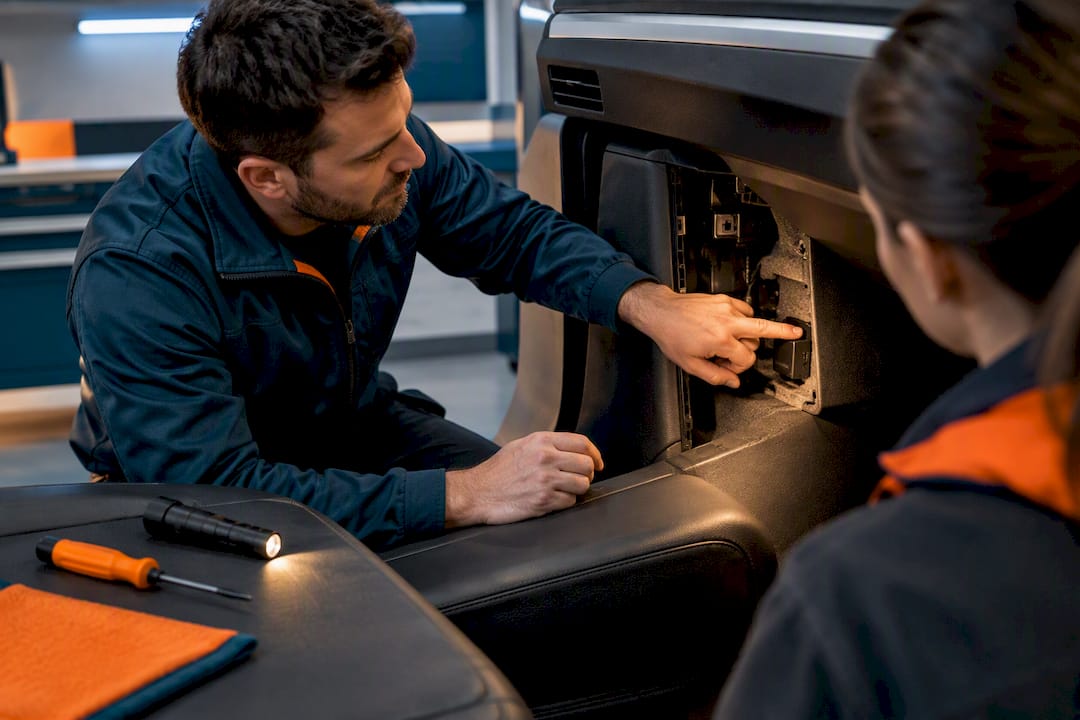
Hardwired, engine-bay or chassis-mounted trackers are harder to find and harder to remove. Professional installers typically favour:
- Wiring routed inside the engine loom, away from obvious harnesses
- Mounting points near the bulkhead or chassis rail rather than under the seat
- A separate backup unit hidden elsewhere in the vehicle, independent of the main power feed
That last point is the one owners underestimate. A concealed main tracker with tamper alerts is strong. A concealed main tracker plus a hidden backup unit is what actually defeats someone who finds and disables the first device.
Why professional fitting and tamper testing change the outcome
Anyone can buy a tracker online. Few devices survive a genuinely determined search, and that’s where installation quality separates working security from an expensive light on a dashboard.
When a device is hardwired into the loom, mounted off the obvious harness points, and backed by a hidden secondary unit, it takes considerably longer to locate and disable than the 48–72 hour window most opportunist thieves work within before giving up or getting caught.
LRD Track’s own pro-fitting tests against a 48–72 hour tamper and evasion window back that up: professionally installed units on Land Rovers routinely outlast the timeframe in which casual searches succeed. Monitoring centres use the tamper and jamming alerts generated during that window to escalate straight to police, following the same cooperative model that recovery-focused vendors like LoJack have used for years.
Pro Tip: Ask your installer to show you where the backup unit sits before you drive away. If you can find it in under a minute, so can a thief.
How to choose an anti hijack tracker: a buyer’s checklist
Feature lists are only useful once you turn them into decisions. Work through these five questions before you commit.
- Does your insurer require Thatcham approval? Check your policy wording; many insurers on high-value vehicles now insist on it.
- Do you want 24/7 monitored response or self-monitoring via app? Monitored support means a human escalates to police the moment an alert fires, day or night.
- Is hardwired concealment worth the extra cost for your vehicle? For anything approaching six figures in value, the answer is almost always yes.
- What is the vendor’s immobilisation safety procedure? Ask specifically how they confirm a vehicle is stationary before cutting fuel or ignition.
- What’s the full 12-month cost? Add the one-off installation fee to the monthly subscription and ask for one bundled figure, not two separate quotes.
Getting these five answers in writing before you buy saves an argument with an installer later, and it tells you fast whether you’re looking at a genuine vehicle security solution or a box with a SIM card in it.
What to do in the first 72 hours after a hijack or theft
The first three days after a theft decide most recovery outcomes. React in this order.
- Your safety first. If you’re still with the vehicle during a hijack, do not resist. Call 999 once you’re safe.
- Alert your monitoring centre immediately and ask them to share the live tracking link directly with the attending police officers.
- Don’t attempt to follow or intercept the vehicle yourself. Let police coordinate the recovery using the live feed.
- Keep the app and monitoring line open. Continuous location updates in the first 48 to 72 hours are when most car recovery tracking successes happen, before a vehicle can be stripped, re-plated, or shipped out.
- Follow up in writing with your monitoring provider and insurer, referencing the incident timestamp and tracker ID.
LRD Track’s own 72-hour recovery plan sets out exactly this sequence for Land Rover owners, built around the same window where pro-fitted trackers consistently outlast tamper attempts.
Field experience and practical trade-offs
Every anti hijack setup involves a trade-off, usually cost against coverage, or concealment against convenience. Cheaper, visible plug-in units are better than nothing, but they’re the first thing a thief checks. Correctly specified, hardwired systems with 24/7 monitoring cost more upfront but materially shift recovery odds in your favour. For a high-value Land Rover, that means Thatcham-approved, hardwired, and monitored, not one of those three, all of them.
— Will
Protecting your Land Rover with LRD Track
Unlike generic trackers built for any car, LRD Track designs its systems specifically around Defender, Discovery, and Range Rover platforms, which means concealment points, wiring routes, and immobilisation logic that actually fit how these vehicles are built and how thieves target them.
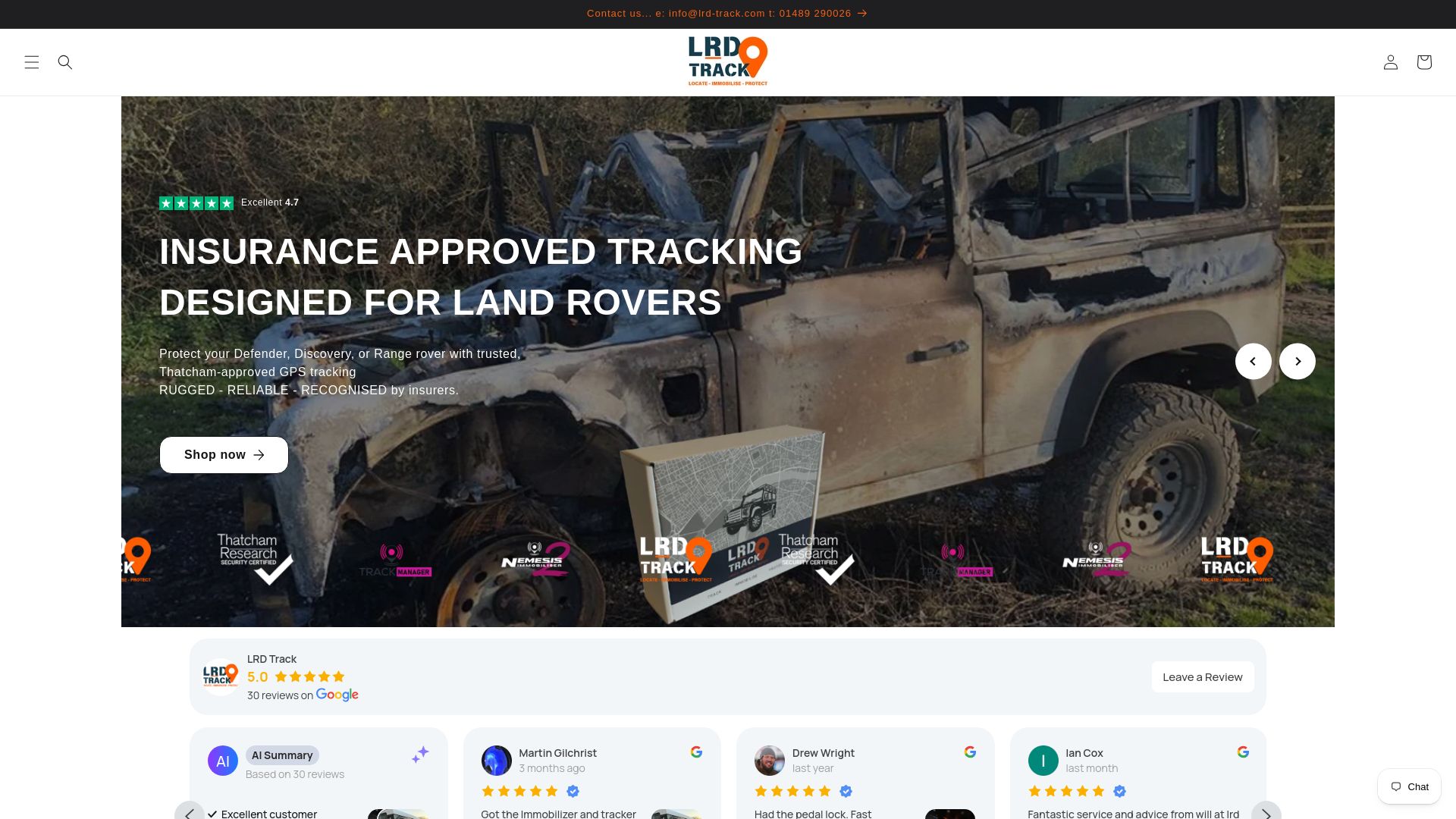
The range covers everything from the entry-level S7 and S5 Insurance Approved Trackers through to the S5 Plus Ultra Backup system with immobiliser and secondary hidden unit, alongside the DEFEND and DEFEND-Plus lines built for Defender and Series models. Booking is straightforward: submit an enquiry, arrange a site visit within the UK, get the unit professionally fitted and hidden, then activate monitoring and your subscription; current pricing details are on the LRD Track website. If your Land Rover needs Thatcham-approved protection that’s actually built for it, start with the tracker collection for your model and get a fitting quote today.
Sources
For deeper technical detail, LRD Track’s own testing covers how thieves search for trackers and why pro fitting outlasts the 48–72 hour window, alongside a breakdown of essential functions to check in any vehicle tracking system and guidance on what actually helps recover a stolen vehicle in real time. Vendor documentation from Road Angel, SafeTag, and Solid GPS informed the feature comparisons above.
FAQ
What is the best anti hijack tracker for a high-value vehicle?
There’s no single “best” device across all vehicles, but for high-value cars the strongest setups combine hardwired concealment, Thatcham approval, and 24/7 monitored response rather than a plug-in unit alone. For Land Rovers specifically, LRD Track’s Thatcham-approved, model-specific systems are built around exactly this combination.
Is it illegal to put a tracker on a vehicle in the UK?
Fitting a tracker to a vehicle you own is legal. Using tracking technology to covertly surveil someone else’s vehicle or movements without consent raises separate privacy and lawful-use concerns that have limited tracker use for surveillance purposes in other jurisdictions, so anti hijack systems should always be fitted to your own vehicle for security, not used to monitor other people.
What’s the difference between an anti hijack tracker and a standard car alarm?
A car alarm reacts to entry or movement while the vehicle is stationary and does nothing once it’s driven away. An anti hijack tracker keeps working after the vehicle moves, tracking location, detecting tamper or jamming attempts, and allowing remote immobilisation once it’s safely stationary.
How much does an anti hijack tracker cost?
Costs vary by product line and whether you need an immobiliser bundled in. LRD Track’s DEFEND tracker subscription runs from £6 a month, with DEFEND-Plus (including immobilisation) at £10 a month, plus a one-off hardware and fitting cost; full current pricing for each model is listed on the LRD Track product pages.
Can thieves find and disable a hidden anti hijack tracker?
A poorly hidden or plug-in unit can be found and removed within minutes. Professionally fitted, hardwired systems with a concealed backup unit are built specifically to outlast the 48–72 hour window in which most opportunist tamper attempts either succeed or give up.