
Most 3G-only car trackers will stop transmitting once your mobile operator switches off its 3G network in your area, though the GPS positioning itself stays perfectly accurate. The fix is straightforward: check whether your device is 3G-only, then swap to a 4G-enabled, Thatcham-approved unit if it is. Don’t wait for the switch-off notice to land, act now and contact your installer or insurer while you still have options.
TL;DR:
- Most 3G-only car trackers will stop transmitting once 3G networks are phased out, but GPS positioning remains accurate and unaffected.
- Checking whether your device is 3G-only requires only a few minutes to verify model and IMEI details with your installer or spec sheet.
- Upgrading to a Thatcham-approved 4G tracker involves a hardware replacement, not just a software update, and must be properly certified to maintain insurance approval.
- Relying on roaming SIMs or backup-positioning devices can only buy limited extra time, as 2G networks are also planned for decommissioning in the future.
- Prioritise upgrading devices in high-value vehicles or those linked to insurance policies before local network switch-offs force emergency replacements.
Table of Contents
- What the 3g shutdown car tracker problem actually means
- How to check if your tracker uses 3G
- Upgrade and workaround options for UK owners
- Does upgrading your tracker affect your insurance?
- What upgrading will cost and when to schedule it
- How Lrd-track supports Land Rover owners through the transition
- Will an upgraded tracker work with your existing vehicle systems?
- Prioritising upgrades without making costly mistakes
- Get your Land Rover ready before your signal drops
- Sources
- FAQ
What the 3g shutdown car tracker problem actually means
Your tracker uses two entirely separate systems, and only one of them is under threat. GPS satellites broadcast position data from orbit, and nothing about the 3G shutdown touches that. What’s disappearing is the cellular link your tracker uses to send that position data back to you or your monitoring centre.
Mobile operators are repurposing 3G spectrum for 4G and 5G capacity, which is why older 3G-only modems inside trackers are being left behind. Your tracker’s GPS chip still “sees” the satellites just fine; it simply has no way to phone home.
The result is a tracker that looks like it’s working but silently isn’t. No error message, no warning light, just a growing gap in your app’s location history.
The UK switch-off isn’t a single flip-the-switch date. It’s a phased withdrawal running across different operators on different timetables, and some networks are leaning on 2G as a stopgap in the interim. That matters because:
- Coverage loss can happen gradually, area by area, rather than nationwide overnight
- A tracker that “still works” today may stop working within months as your local mast is upgraded
- 2G fallback buys some units limited extra time, but it’s not a permanent solution as 2G networks face their own eventual retirement
How to check if your tracker uses 3G
You don’t need technical training to work this out, just five minutes and your device details.
- Find your model and IMEI number. Check the tracking app, a sticker underneath the dashboard, or the paperwork from your original installation.
- Look up the spec sheet or ask your installer. Send the model number and IMEI to whoever fitted it and ask directly whether the modem is 3G-only.
- Ask three pointed questions: Is this unit 3G-only? Does it support 4G or multi-network roaming? Can you supply Thatcham and insurance paperwork if I upgrade?
- Watch for early warning signs, including long gaps in your position history, an app message reporting “no cellular network,” or texts from your SIM provider about network changes.
If your installer can’t answer the first question confidently, that’s a red flag in itself, particularly for a vehicle where insurance-approved tracking is part of your policy.
Upgrade and workaround options for UK owners
The most durable fix is a hardware swap, not a software patch. A a 4G-enabled tracker approved by certification authorities replaces the modem entirely, so your device connects to networks that will remain live for years, not months.
Other approaches can help, but each comes with limits worth understanding before you rely on them:
- Roaming or multi-network SIMs hop between operators to find a live signal, reducing short-term disruption without solving the underlying problem if 3G and 2G are both eventually withdrawn.
- Dual-band or backup-positioning devices, which pair GNSS with additional connectivity, add resilience for high-value vehicles but cost more and need professional deployment.
- Anti-jamming features matter separately from the shutdown issue. Modern telematics can detect deliberate GPS interference and flag it in real time, which is a genuine layer of protection against theft methods that have nothing to do with network generation.
Pro Tip: Ask your installer specifically whether a “firmware update” is being offered as a fix. In most cases, a 3G-only modem is physical hardware that cannot be reflashed into a 4G radio, so a genuine upgrade means a genuine swap.
Does upgrading your tracker affect your insurance?
Thatcham certification isn’t just a badge, it’s tied to your policy wording. Many insurers specify Thatcham-approved systems for high-value vehicles like Defenders, Discoverys, and Range Rovers, and some offer possible premium benefits for certified tracking.
Here’s the part owners often miss: swapping hardware can affect your certification status if you’re not careful.
- Thatcham approval depends on specific hardware versions, so replacements should be appropriately certified to maintain validity.
- Which? warns that swapping trackers may require insurer notification, and skipping that step can create disputes at claim time.
- Always get written confirmation from your insurer and an installation certificate from your fitter, and keep both with your policy documents.
What upgrading will cost and when to schedule it
Start with an audit, not a purchase order. List every vehicle, flag which ones carry insurer-mandated tracking, and prioritise those alongside anything parked in a higher-theft-risk postcode.
- Audit first. Confirm which devices are 3G-only before committing to any spend.
- Prioritise by exposure. High-value vehicles and those with insurance-linked tracking clauses go first.
- Cost factors to weigh include the hardware model, professional installation labour, any SIM or subscription changes, and possible insurer admin fees, all of which vary enough that a single headline price isn’t realistic.
- Time it around renewal. Booking installation ahead of your insurance renewal date avoids a scramble, and beats waiting for your operator’s local switch-off notice to force the issue.
How Lrd-track supports Land Rover owners through the transition
This is exactly the gap Lrd-track was built to close for Defender, Discovery, and Range Rover owners. Every device in the range is Thatcham-approved from the outset, so you’re not left guessing whether a replacement unit will satisfy your insurer.
What that looks like in practice:
- Thatcham-approved 4G hardware, fitted by professional installers UK-wide rather than posted out for self-installation.
- Real-time tracking through a mobile app, with 24/7 monitoring behind it.
- Installer-issued paperwork you can hand straight to your insurer, cutting the back-and-forth that often causes upgrade delays.
That paperwork trail matters more than owners expect. An insurer querying your cover after a hardware change wants proof, not a verbal assurance, and having it ready shortens the conversation considerably.
Will an upgraded tracker work with your existing vehicle systems?
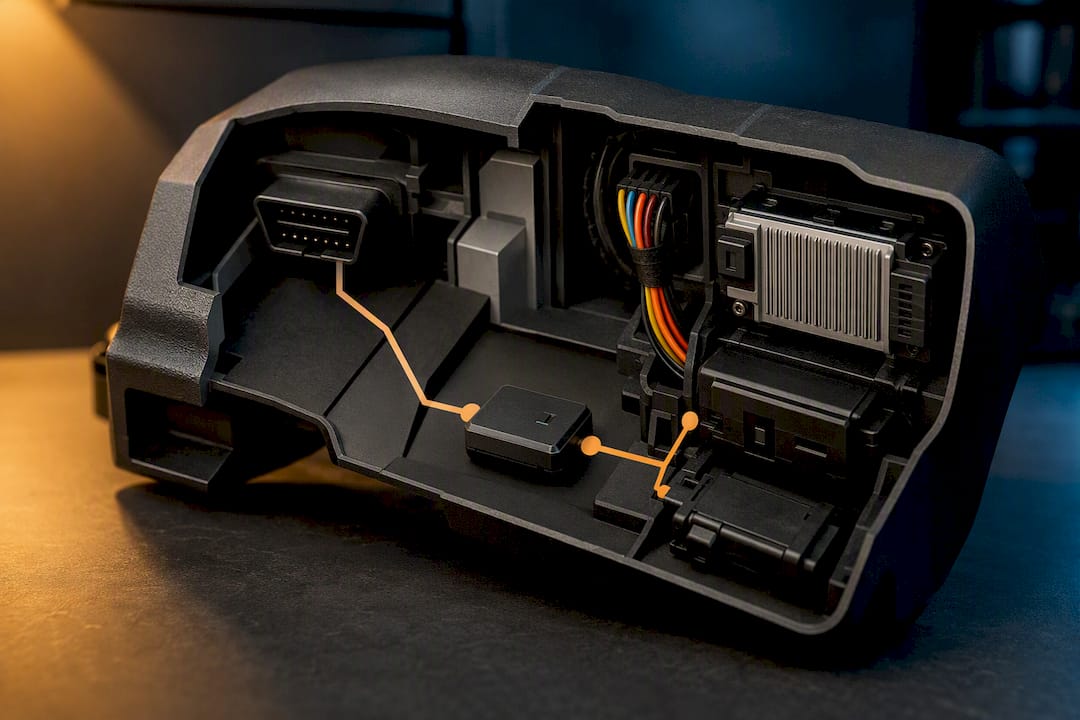
A 4G tracker replacement generally slots into the same physical and electrical setup your 3G unit used, connecting through your vehicle’s wiring loom via the OBD port or a hardwired install rather than requiring changes to the car’s own onboard computer. Your Land Rover’s factory systems, infotainment, and any existing alarm or immobiliser aren’t touched by the swap itself.
Where compatibility questions genuinely arise is around integration with third-party apps or fleet management software. If you’re running a fleet dashboard that pulls data from your current trackers, check with your installer whether the replacement unit reports in a format your existing platform can read. Most professional-grade trackers use standard reporting protocols, but subscription-linked apps sometimes require you to migrate your device list rather than simply swap hardware and expect continuity.
Driver identification features, geofencing alerts, and tow-away notifications, the extras that go beyond basic location, typically depend more on the tracker’s own software than on your vehicle’s systems. That’s good news: it means an upgrade rarely forces you to relearn how your alerts work, since the app interface and notification logic usually carry over even when the modem underneath has changed completely.
One area worth double-checking is remote immobilisation, if your current system includes it. That feature ties into your vehicle’s electronics more directly than passive tracking does, so confirm with your installer that the replacement unit’s immobilisation function has been tested against your specific model year before you rely on it.
Prioritising upgrades without making costly mistakes
The biggest mistake owners make is treating this as optional until a renewal notice or a signal dropout forces the issue. By then, you’re booking an emergency install instead of a planned one.
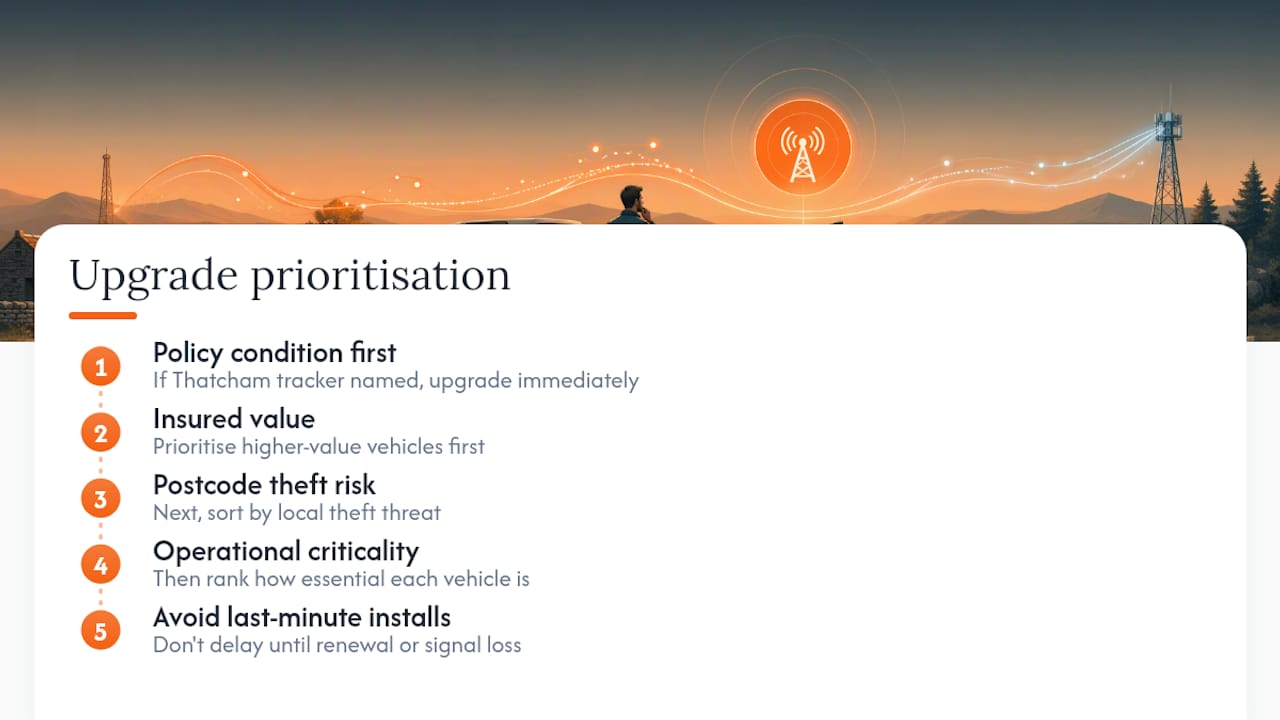
Prioritise by insured value first, then by postcode theft risk, then by how operationally critical the vehicle is to you or your fleet. If your policy names a Thatcham-approved tracker as a condition of cover, that vehicle jumps to the top of the list, no exceptions.
And don’t assume a firmware update will quietly solve this. A 3G-only modem is a physical limitation, not a software one.
— Will
Get your Land Rover ready before your signal drops
A professional specialist provider is the practical route to sorting this properly, rather than discovering the problem when your app goes quiet. Where a roaming SIM or a wait-and-see approach leaves you exposed to patchy coverage as operators wind down 3G, a hardware audit and a Thatcham-approved 4G swap settles the question permanently.
Installations typically include professional fitting, real-time app tracking, and monitoring, plus documentation insurers commonly require. If you’re not sure where your current device stands, that’s the first thing worth resolving. Browse the Defender tracker range or check the S7 insurance-approved tracker for Classic Defenders, and get your installation booked before your local network switch-off catches you out.
Sources
For official timelines, see the Commons Library briefing and Which?'s switch-off guidance; check Gov for local operator notices.
- Insurance-approved vehicle tracker: Thatcham certified systems
- The UK 3G network switch-off: research briefing (Commons Library)
- The UK 3G network switch-off: what you need to know - Which?
FAQ
Will my 3G phone or tracker still work in 2026?
It depends on your operator’s local timetable, since the UK shutdown is phased rather than a single date, but a 3G-only device will eventually lose its cellular connection regardless of area.
What is the best car GPS tracker without a monthly fee in the UK?
Genuinely subscription-free trackers are rare among insurance-approved options, since ongoing monitoring and data connectivity typically require a running SIM cost, so weigh any “no fee” claim against whether it still carries Thatcham certification.
Will my phone still work when 3G is switched off?
Most modern smartphones default to 4G or 5G already and won’t be affected, but older handsets that rely solely on 3G for calls and data will lose service once your operator withdraws it locally.
Can my car be tracked without me knowing?
Legally installed trackers should be disclosed to the vehicle’s owner or driver, and UK rules on tracker legality set out what installers and employers must tell you before fitting one.
Does switching to a 4G tracker guarantee better insurance terms?
Not automatically. Thatcham-approved 4G hardware can support insurer-recognised benefits, but confirmation always comes from your specific insurer, not the device alone.