
If you’re a Land Rover owner searching for the right recovery solution, the answer is simple: choose a Thatcham-approved tracker, professionally installed, with monitored recovery behind it. Some providers fit that brief for UK Land Rover owners, with insurer recognition, widespread fitting coverage, and 24/7 monitoring centres ready to respond if a vehicle moves without permission.
TL;DR:
- Only Thatcham-approved trackers with S5 or S7 categories meet UK insurer standards and provide reliable, tamper-resistant vehicle recovery.
- Professional, covert installation by certified fitters ensures the device is discreet and resistant to theft tactics.
- The monitoring centre actively tracks vehicles 24/7, alerting police and owners immediately if a theft occurs or tampering is detected.
- Confirm the tracker’s approval, coverage, and features like driver identification or immobilisation before purchase and installation.
- Proper documentation of installation and Thatcham certification is essential for insurance discounts and quick claims processing.
Table of Contents
- What is a change tracker provider UK Land Rover owners actually need?
- Why insurer-recognised, professionally fitted trackers work
- What should you ask before choosing a provider?
- How do vehicle trackers and recovery services actually work?
- What does installation actually cost, and when should you tell your insurer?
- Why does LRD Track’s Land Rover focus matter?
- Does your specific Land Rover model change what you need?
- Can a tracker actually lower your insurance premium?
- How do you actually go from browsing to a fitted, working tracker?
- How do UK providers compare on reputation and reach?
- Would you actually be better off with a cheaper tracker instead?
- Get your Land Rover fitted with a Thatcham-approved tracker
- Where to verify the claims in this guide
- Sources
What is a change tracker provider UK Land Rover owners actually need?
Search “change tracker provider UK” and you’ll hit a wall of confusing results. Netwrix ChangeTracker is a genuinely useful product, but it tracks configuration changes on IT servers, priced at around £425.58 per device per year on the G-Cloud marketplace. Not remotely what you need if someone’s driving off with your Defender.
There’s also a UK-registered management consultancy called Change Tracker Limited, and document comparison software like Novaplex Compare that flags edits in Word files. None of these track vehicles. None offer police liaison. None involve a monitoring centre watching your car’s location at 3am.
What you’re actually looking for is proper UK change tracking software for vehicles: a Thatcham-approved GPS tracker, fitted by a professional, backed by a monitoring team that can act the moment your Land Rover moves without permission. That’s a different product entirely, and this guide focuses on it.
Why insurer-recognised, professionally fitted trackers work
Thatcham Research sets the benchmark that UK insurers actually trust. If a tracker carries Thatcham approval, your insurer knows it meets a recognised standard for tamper resistance, backup power, and reliable location reporting. Without it, you’re relying on a consumer gadget that may not satisfy your policy’s security requirements at all, and could leave you exposed if you ever need to make a claim.
Covert installation matters just as much as the device itself. A tracker bolted somewhere obvious gets found, and once a thief finds it, it gets ripped out. Professional fitters hide the unit, run wiring discreetly, and often use multiple mounting points so there’s no single weak spot for a thief to target.
✅ What a properly monitored recovery service gives you:
- Thatcham-approved hardware that insurers recognise on your policy documents
- Covert, professional installation that resists tampering and removal
- A monitoring centre watching your vehicle’s location around the clock
- Direct liaison with UK police the moment a theft is confirmed
- Alerts sent straight to your phone if your Land Rover moves unexpectedly
For Land Rover owners specifically, this combination matters more than for most other vehicles. Defenders, Discoverys, and Range Rovers sit near the top of UK theft targets, and organised gangs know exactly which models to go after. Fleet operators running multiple Land Rovers face the same exposure multiplied across every vehicle on the yard.
Pro Tip: Ask your fitter to show you the Thatcham category sticker after installation, and photograph it. Insurers sometimes ask for proof of the approval level, not just confirmation a tracker exists.
What should you ask before choosing a provider?
Before you commit to any provider, run through this checklist. It takes ten minutes and saves you from an expensive mistake.
- Confirm the Thatcham category. Ask whether the device is S5 or S7. S5 combines tracking with driver identification; S7 is a self-powered backup tracker often specified for vehicles where the primary device could be disabled.
- Check insurer recognition directly. Don’t take a salesperson’s word for it. Ask for a certificate or written confirmation you can hand to your own insurer.
- Ask about monitoring hours and response times. “24/7” should mean an actual UK-based operating centre, not a call centre that only answers during office hours.
- Confirm covert fitting and warranty terms. Where does the fitter mount the unit, and what happens if it fails within the warranty period?
- Ask about driver ID and immobilisation features. These affect both security and your excess in some policies.
- Check the mobile app and data handling. Who sees your location data, and can you control access if you sell the vehicle?
Red flags to walk away from:
- Hardware-only sellers who ship a device with no fitting service
- Monitoring centres based outside the UK with no clear police liaison process
- Vague answers about which areas their fitters actually cover
- No written proof of Thatcham approval you can show your insurer
- Contracts that lock you in with no clear cancellation terms
On pricing, always separate the components: device cost, professional fitting, activation, and the recurring monthly monitoring fee. A provider quoting one number for “everything” without breaking it down is worth questioning.
How do vehicle trackers and recovery services actually work?
Most Thatcham-approved trackers combine GPS for pinpoint location with GSM for sending that data over the mobile network. Higher categories such as S7 often add VHF or independent backup power, so the tracker keeps transmitting even if a thief cuts the main power supply or drives into an area with poor GPS signal.
The monitoring centre isn’t just watching a dot on a map. Operators track real-time location, speed, and heading, and they get automatic tamper alerts the moment someone tries to disconnect the unit or move the vehicle outside expected hours. That’s the trigger point: an alert flags, an operator verifies it against your usual patterns, and if it looks like theft, the centre contacts police directly with live location data.
Features that actually matter for recovery, not just novelty:
- Covert mounting in multiple potential locations, not one obvious spot
- Battery backup independent of the vehicle’s own power
- Tamper detection that fires the moment wiring is disturbed
- Remote immobilisation to stop the vehicle being driven away
It’s worth knowing the difference between this and standard fleet telematics. A telematics system reports routes, mileage, and driver behaviour for management purposes. A stolen-vehicle recovery service exists purely to get your vehicle back after theft, with a VHF car tracker often forming the backup layer when GPS and GSM signal alone aren’t enough.
What does installation actually cost, and when should you tell your insurer?
Budget for four separate cost elements: the tracker hardware itself, professional installation, an activation fee, and then a recurring monthly monitoring charge. Providers structure these differently, so ask for each cost broken out rather than accepting one bundled figure.
Booking to activation usually takes a matter of days once a fitting slot is confirmed, not weeks. Once the tracker is live and the Thatcham certificate issued, that’s your cue to update your insurer, not before. Insurers generally want confirmation the device is actually fitted and active, not just ordered.
Before you finish the process, make sure you:
- Get written confirmation of the installation date and fitter’s details
- Receive the Thatcham certificate or equivalent proof of approval
- Understand the warranty period and what it covers if the unit fails
- Clarify cancellation terms on the monitoring subscription before signing
Keep every piece of paperwork from this process. If you ever need to make an insurance claim, having the installation evidence ready speeds up the conversation considerably and removes any doubt about when cover began.
Why does LRD Track’s Land Rover focus matter?
Specialising in one manufacturer sounds narrow until you consider how Land Rover models get stolen. Defenders, Discoverys, and Range Rovers each have different mounting points, different electronics, and different weak spots that generic fitters may not know well. A provider who only works on Land Rovers has seen more of those specific vulnerabilities than one splitting attention across every make on the road.
LRD Track’s approach centres on four things: Thatcham-approved devices matched to the model, nationwide professional installation, a mobile app that sends immediate alerts, and a monitoring team available around the clock.
The gap between owning a tracker and owning a tracker that actually gets your vehicle back usually comes down to installation quality and monitoring response, not the device’s spec sheet alone.
What to check before you commit:
- Confirm the tracker is rated for your exact model and model year
- Ask for the Thatcham category and cross-check it against your insurer’s requirements
- Review the Thatcham-approved tracker collection for the option that matches your vehicle
- Request evidence of nationwide fitting coverage before booking
Does your specific Land Rover model change what you need?
Not every Land Rover needs the same tracker category, and this is where a lot of owners overpay or underspec. Classic Defenders built before the modern electronics overhaul often carry less built-in security, which is why S7 trackers with independent backup power tend to suit them better than the primary electronics of the vehicle alone.
Newer Range Rovers and Discoverys already come with factory alarm systems and some connectivity, but that doesn’t replace a dedicated recovery tracker. Factory systems focus on deterrence and convenience features, not stolen-vehicle recovery with police liaison. An S5 device layered on top gives you driver identification alongside tracking, which matters for fleet vehicles where multiple people drive the same car.
Beyond Land Rover, plenty of other high-value UK vehicles face the same theft pressure. Popular executive saloons and premium SUVs from other manufacturers show up on the same theft lists, and the mounting and wiring considerations differ by model just as they do across Land Rover’s range. If you run a mixed fleet, don’t assume one tracker specification fits every vehicle on it. Ask any provider whether their hardware and fitting approach is genuinely model-specific, or whether they’re using a one-size-fits-all unit and hoping it holds.
Can a tracker actually lower your insurance premium?
Many UK insurers offer a discount once a Thatcham-approved tracker is fitted and registered, though the size of that discount varies by insurer and by your existing policy terms. The mechanism is straightforward: your vehicle carries lower theft risk in the insurer’s eyes, so the premium reflects that.
To claim it, you generally need to do three things in order. First, get the tracker professionally fitted and activated, not just delivered. Second, obtain written proof of the Thatcham category from your installer, usually a certificate with the device’s unique identifier. Third, send that certificate to your insurer and ask them to update your policy record.
Timing catches people out here. Some owners assume the discount applies automatically once they’ve bought a tracker, but insurers won’t backdate it and won’t apply it based on an order confirmation alone. The device has to be live, and they need documented proof.
It’s also worth calling your insurer before you buy, not after. Ask them directly which Thatcham category they require and whether they have a preferred list of accepted providers. That single phone call can save you from fitting a device that technically works but doesn’t unlock any premium reduction because it falls short of their specific requirement.
Keep a copy of every certificate and confirmation email indefinitely, not just until the policy renews. If you switch insurers later, the new provider will want the same proof, and chasing down old paperwork months later is far harder than filing it properly now.
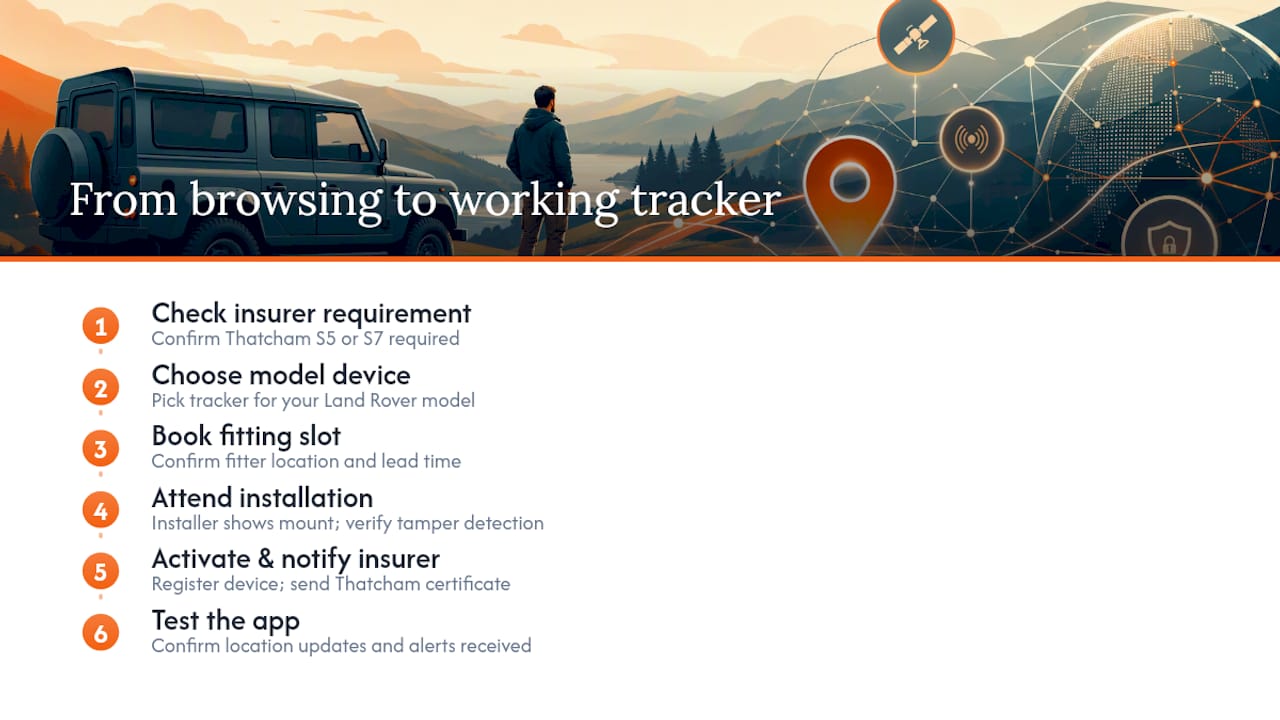
How do you actually go from browsing to a fitted, working tracker?
The process is more straightforward than most owners expect, provided you follow it in the right order rather than skipping steps to save time.
Step one: check your insurer’s requirement first. Before buying anything, confirm which Thatcham category your policy expects, S5 or S7, so you’re not fitting the wrong device.
Step two: choose the device matched to your model. Browse a collection built for your specific vehicle, such as the Range Rover tracker range, rather than a generic listing.
Step three: book a fitting slot. Nationwide coverage means you shouldn’t need to travel far. Confirm the fitter’s location and lead time when you book.
Step four: attend installation. Professional fitting typically takes a few hours. Ask the fitter to show you the mounting location and confirm tamper detection is live before they leave.
Step five: activate the monitoring service. This is separate from installation. The device needs to be registered on the monitoring platform before the 24/7 centre can actually watch it.
Step six: register with your insurer. Send the Thatcham certificate and activation confirmation to your insurance provider and request written confirmation the discount has been applied.
Step seven: test the app. Confirm you’re receiving location updates and alerts on your phone before you consider the job finished.
How do UK providers compare on reputation and reach?
The change tracker market splits cleanly into two camps once you strip away the IT software confusion. One camp sells hardware with little to no installation support, leaving fitting to third parties of variable quality. The other camp builds the entire service around Land Rover models specifically, from device selection through professional fitting to ongoing monitoring.
Reputation in this space tends to hinge on three things: whether the provider’s monitoring centre is genuinely UK-based and available around the clock, whether their fitting network actually covers the country rather than a handful of regions, and whether customers report the alerts and recovery process working as promised when it matters. Generic multi-brand providers often win on price but lose on model-specific fitting knowledge, particularly for older Defenders with non-standard wiring.
Regional fitting coverage is worth scrutinising regardless of which provider you choose. Some installers, like those detailed on Performance Tuning NI’s coverage page, publish exactly which areas they reach, which is the standard of transparency you should expect before booking anyone to fit security hardware on your vehicle.
Would you actually be better off with a cheaper tracker instead?
Cheaper consumer trackers exist, and for a low-value runaround car with no insurance requirement attached, one might be perfectly reasonable. But that’s not the situation most Land Rover owners are in. These vehicles sit high on UK theft lists, and a device without Thatcham approval often won’t satisfy your insurer’s terms at all, discount or no discount.
The publisher’s view is straightforward: for a Defender, Discovery, or Range Rover, a professionally fitted, monitored, insurer-recognised tracker is the sensible baseline, not an upgrade. The theft patterns Land Rover owners actually face make a strong case for it. If you’re still unsure which category fits your model, LRD Track’s team can talk you through the specifics before you commit.
— Will
Get your Land Rover fitted with a Thatcham-approved tracker
Some providers specialise in keeping Land Rovers findable and recoverable when generic trackers and multi-brand fitters fall short on model-specific knowledge. Such providers’ fitters know precisely where a Defender’s wiring runs and where a Range Rover’s weak points sit.
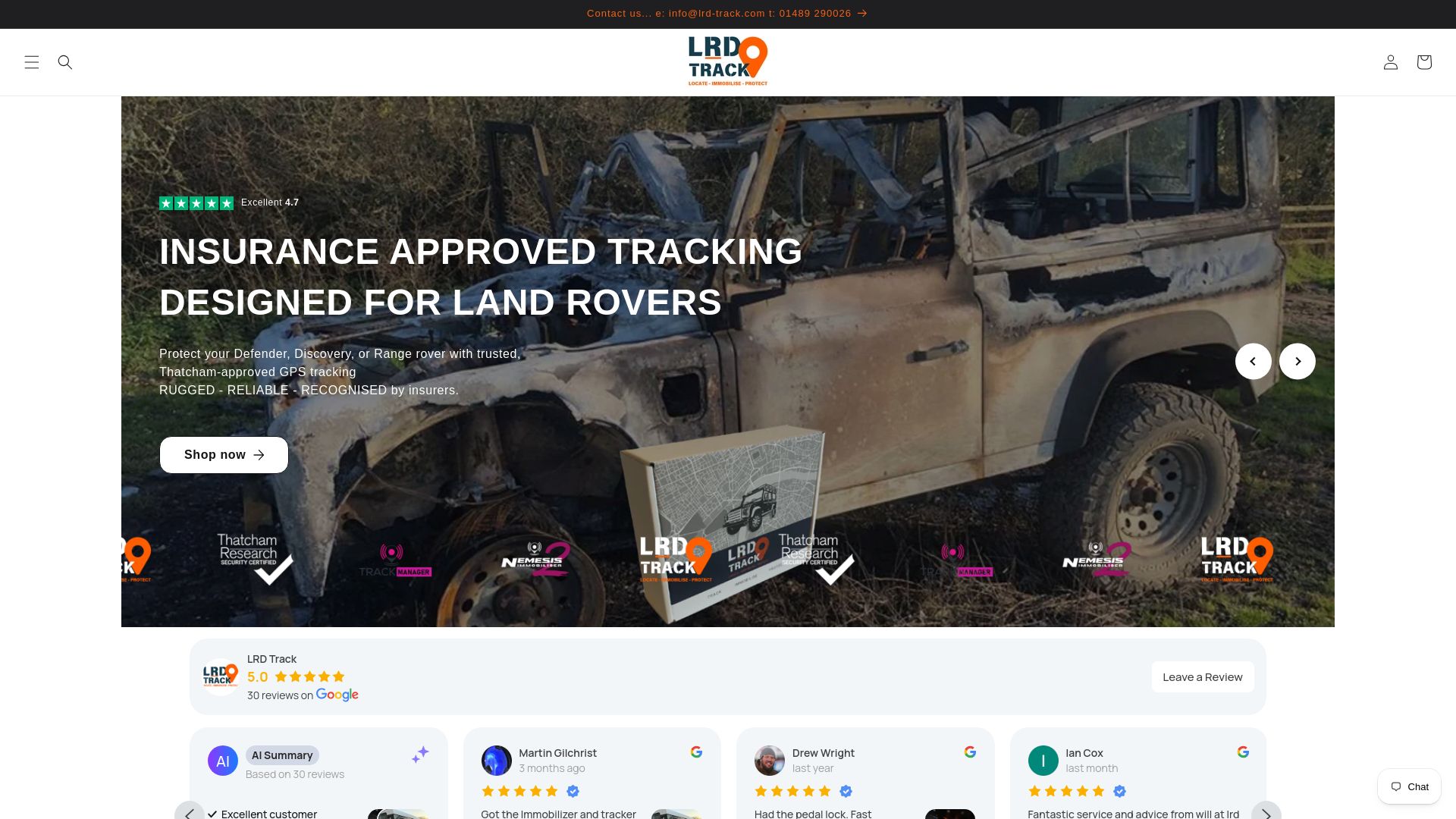
Getting started takes three steps. First, check what Thatcham category your insurer requires, S5 or S7. Second, browse the Thatcham-approved Land Rover tracker range and pick the device matched to your model. Third, book your fitting slot and get the monitoring service activated before you tell your insurer.
If you drive a classic Defender, the S7 Defender tracker is built specifically for that platform’s electronics. For newer models needing driver identification alongside tracking, the S5 tracker covers that requirement directly. Book your fitting today and get your Land Rover properly protected before it becomes a target.
Where to verify the claims in this guide
Cross-check Thatcham categories and insurer requirements directly, and note that terms like Netwrix ChangeTracker or Change Tracker Limited refer to unrelated IT and consultancy products, not vehicle security.