
For most Land Rover owners, the right journey history tracker is Thatcham S7. If your insurer names your model as high risk or you’ve been quoted with an ADR condition, you need S5. Check your policy wording today, then book a professional installer.
That distinction isn’t academic. S7 gives you 24/7 monitoring and GPS recovery data if your Defender or Discovery is stolen. S5 goes further, alerting the monitoring centre the moment your vehicle moves without an approved driver tag, which matters because Land Rover and Range Rover models sit near the top of most theft‑risk lists.
Here’s what to do right now:
- Pull up your insurance policy and search for “tracking device” or “Thatcham” in the wording.
- Save your insurer’s phone number and note down who you spoke to and when.
- Book a professional, concealed installation rather than a DIY fit.
Key Takeaways
Choosing the correct Thatcham category and booking professional, concealed installation are what keep your Land Rover’s insurance valid and your theft claim credible.
| Point | Details |
|---|---|
| Match category to insurer wording | Check your policy for “Thatcham,” “S5” or “S7” before buying anything. |
| S5 counters relay theft | Automatic Driver Recognition alerts monitoring the instant an unrecognised driver moves the vehicle. |
| Monitoring must meet BS 8591 | Trained operators verify alerts and liaise with police, unlike passive consumer trackers. |
| Keep your evidence trail | Save the installation certificate, serial number and activation email for insurer claims. |
| Lrd-track fits the compliant option | Lrd-track supplies Thatcham S7 and S5 systems built and fitted specifically for Land Rover models. |
Table of Contents
- What is a journey history tracker, and what’s the difference between S7, S5 and S5+?
- Why do professional installation and 24/7 monitoring matter so much?
- How do you confirm what your insurer actually requires?
- Which features actually matter for recovery and insurer evidence?
- What does it cost, and how long does installation take?
- What should you ask before you buy or book an installer?
- What has fitting hundreds of Land Rovers taught us about tracker installation?
- Ready to fit an insurance-approved tracker to your Land Rover?
- Frequently asked questions
- Sources
What is a journey history tracker, and what’s the difference between S7, S5 and S5+?
A journey history tracker, in the sense that matters for your insurance, is a Thatcham‑approved GPS system that logs your vehicle’s movements and reports to a monitored control centre around the clock. It’s not a consumer gadget bolted under the dashboard. It’s a certified security product with defined performance standards.
The three categories insurers reference most:
- S7 — 24/7 monitoring to BS 8591 standard, GPS locating to a narrow radius, health checks and resistance to attack. This is the recovery baseline.
- S5 — everything in S7 plus Automatic Driver Recognition, which flags the monitoring centre instantly if the vehicle moves without a paired driver tag.
- S5+ — adds remote immobilisation, giving the monitoring centre the ability to stop the vehicle after theft is confirmed.
Each category needs professional installation where your insurer specifies it. A self-fitted unit, however good the hardware, can fail that condition entirely.
Why do professional installation and 24/7 monitoring matter so much?
BS 8591-compliant monitoring plus a properly concealed fit are often the exact conditions your insurer wrote into the policy, and they directly affect whether police treat your vehicle as recoverable. A monitored centre operating to BS 8591 employs trained operators who verify a genuine theft signal before contacting police, rather than leaving you to work out what’s happening from a phone app at 3am.
Insurers frequently require Thatcham-approved trackers for high-value vehicles, and Land Rover and Range Rover models are commonly named on higher-risk lists — meaning the wrong category, or no monitoring at all, can leave a theft claim exposed.
A passive consumer tracker simply doesn’t offer that verification step. It shows you a dot on a map, nothing more.
Pro Tip: Ask your installer to book a post-fit health check within the first month. Concealed units can shift slightly during early driving, and a quick signal check catches problems before you ever need to rely on them.
How do you confirm what your insurer actually requires?
Start with the policy document, not a guess. Search for “tracking device,” “Thatcham category” or “S5”/“S7” in your wording, because insurers can and do reference specific categories as claim conditions.
Then work through this in order:
- Note the exact Thatcham category named (S5, S7, or unspecified).
- Check whether an approved installer list is mentioned.
- Call the insurer’s helpline and ask them to confirm the requirement in writing, by email.
- Keep that email alongside your policy documents.
Insurers most commonly push owners toward S5 when the vehicle is high-value, when the model appears on a theft-risk list, or when the policy has already flagged a relay-theft concern. Defender and Discovery owners see this condition more often than most.
Which features actually matter for recovery and insurer evidence?
Not every feature on a spec sheet earns its place. Some are there purely for insurer sign-off; others genuinely help police find your vehicle.
Insurer and police essentials:
- 24/7 monitoring to BS 8591 — the non-negotiable core of any approved system.
- GPS with roaming SIM — keeps location data flowing even if one network drops out.
- Exportable journey logs with timestamps — the breadcrumb trail investigators and insurers request after a theft.
- ADR (driver ID) — proves exactly when an unrecognised driver moved the vehicle.
- Battery backup and tamper resistance — keeps the unit reporting even if power is cut.
- Remote immobilisation — available on S5 Plus systems, where insurers specifically require it.
Convenience extras, like live tracking through a mobile app or driver privacy modes, are genuinely useful day to day. Just don’t confuse them with the certified features an insurer needs to see.
What does it cost, and how long does installation take?
You’re paying for three things: the hardware itself, professional fitting labour, and an ongoing monitoring subscription. There’s no way around the recurring fee, because that subscription is what funds the 24/7 monitoring centre and its trained operators.
Budget for a mid-range hardware cost, a separate installation charge for concealed professional fitting, and a monthly monitoring tier that typically scales with the category you choose (S5 and S5+ sit above S7 given the extra ADR and immobilisation hardware).
The realistic timeline:
- Confirm your insurer’s required category (same day, by phone or email).
- Order the matching hardware.
- Book your fitting slot, usually available within 48 to 72 hours.
- Have the installer activate and configure monitoring on the day of fitting.
- Send your insurer the installation certificate and serial number as proof.
What should you ask before you buy or book an installer?
Before any money changes hands, get clear answers on these points:
- What Thatcham category is this, and can you give me the certificate number?
- Is the installation professional and concealed, not a visible bolt-on?
- Which monitoring centre handles alerts, and does it meet BS 8591?
- What format is journey data exported in if my insurer or police request it?
- If it’s S5, exactly how does the driver tag work, and what happens if I lose it?
- Does the unit have a roaming SIM and battery backup?
- What’s the warranty period, and is the monitoring contract transferable if I sell the vehicle?
Once fitted, keep the installation certificate, device serial number and monitoring activation email somewhere you can find them fast. That’s the evidence your insurer will ask for first.
What has fitting hundreds of Land Rovers taught us about tracker installation?
Every Defender, Discovery and Range Rover hides its wiring loom differently, and a tracker fitted well on one model can be spotted in seconds on another if the installer doesn’t know the vehicle. Concealment isn’t guesswork. It’s model-specific knowledge built up fit after fit.
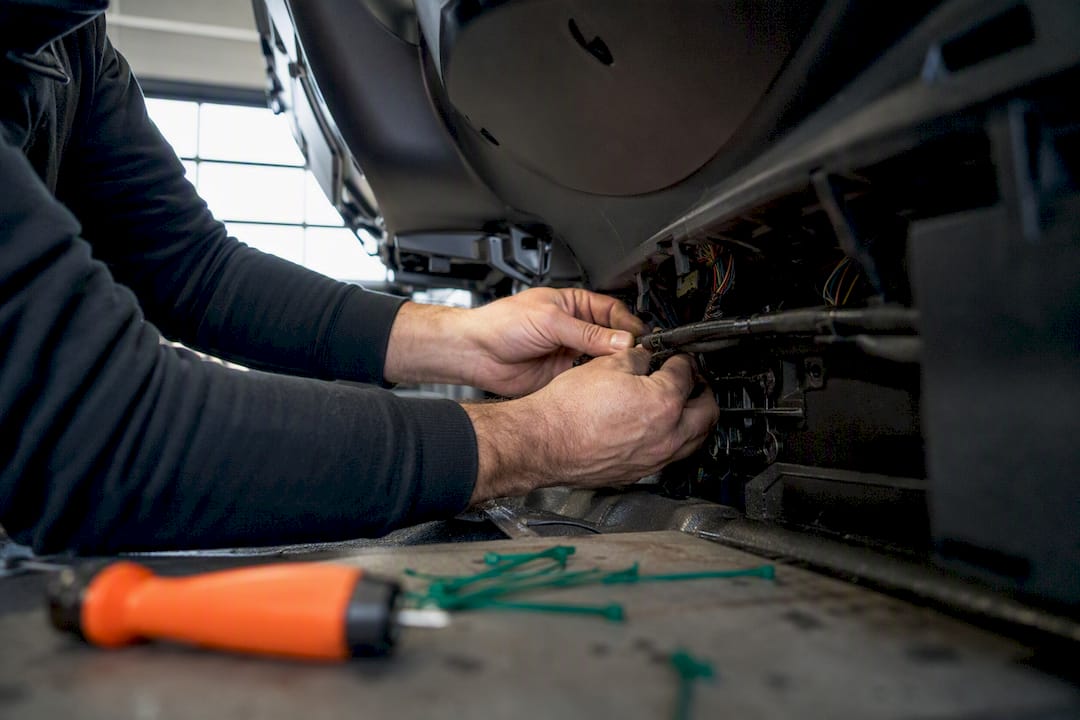
That’s the gap Lrd-track exists to close: Thatcham S7 approval on our core hardware, paired with fitment experience specific to Land Rover architecture, not generic aftermarket wiring diagrams.
Ready to fit an insurance-approved tracker to your Land Rover?
If your insurer has named S7 or S5, you don’t need to shop around endlessly to find a system built for your exact model. Lrd-track designs, supplies and fits Thatcham-approved trackers specifically for Defender, Discovery, Range Rover and Grenadier owners, so you’re not relying on an installer’s best guess at your vehicle’s wiring.
Every system comes with professional, concealed installation, BS 8591 monitoring, and driver ID where your policy requires it, backed by a clear warranty and monitoring contract you can check before you commit. If you need automatic immobilisation on top of ADR, the S5 Plus range covers that too.
Use the tracker comparison tool to match your exact model and insurer requirement to the right category, then book your fitting slot directly from the product page.
Frequently asked questions
Do I legally need a journey history tracker on my Land Rover? There’s no legal requirement, but many insurers make a Thatcham-approved tracker a condition of cover for Defender, Discovery and Range Rover models, particularly where relay theft risk is high.
Can I install the tracker myself to save money? Most insurer conditions specify professional installation. A DIY fit can invalidate the exact cover you bought the tracker to protect.
What happens if I choose S7 but my insurer wanted S5? Your theft claim could be challenged or reduced, since the wrong category can leave you outside your policy’s conditions. Always confirm in writing before you buy.
Does the monitoring subscription ever stop? No, the monitoring subscription runs continuously alongside your policy. Cancelling it removes the 24/7 monitoring your insurer is relying on.
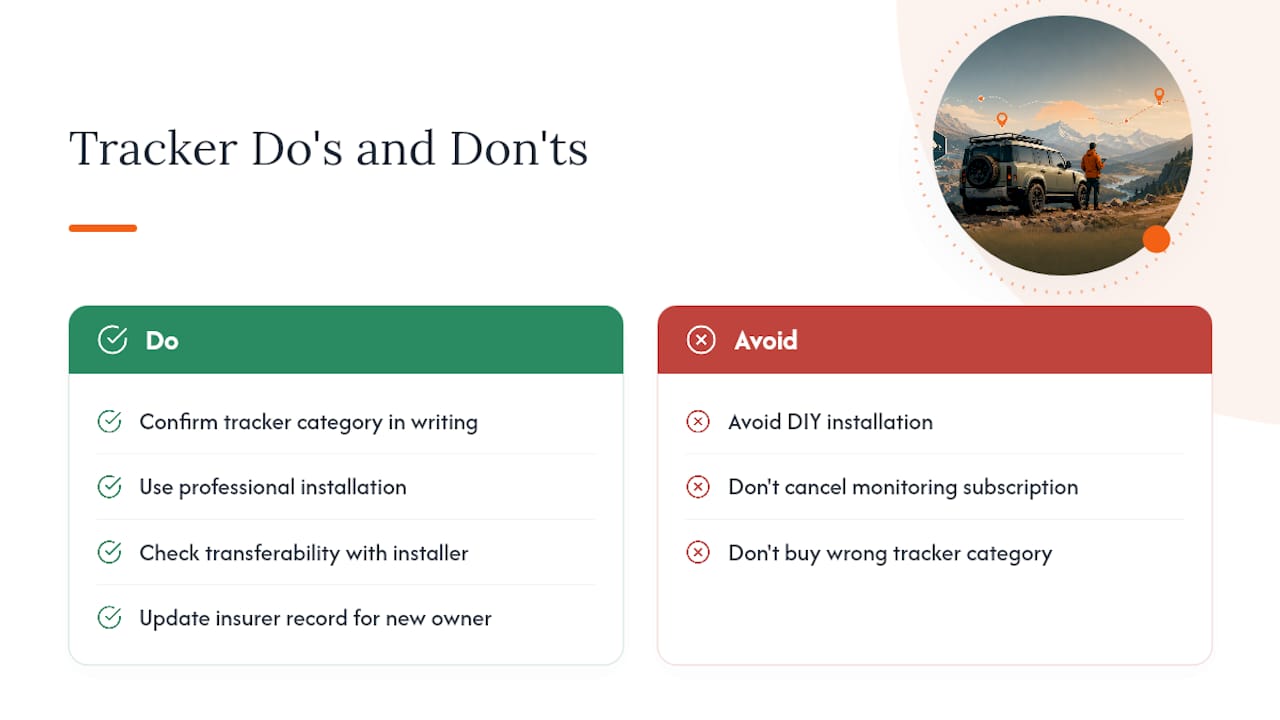
Can a journey history tracker be transferred if I sell my Land Rover? Some monitoring contracts and warranties are transferable. Check this specifically with your installer before you sell, and update the insurer record for the new owner.
Sources
- VEHICLE SECURITY PRODUCT DEFINITIONS GUIDELINES
- Insurance Approved Vehicle Tracker: A Complete Guide | insurd®
- Thatcham Approved Trackers UK 2026: S5 Vs S7 | KeepClose