
A hardwired car tracker, professionally fitted, is the strongest choice for any high-value vehicle. If insurance approval matters to you, pick a Thatcham-approved unit and get it fitted by an accredited installer rather than doing it yourself. That single decision affects your recovery odds, your premium, and whether your insurer will even accept the device as valid security.
Here’s what to do next, in order:
- Confirm compatibility first. Check the tracker works with your specific model, especially if you drive a Land Rover Defender, Discovery, or Range Rover, where wiring and CAN-bus access vary between years.
- Choose an insurance-approved package. Look for Thatcham certification and a monitored service with police liaison, not just a basic GPS dot on a map.
- Book professional installation. A qualified fitter protects your warranty, hides the unit properly, and wires it correctly the first time.
Skipping professional fitment to save a weekend afternoon is a false economy. A botched hardwire job can trip warning lights, damage airbag circuitry, or leave the tracker visible to anyone who pops the glovebox. Get it done right once.
Key Takeaways
Thatcham-approved hardwired trackers, professionally fitted and actively monitored, give high-value vehicles the strongest realistic protection against theft and insurance disputes.
| Point | Details |
|---|---|
| Choose hardwired over alternatives | Hardwired units resist tampering far better than battery or OBD2 trackers for high-value vehicles. |
| Verify Thatcham approval | Insurers commonly require Thatcham-approved devices for recovery-linked discounts and claims evidence. |
| Book professional installation | Fitting takes roughly 1 to 4 hours and protects your warranty against wiring mistakes. |
| Keep monitoring active | A lapsed subscription can strip your insurer’s required evidence trail after a theft. |
| Match hardware to your model | Lrd-track fits Thatcham-approved trackers, immobilisers, and looms specifically built for Land Rover models. |
Table of Contents
- What is a hardwire car tracker and how does it differ from other options?
- What features actually matter in a hardwired tracker?
- How long does professional installation actually take?
- Is it legal to fit a tracker, and does it actually help with insurance?
- What do subscriptions and running costs actually look like?
- What does LRD Track’s professionally fitted solution include?
- How do you choose the right tracker and what should you ask the installer?
- What’s a realistic timeline and cost range for fitting?
- How do leading hardwired tracker approaches compare?
- What should you take away from all this?
- What’s overrated and underrated in tracker buying decisions?
- Where can you get a Thatcham-approved tracker fitted properly?
- Frequently asked questions
- Sources
What is a hardwire car tracker and how does it differ from other options?
A hardwired car tracker connects directly into your vehicle’s electrical system, tapping constant power, ignition-switched power, and a chassis ground. Unlike a battery-powered unit you charge and swap, or an OBD2 tracker you plug into the diagnostic port, a hardwired device draws power permanently from the car itself. That means no charging schedule, no dead battery mid-journey, and far fewer opportunities for a thief to simply unplug it and drive off.
The three main approaches each suit different needs:
- Hardwired trackers connect permanently to the vehicle’s power system, sit hidden behind trim panels or under seats, and resist tampering because there’s nothing to unplug or remove quickly.
- Battery-powered trackers are portable and easy to relocate between vehicles, but need periodic charging and offer weaker theft resistance since they can be found and removed.
- OBD2 trackers plug straight into the diagnostic port and install in minutes, and some models pull CAN data for richer telematics, but their visibility and easy-unplug design make them a poor fit for serious theft deterrence.
| Approach | Theft resistance | Ease of fit | CAN-bus access | Reusability across vehicles |
|---|---|---|---|---|
| Hardwired | High | Requires professional skill | Often available | Low, fitted to one vehicle |
| Battery-powered | Moderate | Very easy | Rarely available | High |
| OBD2 plug-in | Low | Instant | Sometimes available | High |
For a Defender or Range Rover sitting on an insurer’s high-theft-risk list, that trade-off tips firmly towards hardwired. It costs more effort upfront, but it’s the version thieves can’t simply yank out in ten seconds.
What features actually matter in a hardwired tracker?
Not every tracker marketed as “hardwired” delivers the same protection. Some genuinely useful features separate a serious security device from a glorified location pin.
- Real-time update frequency and network resilience. Look for 4G connectivity with 2G fallback so tracking keeps working even where signal is patchy.
- Tamper and power-cut detection. A thief who cuts the wiring loom should trigger an immediate alert, not silence.
- Backup battery. This keeps the device transmitting for a period after the main power supply is disconnected, which matters enormously if a thief disconnects your battery first.
- Remote immobilisation. Some systems let a monitoring centre or the owner cut the starter circuit remotely, stopping a stolen vehicle before it gets far.
- Geofencing and tow-away alerts. Useful for fleet managers and private owners alike, flagging movement outside expected hours or zones.
- CAN-bus and driver ID access. Fleet operators benefit from richer telematics data and the ability to identify which driver was behind the wheel at a given time.
Pro Tip: Don’t judge a tracker purely on its app screenshots. Ask what happens in the first ninety seconds after the vehicle is stolen: does it alert you instantly, does it notify a monitoring centre, and can it flag the theft to police? That sequence is what actually gets vehicles recovered.
Thatcham approval remains the clearest trust signal in this market. Thatcham tests insurance-grade tracking systems against defined criteria, and insurers commonly treat that approval as a prerequisite for recovery-linked discounts. A tracker without it might still work perfectly well, but proving that to an insurer after a theft is a much harder conversation.
How long does professional installation actually take?
Professional hardwired installs in the UK typically run between one and three hours, depending on vehicle complexity and how much dismantling the installer needs to do to route wiring and hide the unit properly. A standard hardwired fit on a common model often takes around 1 to 2 hours, while advanced security integrations, such as immobiliser wiring or a full insurance-grade system on a Defender’s older electrical architecture, can need 2 to 4 hours.
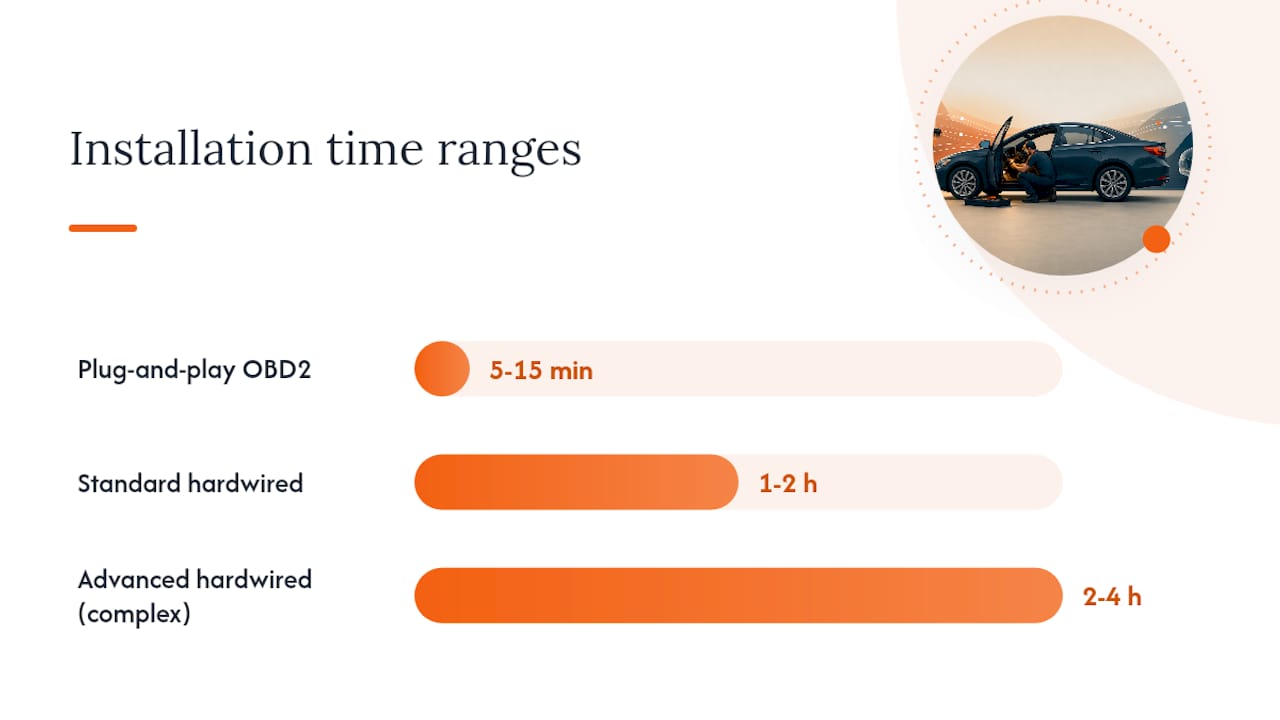
Compare that against a plug-and-play OBD2 unit, which can be inserted in 5 to 15 minutes. That speed comes at the cost of everything a hardwired system offers: concealment, tamper resistance, and durability.
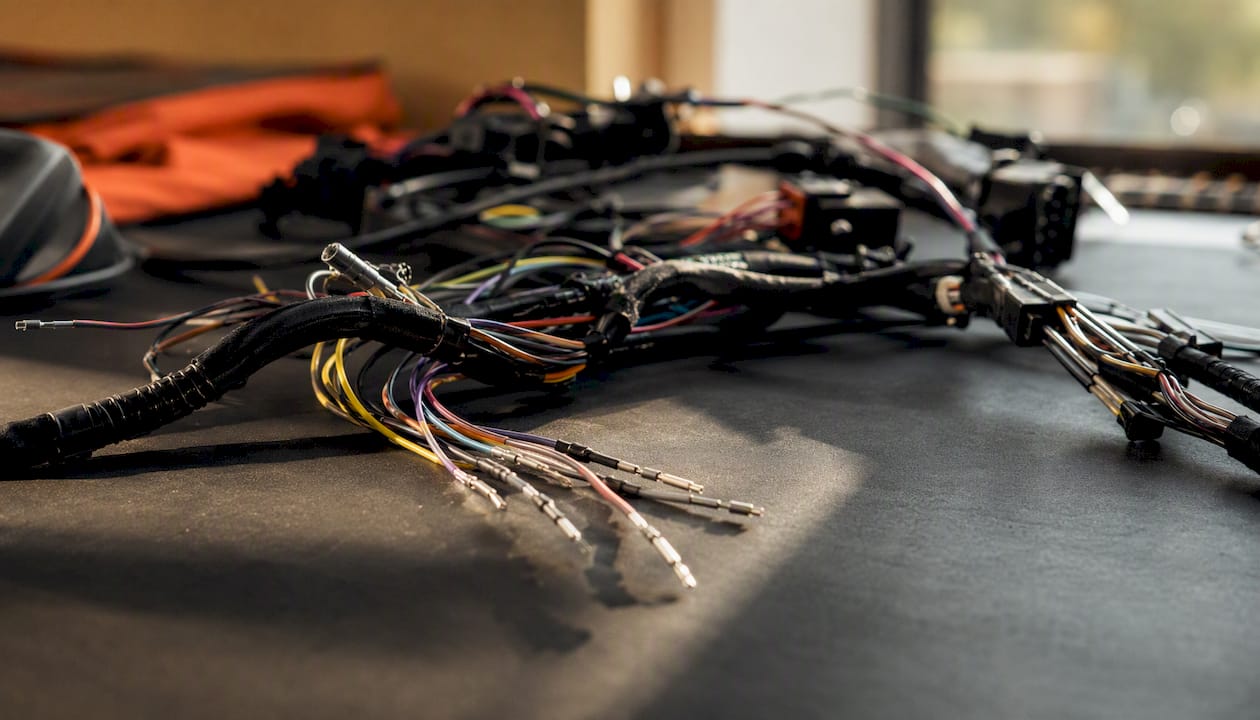
A correct hardwire fit follows a fairly consistent sequence. Installers typically disconnect the battery, remove the lower dash trim, then use a multimeter to identify constant power, switched ignition power, and a solid ground point. Every power feed gets fused, wiring is routed well clear of airbag circuits and pedal mechanisms, and the device is tested on the tracking platform before the trim goes back on.
DIY installation can save you the fitting fee, but it carries real risk:
- Pros: Lower upfront cost, no waiting for a booking slot.
- Cons: Incorrect wiring can damage airbag or CAN systems, void your vehicle warranty, or leave the unit poorly concealed where a thief spots it in seconds.
Professional installation costs more but removes that risk:
- Pros: Correct mounting, proper concealment, and an installer certificate that insurers often want to see.
- Cons: You need to book a slot and pay a fitting fee on top of the hardware.
Pro Tip: Once fitted, check your tracker’s connections and app status roughly a month later. Vibration and heat cycling can loosen a poorly seated connector, and catching that early beats discovering it only after a theft.
Is it legal to fit a tracker, and does it actually help with insurance?
Fitting a tracker to your own vehicle is legal in the UK, no caveats needed. The only line to watch is consent: never install a tracking device on a vehicle you don’t own or don’t have explicit permission to monitor, since that strays into privacy and data protection territory that has nothing to do with vehicle security.
Where things get more nuanced is insurance. “Insurance-approved” generally means the device carries Thatcham approval and is monitored by a service capable of liaising with police during a theft. Insurers treat that combination as materially stronger evidence than an unapproved tracker bought cheaply online, because Thatcham approval reflects a tested standard rather than a manufacturer’s own claims.
- Recovery pathway: A monitored service typically detects unauthorised movement, alerts the owner, and contacts police with real-time location data, which is the evidence chain insurers expect to see in a claim.
- Premium impact: Many insurers offer reduced premiums or coverage eligibility for high-theft-risk models specifically because a Thatcham-approved, monitored tracker is fitted.
- Claims evidence: Insurers often want proof of professional fitment and an active monitoring subscription, not just proof of purchase.
Pro Tip: Keep your installation certificate and monitoring subscription confirmation together in one file. If you ever need to make a claim, having both ready speeds up the process considerably.
What do subscriptions and running costs actually look like?
Every hardwired tracker needs some form of ongoing service to stay useful, and the billing models vary more than most buyers expect.
- Self-managed SIM/data plans put you in charge of the data connection yourself, generally the cheapest route but with no monitoring layer behind it.
- Platform subscriptions give you app access, alerts, and history logging without a live monitoring team watching for theft events.
- Fully monitored plans include a monitoring centre with police liaison, which is what most insurers actually want to see for high-value vehicles.
Costs scale with that service level. A basic self-managed plan sits at the lower end of the market, while a fully monitored, insurance-grade subscription costs more monthly because you’re paying for a team that responds around the clock, not just software. Budget for the one-off hardware and fitting cost separately from the recurring subscription, since dropping the subscription later can quietly turn a Thatcham-approved tracker into a device that no longer meets your insurer’s requirements.
Before signing anything, check three things in the contract: the cancellation policy and any lock-in period, exactly what’s included in “monitoring” (some plans cap alert volumes), and the length of the hardware warranty.
What does LRD Track’s professionally fitted solution include?
Land Rover models present a particular challenge. Older Defenders and Series vehicles have simpler, more exposed wiring that thieves know well, while modern Discoveries and Range Rovers run complex electrical architectures where the wrong wiring choice risks expensive damage. LRD Track builds its hardware and installation service specifically around these models, rather than treating a Land Rover the same as any other car.
The S7 Classic Defender Tracker is built for Defender owners who want insurance-grade tracking without unnecessary complexity. For owners wanting remote immobilisation alongside tracking, the Nemesis 2 Immobiliser adds the capability to cut the starter circuit remotely if a theft is detected. And for Defenders where the alarm wiring needs rerouting during a security upgrade, the Defender BBUS Relocation Loom offers a plug-and-play way to reposition alarm wiring without a full rewire.
Every LRD Track installation is carried out by professional fitters, paired with a mobile app for real-time tracking and 24/7 monitoring assistance that watches for theft events around the clock. That combination, hardware plus fitment plus monitoring, is what turns a tracker into something an insurer treats seriously.
A tracker that isn’t Thatcham-approved and professionally fitted often struggles to satisfy an insurer’s evidence requirements after a theft, no matter how good the underlying hardware is. Approval and correct fitment are what convert a good product into accepted proof.
Owners can use the LRD Track product finder to match their specific model to the right package before booking an installation slot.
How do you choose the right tracker and what should you ask the installer?
Run through this checklist before you commit to any product:
- Vehicle compatibility. Confirm the tracker is designed for your model year and electrical architecture, not a generic fit.
- Thatcham status. Verify approval directly rather than trusting marketing copy alone.
- Monitoring options. Decide whether you need full police-liaison monitoring or a lighter self-managed plan.
- Immobiliser capability. Check whether remote immobilisation is included or needs adding separately.
- Backup power and concealment. Ask specifically how the unit behaves during a power cut and where it will be hidden.
When you speak to a vendor or installer, ask these directly:
- How long is the hardware warranty, and does it cover parts and labour?
- Is the fitter certified, and can they provide an installation certificate for my insurer?
- What’s the process if the device flags a theft, who gets notified and how fast?
- What evidence does your monitoring service provide if I need to make an insurance claim?
Watch for warning signs during that conversation. A vendor who won’t explain their wiring method, offers no UK-based support, gives a vague answer about monitoring escalation, or quotes a long hardware lead time without a clear reason is worth walking away from.
What’s a realistic timeline and cost range for fitting?
Booking to completion for a professional hardwired install usually runs from a same-week appointment through to a finished fit in a single visit lasting one to four hours on the day, depending on how much of your vehicle’s trim needs removing. Simpler models with accessible wiring sit at the shorter end; a Defender needing an immobiliser integrated alongside the tracker sits at the longer end.
Total cost breaks into two parts you should budget separately: the hardware and one-off fitting fee, and the ongoing subscription for monitoring and data. Expect the fitting fee to reflect the labour involved, since a Thatcham-grade install with immobiliser wiring takes an installer noticeably longer than a basic tracker-only fit. Treat any quote that seems unusually low with suspicion. It often means a shorter, less careful installation, or a subscription model that doesn’t include real monitoring.
How do leading hardwired tracker approaches compare?
Rather than ranking specific competing brands, it helps to compare the categories of product you’ll encounter when shopping.
General-purpose hardwired trackers sold for any vehicle tend to be cheaper and widely available, but installers may not have specific experience with your model’s wiring quirks. That’s a real problem on a Defender, where wiring layouts vary noticeably between production years.
Model-specific systems, like those built around Land Rover architecture specifically, cost more but come with installers who already know where the constant power feed sits on a 2015 Discovery versus a 2019 one. That familiarity shortens fitting time and reduces the risk of a wiring mistake.
Fleet-oriented platforms prioritise CAN-bus data and driver identification over concealment, since fleet vehicles are rarely targeted for covert theft in the same way a private high-value Land Rover is. If you manage several vehicles, that telematics depth matters more than it does for a single private owner.
The trade-off across all three is consistent: broader compatibility generally means less specialist knowledge at the fitting bay, while a narrower, model-focused approach means slower onboarding for unusual vehicles but far more precise fitment on the ones it’s built for.
What should you take away from all this?
Choosing a Thatcham-approved hardwired tracker and having it professionally fitted gives high-value vehicles the strongest realistic protection against theft and the best chance of insurer acceptance after a claim.
- Prioritise a hardwired, Thatcham-approved unit over a battery or OBD2 alternative for any vehicle an insurer considers high-risk.
- Book professional installation rather than DIY fitting to protect your warranty and ensure proper concealment.
- Confirm your subscription includes genuine monitoring with police liaison, not just app access.
- Budget for the hardware, fitting fee, and ongoing subscription as three separate costs.
- Use the LRD Track product finder to match your Land Rover model to the correct package before booking a fitting slot.
Where to read more
- How Long Does It Take to Install a Car Tracker? (UK Guide) covers realistic fitting times across different tracker types.
- 2026 Ultimate GPS Tracker Installation Guide for Fleet Vehicles explains the wiring steps and safety precautions professional installers follow.
- Thatcham Research publishes the approval standards insurers reference for security devices.
- How does the LRD Track work? details the installation, app, and monitoring service.
What’s overrated and underrated in tracker buying decisions?
Most guides to vehicle tracking spend their energy comparing app interfaces and update frequencies. That’s not where the real decision gets made. The gap between a tracker that recovers a stolen Land Rover and one that doesn’t almost always comes down to two boring factors: whether the unit is Thatcham-approved, and whether it was fitted by someone who actually knew what they were doing.
The conventional advice tends to underweight installation quality entirely, treating it as an afterthought once you’ve picked the hardware. That’s backwards. A brilliant tracker wired incorrectly, with a loose ground connection or a power feed that trips under load, is worse than no tracker at all, because it gives you false confidence right up until the moment you need it. Fitment time matters less than fitment competence. An installer who takes the full three hours to route wiring properly and test the platform connection is doing you a bigger favour than one who rushes a ninety-minute job to fit in another booking.
What’s genuinely underrated is the subscription conversation. Owners obsess over hardware specifications, then treat the monthly monitoring fee as an afterthought, sometimes letting it lapse to save money. That single decision can quietly strip an insurance-approved tracker of the monitoring evidence an insurer actually wants to see after a theft. If you’re going to spend properly on one part of this, spend it on keeping the monitoring active, not on chasing marginal hardware upgrades.
For Land Rover owners specifically, model-specific expertise beats generic compatibility every time. A wiring loom that an installer has fitted a hundred times on the same Defender generation gets done faster and more reliably than one they’re improvising on the day.
Where can you get a Thatcham-approved tracker fitted properly?
If you’ve read this far, you already know the shortcut version: pick Thatcham-approved hardware, get it fitted professionally, and keep the monitoring subscription active. Lrd-track builds its entire offering around exactly that sequence, but specifically for Land Rover owners who need a fitter who already understands Defender, Discovery, and Range Rover wiring rather than learning it on your vehicle.
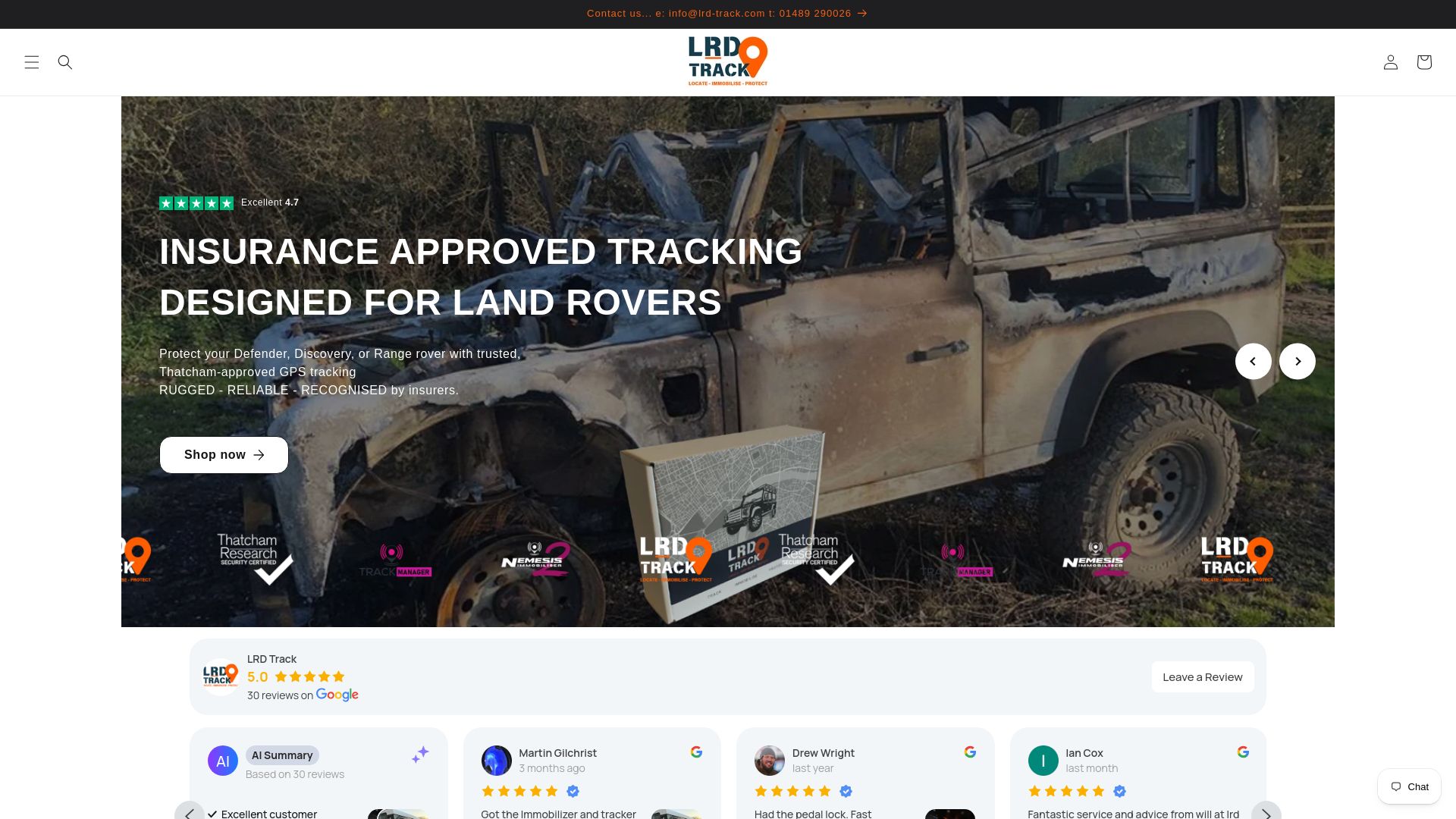
That model-specific focus is the real advantage over a generic tracker fitted by a general installer. Every Lrd-track package pairs Thatcham-approved hardware with professional installation, a mobile app for real-time location and alerts, and 24/7 monitoring that can escalate to police during a theft. Whether you’re protecting a Series Defender or fitting out a small fleet of Discoveries, the product finder matches your exact model to the right package, and if you already know a Defender needs the extra security depth, the S7 Classic Defender Tracker is a solid starting point to check compatibility and book a fitting slot.
Frequently asked questions
How long does it take to install a hardwired car tracker? Professional installations typically take between 1 and 3 hours, with standard fits closer to 1 to 2 hours and advanced security integrations, like immobiliser wiring, taking 2 to 4 hours.
Is a hardwired tracker better than an OBD2 tracker? For theft prevention, yes. Hardwired units are hidden and hard to remove quickly, while OBD2 trackers plug into a visible port and can be unplugged in seconds, making them better suited to short-term or lease use than serious security.
Do I need Thatcham approval for my insurance to accept a tracker? Many insurers treat Thatcham approval as a requirement for recovery-linked discounts and smoother claims, so check with your insurer directly, but approved hardware is the safer default for high-theft-risk vehicles.
Can I fit a hardwired tracker myself? You can, but incorrect wiring risks damaging airbag circuits or voiding your warranty. Professional fitment is strongly recommended, particularly on Land Rover models with complex electrical architecture.
What does a monitored tracking subscription actually include? A fully monitored plan typically includes a monitoring centre watching for theft events around the clock, with the ability to notify police directly, on top of the app access and data connection a basic subscription provides.
This article provides general information on vehicle tracking and installation and isn’t a substitute for professional advice. Confirm current insurance requirements with your provider and installation specifics with a qualified fitter before proceeding.
Sources
- How Long Does It Take to Install a Car Tracker? (UK Guide for Fast & Secure Fitting)
- 2026 Ultimate GPS Tracker Installation Guide for Fleet Vehicles
- Thatcham Research