
If you drive a Defender, Discovery, or Range Rover, the honest answer is this: most insurers now expect a Thatcham-approved finance company tracker fitted before they’ll offer full theft cover, and for the majority of prestige Land Rover models, that means Category S5. Category S7 can suffice for lower-value or lower-risk models, but the only way to know for certain is to check your policy schedule.
Here’s what has to be true for either category to count towards your cover:
- Professional installation by a recognised installer, not a DIY fit
- An active 24/7 monitoring subscription, not just a dormant device
- A valid Thatcham certification reference on file with your insurer
Recent guidance from Thatcham Research confirms that S5 devices require driver recognition (ADR), roaming SIM connectivity, and a monitored response centre meeting BS 8591. Lrd-track supplies Thatcham-approved S5 and S7 systems with UK-wide professional fitting and monitoring already built in, which takes the guesswork out of getting this right the first time.
Key Takeaways
Thatcham-approved tracking only counts towards your insurance when the correct S5 or S7 category is fitted by a recognised installer and backed by an active 24/7 monitoring subscription.
| Point | Details |
|---|---|
| Check your policy first | Read your schedule or ask your broker whether S5 or S7 is specified before buying anything. |
| S5 means ADR and instant alerts | Choose S5 if your Land Rover has keyless entry or sits above typical insurer value thresholds. |
| Keep monitoring active | A lapsed subscription is treated by most insurers as no protection, even with hardware fitted requiring active monitoring. |
| Save every certificate | Retain your Thatcham reference, installation certificate, and monitoring contract for claims or renewals. |
| Lrd-track covers both categories | Lrd-track fits Thatcham S5 and S7 systems for Land Rovers UK-wide, with monitoring and paperwork included from day one. |
Table of Contents
- What’s the difference between Thatcham S5 and S7 trackers?
- How do you check your insurance tracker requirements?
- What must a professional installation include for Thatcham compliance?
- What extra security steps should you add beyond a tracker?
- What role does a monitored tracker play in recovery and police liaison?
- How do you verify a compliant tracker provider before you buy?
- Which UK finance companies offer Thatcham-approved trackers for Land Rovers?
- How does the tracker purchase and activation process actually work?
- What does a Land Rover tracker cost in total?
- How long does it take from order to full insurance recognition?
- Why professional installation matters more than the device itself
- Get a Thatcham-approved tracker fitted by Lrd-track
- Frequently asked questions
- Sources
What’s the difference between Thatcham S5 and S7 trackers?
The split between S5 and S7 comes down to what happens in the moments before and after a theft, not just afterwards.
Category S5 is the fuller specification. It combines GPS tracking with Automatic Driver Recognition (ADR), a small tag or fob that identifies the authorised driver to the vehicle’s system. According to Thatcham’s security certification criteria, S5 devices must also include a roaming SIM, battery backup, and resistance to tampering, alongside monitoring from a centre certified to BS 8591. In practice, that means:
- Immediate alerts the moment your Land Rover moves without the driver tag present, catching relay attacks and key cloning before the vehicle leaves your street.
- Live location tracking from the second an unauthorised movement is flagged, not just once the vehicle is reported stolen.
- A monitored response where a BS 8591 centre contacts you and, where needed, the police, rather than leaving you to watch a map on your phone alone.
Category S7, by contrast, is a location-only asset tracker. It doesn’t need ADR, so there’s no driver tag pairing and no instant “someone’s driving off without authorisation” alert. What it does provide is reliable post-theft recovery: once a vehicle is confirmed stolen, S7’s monitored GPS tracking helps police and recovery teams locate it. Thatcham’s own product definitions guidelines set out these technical thresholds precisely, including the minimum resistance-to-attack timeframes both categories must pass.
The practical outcome: S5 is about prevention and early warning, S7 is about recovery after the fact. For a keyless-entry Defender parked on a driveway, that distinction between an alert at 2am and a recovery attempt the next morning matters enormously to your excess and your no-claims record.
How do you check your insurance tracker requirements?
Your policy schedule, not the sales page you bought your car insurance from, is where the real requirement lives. Insurers rarely advertise their tracker rules prominently. They bury the condition in the schedule or a security endorsement, so you need to go looking.
Start here:
- Read your policy schedule in full, or call your broker and ask directly: “Does my policy specify Thatcham S5 or S7?”
- Check your vehicle’s declared value. Specialist insurance data shows insurers commonly set S5 requirements at mid to high vehicle values, with prestige and keyless-entry models pushed towards S5 even at lower values.
- Factor in your postcode. High-theft postcodes often tip an insurer’s requirement from S7 to S5, even on a mid-range Discovery.
- Confirm your monitoring subscription is live. An installed tracker with a lapsed subscription is treated by most insurers as no protection at all, according to industry guidance on motor insurance tracker requirements.
Keep three documents on file, ideally digitally and on paper: the Thatcham certification reference for your device, your installation certificate from the recognised installer who fitted it, and your monitoring contract confirming an active subscription.
Pro Tip: Don’t over-buy. If your policy only requires S7, paying for S5’s driver recognition adds cost without adding cover. Check the schedule before you check the price list.
What must a professional installation include for Thatcham compliance?
Thatcham certification isn’t just about the hardware in the box. It covers how that hardware gets fitted, tested, and documented, which is why a recognised installer matters as much as the device itself.
A compliant fitting typically works through these steps:
- Secure, concealed mounting so the device isn’t visible or easily located by a thief doing a quick sweep of the cabin.
- CAN-bus integration or immobiliser wiring where the chosen product includes immobilisation, tying the tracker into the vehicle’s own systems rather than sitting as a standalone add-on.
- Driver ID tag pairing, for S5 devices, so ADR recognises the authorised key or fob correctly from day one.
- Roaming SIM activation and a signal test, confirming the device can actually communicate once it leaves the workshop.
- Battery backup and resistance-to-attack checks, verifying the unit meets Thatcham’s minimum tamper-resistance timeframes.
Once fitting is complete, Thatcham’s own guidance is clear that recognised installers must issue an installation certificate referencing the specific Thatcham approval number, and confirm monitoring activation in writing. That paperwork is what your insurer will ask for if you ever need to prove compliance, particularly during a claim.
Lrd-track’s UK installation network fits its Thatcham S5 and S7 systems to this standard as a matter of course: driver tag pairing, roaming SIM activation, and a certificate that names the exact Thatcham reference your insurer needs. Alongside the hardware, owners get mobile app tracking and 24/7 monitoring support switched on before the installer leaves the driveway.
What extra security steps should you add beyond a tracker?
A Thatcham tracker is the foundation, not the whole wall. Layering additional measures on top closes gaps that a tracker alone can’t cover, and most of them cost far less than a claim excess.
Start with what’s free and immediate:
- Keep your driver ID tag away from your key fob and out of sight in the house, since a stolen tag defeats the point of ADR.
- Turn on push alerts in your tracker’s app so you see unauthorised movement in real time, not the next morning.
- Never let your monitoring subscription lapse, even temporarily, between renewals.
Once those habits are in place, add physical layers suited to your risk level:
- A CAN-bus immobiliser, which blocks the electronic signal thieves use to bypass keyless start systems.
- Steering or gear locks for Defenders and older Discovery models parked on the street overnight.
- Secure, off-street parking or a locked garage wherever possible.
- VIN etching on windows and body panels, which reduces resale value for stolen parts and deters opportunist theft.
Pro Tip: If your Land Rover sits in a high-theft postcode, fit the tracker and immobiliser together before spending on cosmetic deterrents. Recovery and prevention beat visible warning signs every time.
Prioritise the tracker and active monitoring first. Everything else is reinforcement, not replacement.
What role does a monitored tracker play in recovery and police liaison?
Once a theft alert fires, the monitoring centre becomes the link between your vehicle, you, and the police. A BS 8591 monitored centre doesn’t just log the GPS coordinates; trained staff verify the alert, contact the registered keeper, and where theft is confirmed, pass live location data directly to police control rooms.
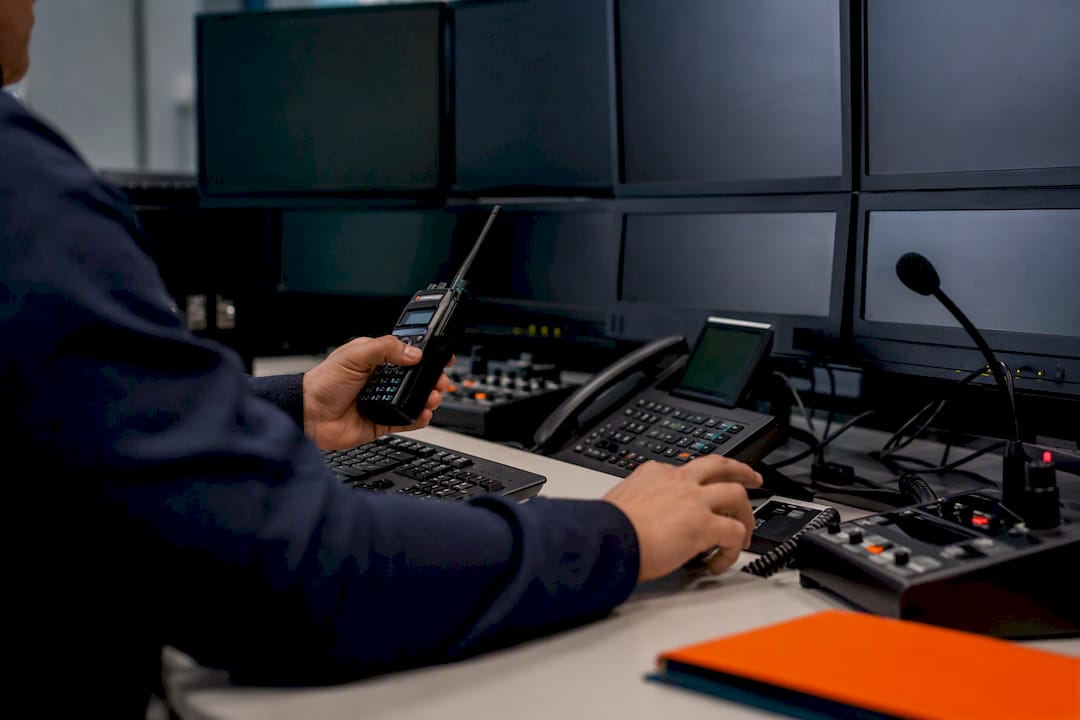
That handover matters more than most owners realise. Police forces prioritise recovery requests that come with verified, monitored tracking data over an owner’s own phone screenshot of a map, because the monitoring centre has already confirmed the vehicle is genuinely stolen rather than simply out of range or loaned to a family member. It cuts through the delay that often lets a stolen Land Rover reach a port or a chop shop before recovery teams even get moving.
This is also where the S5 versus S7 distinction plays out in real terms. An S5 system’s driver recognition means the alert fires the instant the vehicle moves without an authorised tag present, often while the vehicle is still nearby. An S7 system typically activates once a theft is reported, so the alert and the police liaison happen slightly later in the sequence, though the recovery mechanism itself works the same way.
For owners, the practical takeaway is straightforward: a Thatcham tracker’s value in an actual theft depends entirely on that monitoring relationship staying active and the installer having registered your device correctly. A tracker that’s fitted but never connected to a live monitoring contract has no one to call the police on your behalf.
How do you verify a compliant tracker provider before you buy?
Not every “Thatcham-approved” claim online stands up to scrutiny, so a few checks before you pay protect you from buying something your insurer won’t recognise.
First, confirm the actual device model appears on Thatcham’s own certified device list, not just a provider’s marketing page. Thatcham publishes its approved products directly, and a genuine provider will happily point you to that listing rather than asking you to take their word for it.
Second, ask whether installation is carried out by a recognised installer employed or contracted directly by the provider, or subcontracted to a third party with no accountability back to the tracker manufacturer. Recognised installer status is part of what keeps your certification valid, and a provider that can’t name their installation network is a red flag.
Third, check that a live monitoring contract is included or clearly priced from day one, not sold as a vague optional extra. A provider who treats the subscription as an afterthought is one who doesn’t fully understand what Thatcham compliance actually requires.
Finally, ask what paperwork you’ll receive after fitting: an installation certificate, a specific Thatcham reference number, and written confirmation that monitoring has been activated. If a provider can’t answer that clearly before you’ve paid, that’s worth treating as a decision point in itself. Lrd-track provides all three as standard for every Land Rover fitting.
Which UK finance companies offer Thatcham-approved trackers for Land Rovers?
Land Rover owners often assume a “finance company tracker” means something sold directly by their car finance provider, but in practice, most PCP and HP agreements simply require you to arrange Thatcham-approved tracking yourself rather than supplying one.
Some finance providers do flag tracker requirements explicitly in higher-value agreements, particularly on new Defender and Range Rover models where residual values are steep and theft risk is a known factor in underwriting. Where that’s the case, the finance agreement will usually specify the Thatcham category needed, mirroring what your insurer asks for, since both are protecting the same asset.
The practical route for most owners is the same regardless of whether the requirement comes from a lender or an insurer: source a Thatcham-certified S5 or S7 device from a specialist provider, get it professionally fitted by a recognised installer, and keep the paperwork on file to satisfy whichever party asks for it. Lrd-track’s Land Rover-specific range covers both categories, built specifically around Defender, Discovery, and Range Rover platforms rather than adapted from a generic universal fitting.
If your finance agreement or insurer names a specific category, that’s the one to buy. Buying an S5 device to be safe when only S7 is required adds cost without adding any recognised benefit on your finance or insurance paperwork.
How does the tracker purchase and activation process actually work?
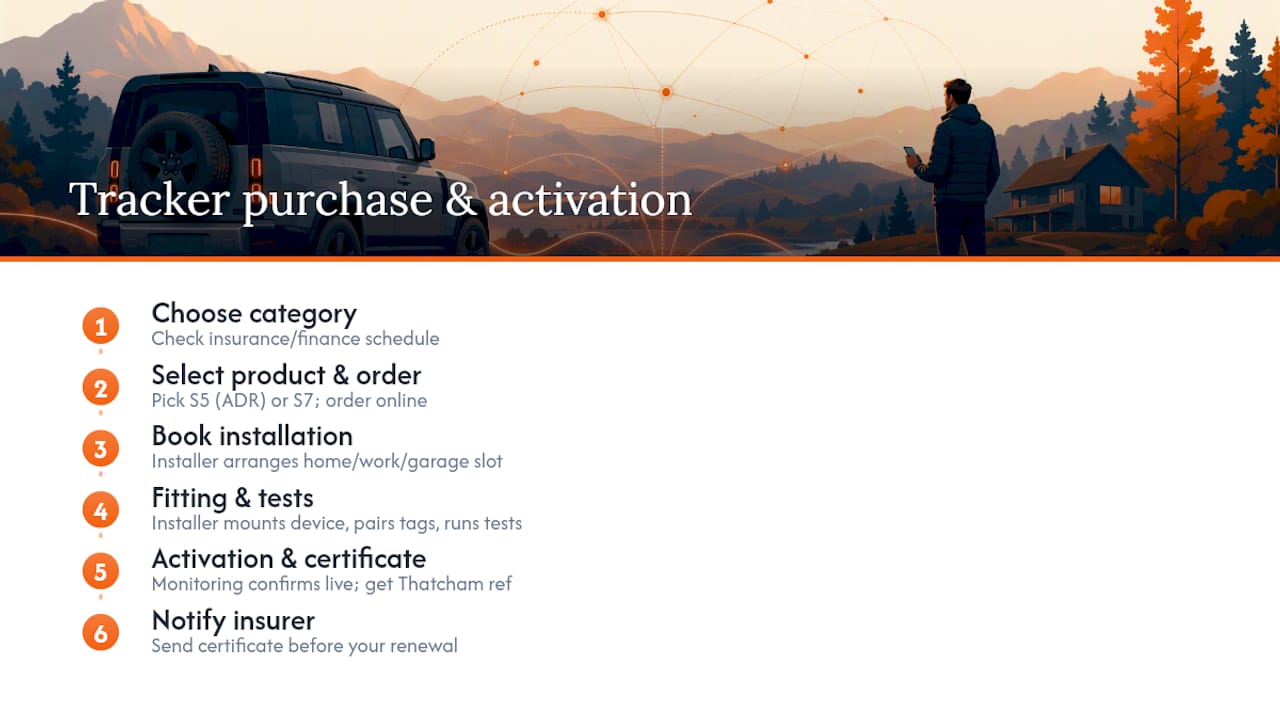
The process from browsing to a fully activated, insurer-recognised tracker typically follows a consistent sequence, regardless of which provider you choose.
You start by identifying the right category for your vehicle and policy, using your insurance schedule or finance agreement as the reference point. From there, you select the matching product, S5 for vehicles requiring ADR, S7 where location-only tracking meets the requirement, and place your order online.
Installation booking comes next. A recognised installer contacts you to arrange a fitting slot, usually at your home, workplace, or a partner garage, since Thatcham-compliant fitting needs proper access to the vehicle’s wiring and cabin space rather than a roadside job. On the day, the installer mounts the device, pairs any driver ID tags, activates the roaming SIM, and runs the resistance-to-attack and connectivity tests Thatcham requires.
Once fitting is signed off, activation happens in two parts: the monitoring centre confirms your subscription is live and your vehicle details are correctly logged, and you receive your installation certificate along with the Thatcham reference number for your specific device. That paperwork is what you forward to your insurer or finance company to confirm compliance.
The final step is entirely on you: update your insurer with the new certification details before your next renewal, so the discount or condition is reflected correctly rather than left as an assumption on file.
What does a Land Rover tracker cost in total?
Pricing for a Thatcham-approved system has several separate components, and understanding each one stops any surprises once the invoice lands.
The tracker hardware itself is priced by category, with S7 devices generally cheaper than S5 given the added ADR and roaming SIM specification the latter requires. Professional installation is typically bundled into the purchase price with reputable providers rather than charged separately, though it’s worth confirming this before you order, since a separately invoiced fitting fee can catch owners out.
The monitoring subscription is the recurring cost, billed monthly or annually, and is the part owners most commonly let lapse by mistake. It covers the BS 8591 monitored centre, the actual service that makes your certification meaningful to an insurer.
If your Land Rover is on finance, some agreements build the tracker cost into the monthly payment, while others require you to arrange and pay for it independently. There’s no universal rule here, so check your finance agreement’s terms rather than assuming.
Multi-vehicle households sometimes ask about a multi car tracker discount when fitting more than one Land Rover, which can reduce the per-vehicle cost of installation and monitoring when arranged together. It’s worth asking your provider directly what’s available for a second vehicle before assuming standard single-vehicle pricing applies.
How long does it take from order to full insurance recognition?
Ordering a tracker is the easy part. Getting it recognised by your insurer is where the timeline actually matters, and it’s rarely instant.
Most providers can arrange a UK installation slot within a week or two of ordering, faster in urban areas with a larger installer network, slower in rural postcodes. The fitting itself typically takes two to three hours, covering mounting, wiring, tag pairing, and the required Thatcham test sequence.
Monitoring activation usually happens the same day as fitting, with the centre confirming your subscription and vehicle details are correctly logged before the installer leaves. Your installation certificate and Thatcham reference number should follow within a few working days, either on the spot or by email shortly after.
The step owners most often delay, and the one that actually determines when your cover is confirmed, is passing that paperwork to your insurer. Some insurers update your policy and any associated discount within days of receiving it; others only reflect it at your next renewal unless you specifically ask them to amend the policy mid-term. If your finance agreement flags a tracker requirement, the same logic applies: confirmation isn’t complete until the paperwork has actually reached the party that asked for it.
Build in two to three weeks from order to full recognition as a realistic expectation, and chase your insurer directly if you haven’t had written confirmation within that window.
Why professional installation matters more than the device itself
The conventional advice on this topic spends most of its energy comparing tracker specifications: GPS accuracy, battery life, app interface. That’s the wrong place to focus.
What actually determines whether your Land Rover is protected, and whether your insurer will honour a claim, is the paperwork trail behind the device: the recognised installer, the Thatcham reference, the live monitoring contract. A brilliant tracker fitted badly or left unmonitored is functionally worthless to an insurer, no matter how good its GPS chip is.
Owners underestimate how often claims get complicated not by theft itself but by a lapsed subscription or a missing installation certificate discovered only after the vehicle’s gone. That’s an administrative failure, not a security one, and it’s entirely avoidable.
My honest read: check your policy schedule before you buy anything, match the category precisely rather than over-specifying “to be safe,” and treat the installer’s paperwork as seriously as the device. A Land Rover-specific provider that builds S5 and S7 fitting, activation, and documentation into one process removes most of the risk of getting this wrong.
Get a Thatcham-approved tracker fitted by Lrd-track
Lrd-track is the direct route to Thatcham compliance for Land Rover owners, built specifically around Defender, Discovery, and Range Rover platforms rather than adapted from a generic fitting service. That focus means every installer in the network already understands Land Rover wiring layouts and where a device needs to sit to stay concealed and effective.
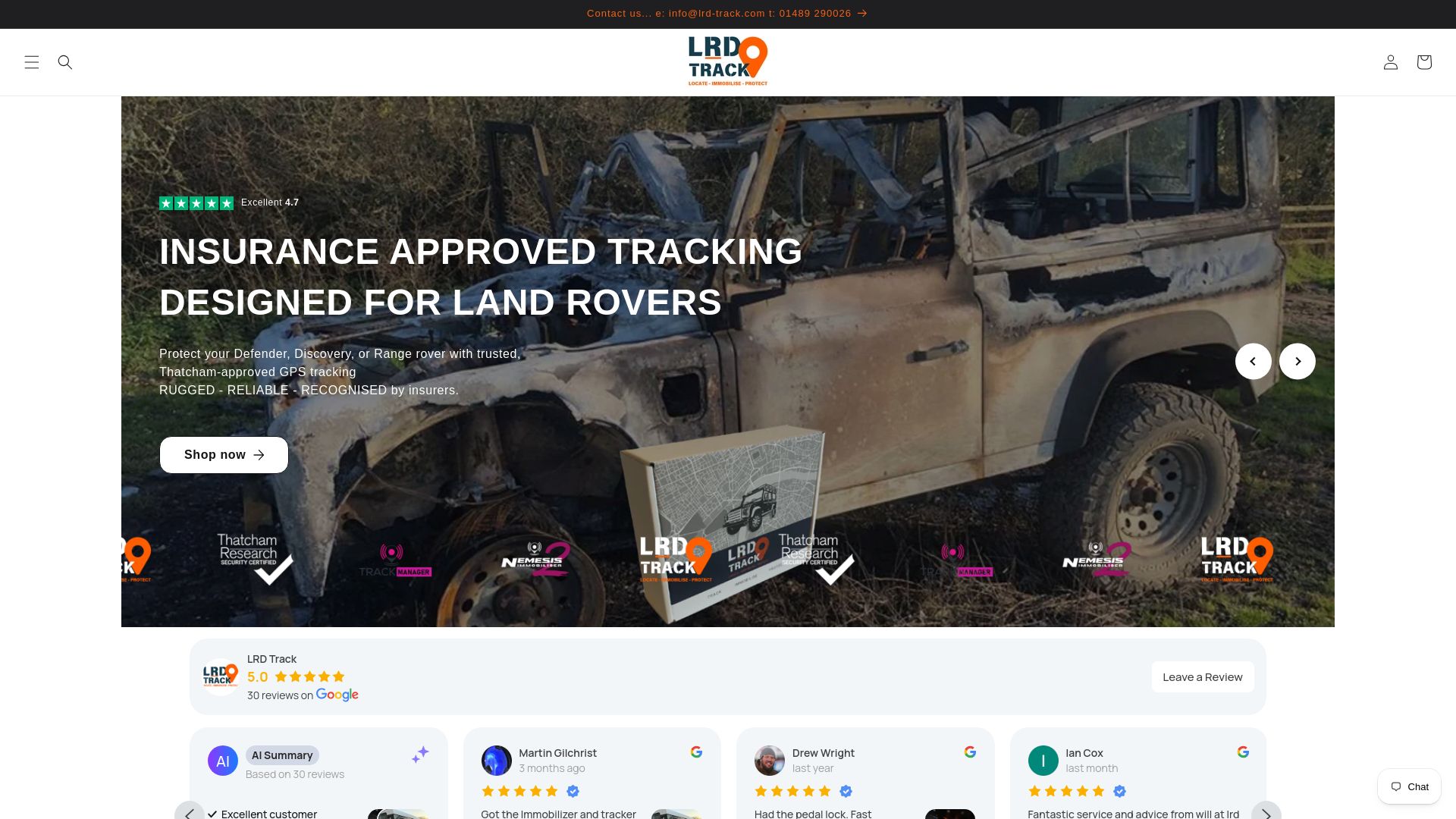
The range covers both Thatcham categories: the S5 tracker with driver ID for vehicles requiring ADR, the S7 Classic Defender tracker where location-only cover meets your policy requirement, and the S5 Plus Discovery tracker with immobiliser for owners who want tracking and immobilisation fitted as one job rather than two separate purchases.
Every installation includes mobile app tracking, 24/7 monitoring activated on the day, and the paperwork your insurer will ask for: an installation certificate, your device’s Thatcham reference number, and written confirmation your monitoring contract is live. Not sure which category your policy needs? Use the Lrd-track product finder to match your Land Rover model to the right system and book a UK-wide fitting slot.
Frequently asked questions
Does my Land Rover legally need a Thatcham tracker? There’s no legal requirement, but many insurers make it a condition of cover for higher-value or keyless-entry Land Rover models. Check your policy schedule to confirm whether it applies to you.
Can I install a Thatcham S5 tracker myself? No. Thatcham certification requires professional fitting by a recognised installer, and a self-fitted device typically won’t be accepted by your insurer regardless of the hardware’s specification.
What happens if I stop paying my monitoring subscription? Your tracker stops being monitored by a BS 8591 centre, which most insurers treat as equivalent to having no tracker fitted at all, even though the hardware remains in the vehicle.
Is S5 always more expensive than S7? Generally yes, since S5 includes driver ID tags, a roaming SIM, and additional testing that S7 doesn’t require. Buy S5 only if your insurer or finance agreement specifies it.
Will fitting a tracker reduce my insurance premium? Many insurers offer a discount once you provide your Thatcham reference and installation certificate, though the amount varies by provider and vehicle. Contact your insurer directly to confirm.