
If your Defender, Discovery or Range Rover is worth protecting, choose a Thatcham S5 tracker. It is the category most UK insurers require for high-value Land Rovers, and it is the one that gives you driver recognition, real-time tracking and the fitment paperwork your insurer needs. If your vehicle is older or your insurer accepts it, an S7 covers location tracking at a lower cost. Either way, the next step is the same: get professional installation from a specialist such as Lrd-track, confirm your device appears in the Thatcham Security Certification database, and send your fitment certificate to your insurer before your policy renewal.
Quick actions:
- ✅ Confirm your insurer’s category requirement (S5 or S7) in writing
- ✅ Choose a Thatcham-listed device that matches that category
- ✅ Book professional fitment with a Land Rover specialist
- ✅ Submit your fitment certificate and subscription confirmation to your insurer
- ✅ Keep all activation records safe for any future claim
Jaguar Land Rover actively recommends working with recognised tracker providers and activating in-vehicle security features. Your insurer is watching for exactly this.
Key takeaways
For high-value Land Rovers, a Thatcham S5 tracker with professional installation and an active monitoring subscription is the only configuration that reliably satisfies UK insurer requirements and protects against claim rejection.
| Point | Details |
|---|---|
| S5 vs S7 choice | S5 includes ADR and is required by most insurers for high-value Land Rovers; S7 suits lower-value or cost-sensitive cases. |
| Professional fitment is mandatory | A fitment certificate from a specialist installer is what your insurer needs to confirm compliance. |
| Active subscription is a policy condition | A lapsed subscription can result in a lawfully declined theft claim, as confirmed by the Financial Ombudsman. |
| Insurer sign-off requires paperwork | Submit your Thatcham listing reference, fitment certificate and subscription confirmation in writing. |
| Lrd-track recommendation | Lrd-track supplies Thatcham S5 and S7 trackers with Land Rover-specific installation and full insurer documentation. |
Table of Contents
- What is the difference between a Thatcham S5 and S7 tracker?
- Why does Thatcham certification matter for your insurance?
- What features must a Thatcham-approved tracker have?
- Why does professional installation matter?
- What does a Thatcham tracker cost, and how does it affect your premium?
- How do you get your insurer to accept the tracker?
- What happens when your Land Rover is stolen?
- Questions to ask any installer before you buy
- Red flags that should make you walk away
- Why Lrd-track focuses exclusively on Land Rover security
- Lrd-track S5 and S7 packages: what you get and how to order
- Sources
What is the difference between a Thatcham S5 and S7 tracker?
Thatcham S5 and S7 are not interchangeable. S5 requires automatic driver recognition (ADR), meaning a small tag must be present in the vehicle for normal operation. If the vehicle moves without the tag, an alert fires immediately. S7 provides GPS location tracking without ADR and costs less, but it offers fewer layers of protection and fewer insurers will accept it for high-value vehicles.
| Feature | S5 | S7 |
|---|---|---|
| Automatic driver recognition (ADR) | ✅ Yes | ❌ No |
| Real-time online tracking | ✅ Yes | ✅ Yes |
| Movement-without-tag alert | ✅ Yes | ❌ No |
| Remote immobilisation capability | ✅ Typically included | ⚠️ Varies by device |
| Insurer preference for high-value Land Rovers | ✅ Strong | ⚠️ Limited |
| Typical cost tendency | Higher | Lower |
Which profile fits which category?
- S5: New or near-new Defender, Discovery or Range Rover; higher-value vehicles; any model where your insurer has stated a category requirement; modified or high-specification vehicles that attract elevated theft risk.
- S7: Older or lower-value Land Rovers; owners whose insurer explicitly accepts S7; cost-sensitive situations where ADR is not a policy condition.
Pro Tip: When in doubt, choose S5. The ADR tag is the single feature that separates a tracker from a full theft-deterrent system. If your insurer later upgrades its requirements, you will already be compliant.
Why does Thatcham certification matter for your insurance?
Thatcham Security Certification is an independent testing programme. It assesses devices against defined performance criteria and lists certified products in a searchable database that both owners and insurers can check. That database reference is what gives your insurer confidence that the device you have fitted is genuinely what it claims to be.
What certification does and does not guarantee:
- ✅ Confirms the device meets defined technical standards for its category
- ✅ Gives insurers a verifiable reference to validate your fitment
- ✅ May support a lower premium when you fit a certified system, though discounts are negotiated between manufacturers and underwriters
- ❌ Does not guarantee your insurer will automatically reduce your premium
- ❌ Does not guarantee recovery if your subscription has lapsed
- ❌ Does not mean a claim will be paid if other policy conditions are unmet
For Land Rover owners specifically, many insurers make a Thatcham-approved tracker an explicit condition of cover, particularly for vehicles above certain valuations. Maintaining an active subscription is not optional. It is a policy condition.
What features must a Thatcham-approved tracker have?
Not all trackers are equal, even within the same category. Here is what to insist on:
- Multi-channel location tracking: GPS combined with GSM and, where applicable, VHF. Multiple frequencies resist jamming and keep tracking active even when thieves use signal blockers.
- Automatic driver recognition (S5): ADR tag alerts the monitoring centre the moment your vehicle moves without authorisation.
- Remote immobilisation: The ability to stop the engine remotely, coordinated through the monitoring centre rather than triggered by the owner alone.
- 24/7 monitored recovery with police liaison: An operator must be reachable at any hour to verify alerts, escalate to police and coordinate recovery.
- Tamper detection and backup tracking: If the primary unit is attacked, a backup system maintains location data.
- Hardwired, concealed installation: Compatible with Land Rover wiring, with a clear fitment certificate and activation document for your insurer.
Pro Tip: Ask specifically about monitoring response times and police liaison track record before you buy. A cheap subscription with slow escalation is worth far less than a slightly higher monthly fee with a dedicated recovery team.
For a deeper look at how to stop your Land Rover being stolen, the security layers that matter most go well beyond the device itself.
Why does professional installation matter?
Your insurer does not just want a Thatcham-listed device. They want proof it was fitted correctly by someone who knows what they are doing. A DIY install, however careful, rarely satisfies that requirement.
A professional installer should provide:
- ✅ A fitment report confirming the device model, Thatcham category and installation date
- ✅ An activation certificate showing the subscription is live
- ✅ Concealed installation that does not compromise Land Rover wiring or void manufacturer warranty
- ✅ Post-fit checks confirming tracking and monitoring are active
- ✅ Guidance on handing documentation to your insurer
Expect a site survey before the appointment, a fitment session typically lasting two to three hours, and a copy of all paperwork to keep alongside your policy documents. An installer who cannot produce a fitment certificate is a red flag, full stop.
What does a Thatcham tracker cost, and how does it affect your premium?
The real cost has four components: the hardware, the professional fitment fee, any activation charge, and the ongoing monitoring subscription. These vary by device and installer, so request an itemised quote before committing.
On the insurer side, the picture is equally specific:
- Some insurers apply an endorsement requiring a tracker as a condition of cover, particularly for high-value Land Rovers.
- Higher excesses or minimum premiums may apply when a tracker is mandated for vehicles above certain valuations.
- A Financial Ombudsman ruling confirmed that an insurer can lawfully decline a theft claim where the policy required a Thatcham Category 5 tracker to be installed and maintained with an active subscription, and the owner had not complied.
Request a written endorsement template from your insurer before you purchase. Match the device category and installation evidence to exactly what that template requires.
How do you get your insurer to accept the tracker?
Follow this sequence and keep every document:
- Confirm the requirement: Ask your insurer in writing which Thatcham category they require and whether they have a preferred device list.
- Select a listed device: Check the Thatcham database to confirm the exact model and category reference.
- Book professional fitment: Use a specialist with Land Rover experience who will supply a fitment certificate.
- Submit documentation: Send the fitment certificate, activation confirmation and subscription details to your insurer and request written acknowledgement.
- Keep records: Store activation receipts and subscription renewal confirmations. If a claim is ever disputed, these are your evidence.
Bodies such as Thatcham Research and the Financial Ombudsman Service are your recourse if a claim is rejected on tracker-compliance grounds, but prevention is far simpler than dispute.
What happens when your Land Rover is stolen?
A monitored tracker does not just locate your vehicle. It triggers a response chain:
- The monitoring centre receives an alert (movement without ADR tag, tamper detection, or owner report).
- An operator verifies the alert, attempts to contact you, and confirms theft.
- Real-time location data is passed to a police liaison team.
- Where supported, remote immobilisation is activated to stop the vehicle.
- Recovery is coordinated with law enforcement.
Be aware of the limits. Police resourcing affects response times. Signal jamming can disrupt GPS and GSM, which is why multi-frequency devices matter. And if your subscription has lapsed, the monitoring centre cannot act. The moment you receive a theft alert, call your monitoring centre immediately and do not attempt to recover the vehicle yourself.
Questions to ask any installer before you buy
- Is the device listed in the Thatcham database, and what is its exact category reference?
- Do you provide a fitment certificate and activation document for my insurer?
- Do you have experience fitting trackers to Land Rover Defender, Discovery and Range Rover models?
- What is your monitoring centre’s guaranteed response time?
- What does the monthly subscription include, and what are the exit terms?
- How are software updates handled, and what happens if the device needs replacing?
- Can you provide references or case studies from Land Rover owners?
Red flags that should make you walk away
- No Thatcham listing, or the installer cannot give you the exact category reference
- No fitment certificate offered as standard
- Monitoring described as “owner-reported only” with no automated alerts
- No police liaison capability
- DIY installation recommended to save money
- Subscription terms that allow short-notice cancellation by the provider
- No Land Rover-specific fitment experience
Immobiliser bypass techniques are well-documented among professional thieves. A tracker without proper concealment and anti-jamming measures is a much weaker deterrent than it appears on paper.
Why Lrd-track focuses exclusively on Land Rover security
Land Rovers are among the most targeted vehicles in the UK. That is not a general observation. It shapes every decision Lrd-track makes, from the devices it stocks to the way its installers approach concealment in a Defender versus a Range Rover. Generic tracker providers fit devices across hundreds of vehicle types. Lrd-track fits them in one family of vehicles, which means the fitment is tighter, the concealment is better, and the paperwork your insurer receives is specific and complete.
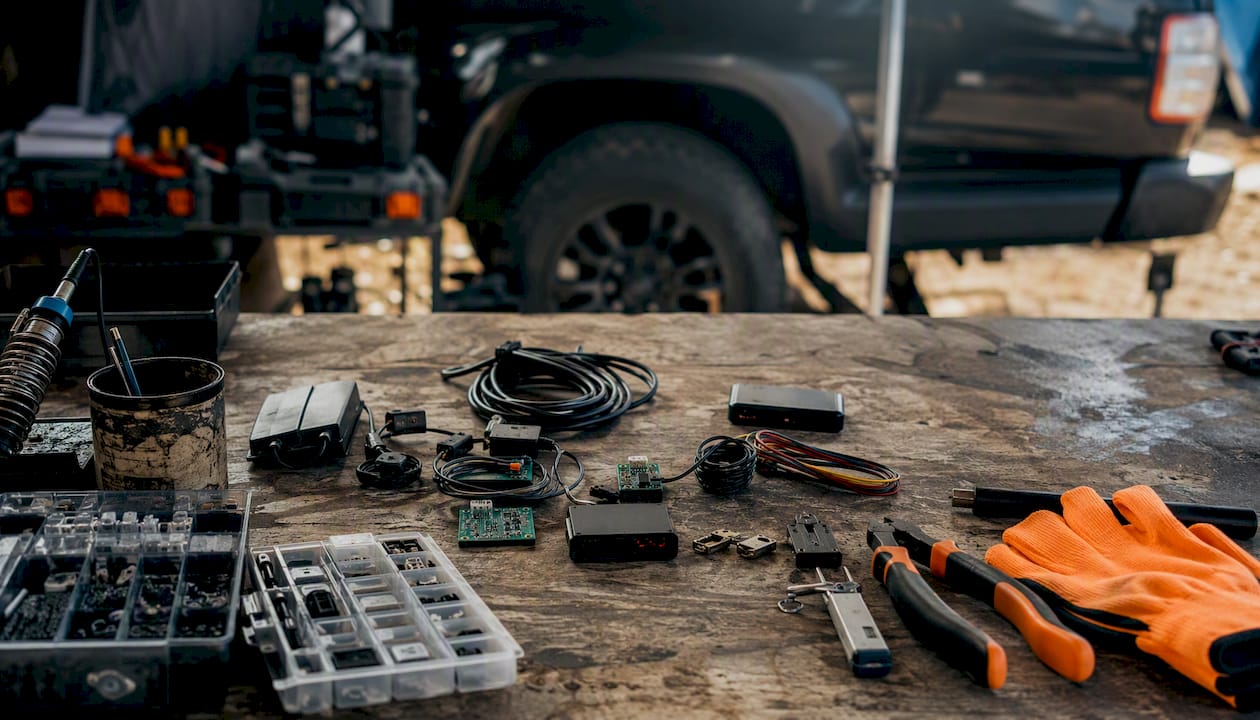
Lrd-track supplies Thatcham S5 and S7 devices, handles professional installation, provides fitment certificates and activation documents, and supports insurer sign-off from purchase through to policy confirmation. The 24/7 monitoring includes police liaison and remote immobilisation where the device supports it. For owners who want to understand why Land Rover security is more critical than ever, the risk picture has sharpened considerably.
Lrd-track S5 and S7 packages: what you get and how to order
Your Defender, Discovery or Range Rover deserves a tracker fitted by people who know exactly where to hide it and exactly what your insurer needs to see.
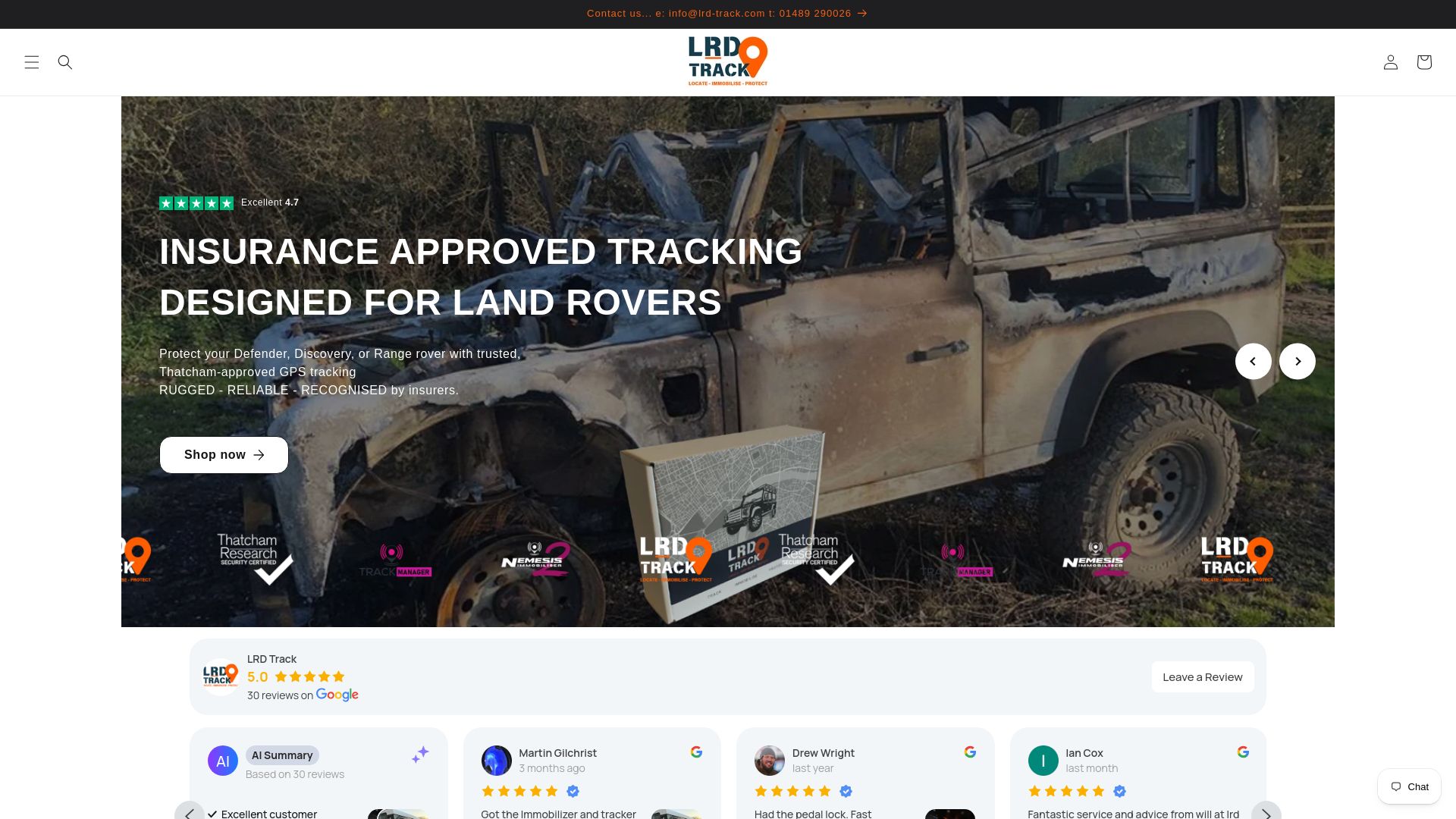
Lrd-track’s S5 packages include Thatcham-listed hardware, ADR driver recognition, remote immobilisation, 24/7 monitored recovery with police liaison, and the full fitment documentation pack your insurer requires. The S5 tracker with driver ID is the right choice for high-value Land Rovers where insurer acceptance is non-negotiable. For cost-sensitive cases where your insurer accepts S7, Lrd-track’s S7 packages deliver real-time location tracking and 24/7 monitoring at a lower price point.
Use the Lrd-track product finder to match your vehicle and insurer requirement to the right package, then book your installation. Lrd-track will supply every document you need to hand to your insurer and confirm your cover is compliant from day one.
Sources
Check these sources directly when verifying device categories, insurer requirements or dispute precedents:
- Thatcham Security Certification
- Car security systems and your insurance | AA Insurance
- Thatcham vehicle security categories | MotoringResearch
- Decision reference DRN-5245609 | Financial Ombudsman Service
- Changes to car insurance | Momentum Solutions
Keep your fitment certificate, Thatcham listing reference and subscription confirmation in a single folder alongside your policy documents. If a claim is ever questioned, those three items are your defence.