
A UK car tracker typically costs from entry-level prices for basic plug-in devices up to thousands of pounds for professionally fitted, police-backed Thatcham S5 systems in the first year. Three things drive that range: the hardware itself, the installation, and the ongoing monitoring subscription.
💡 Quick cost snapshot: Entry-level plug-in trackers start at roughly the lower £30s to £50 for hardware, while professionally fitted Thatcham S5/S7 systems commonly cost from under £200 up to over £700 including installation. Police-backed VHF systems can push year-one costs to over £500 up to nearly £1,000.
Here is how those tiers map to real use cases:
- Budget (£35–£120 year one): Plug-in OBD or portable battery trackers. Basic geofencing and location history. No insurer approval, no police recovery.
- Mid-range (£189–£400 year one): Hardwired S7 systems with professional fitting. Meets most insurer requirements for standard vehicles.
- Premium/insurance-grade (£400–£937 year one): Thatcham S5 with driver ID, immobiliser, and 24/7 police-monitored recovery. Required by many insurers for high-value Land Rovers.
If your insurer has specified a Thatcham category, the budget tier simply will not satisfy them. For a Defender, Discovery, or Range Rover, the premium band is usually where you need to be.
Key takeaways
A UK car tracker’s real cost is hardware plus installation plus subscription, and for Land Rover owners the insurance-grade tier is rarely optional.
| Point | Details |
|---|---|
| Year-one cost range | Entry plug-in systems cost —; Thatcham S5/S7 systems typically total £189–£719; VHF police-backed systems reach £550–£937. |
| Subscription dominates TCO | Monthly plans run £5.99–£12.99; annual prepay £59.99–£129.99. Over three years, subscription often exceeds hardware cost. |
| Insurer requirements | High-value Land Rover insurers commonly specify Thatcham S5; S7 may suffice for lower-value vehicles. Confirm before buying. |
| Lapsed subscription risk | Letting monitoring lapse can suspend service and potentially invalidate an insurance theft claim. |
| Lrd-track for Land Rovers | Lrd-track offers Thatcham S5 and S7 systems with professional Land Rover-specific installation and 24/7 monitored recovery. |
Table of Contents
- What does a car tracker actually cost in the UK?
- Realistic UK price bands: from entry level to premium
- What do Thatcham S7 and S5 actually mean for your insurance?
- How does tracker installation work, and what does it cost?
- What are the ongoing running costs for a car tracker?
- How do you choose the right tracker for your vehicle?
- Lrd-track S5 and S7 trackers for Land Rover owners
- Can you finance a car tracker, and are payment plans available?
- Does your location in the UK affect tracker pricing?
- Total cost of ownership: what you pay over three years
- Why professional installation matters more than most buyers realise
- Get a quote and book your Lrd-track installation
- Sources
What does a car tracker actually cost in the UK?
The total price of a UK car tracker has four distinct components. Knowing each one stops you being surprised by an invoice that is larger than the headline price suggested.
Hardware
The physical device is what most people price-shop first, but it is rarely the biggest cost over time. Some hardware-only units are available for under £20, though these lack insurer approval and live recovery monitoring entirely. Plug-in OBD trackers typically sit in the £34–£50 range. Hardwired GPS units with Thatcham approval start around £100–£199. VHF dual-technology devices, which combine GPS with radio-frequency signals that work even when GPS is jammed, sit at the top of the hardware cost ladder.
Installation
- Plug-in OBD: Self-fit in minutes. No labour cost, but no Thatcham approval either.
- Self-fit battery/portable: Simple mounting, no wiring. Again, no professional certification.
- Professionally hardwired: Typically £50–£150 in labour, depending on vehicle complexity. Immobiliser wiring and driver ID tag integration add time and cost.
- VHF/dual-tech systems: More complex installation, often at the higher end of that labour band or beyond.
For Land Rovers specifically, the wiring complexity of a Defender or Discovery can extend fitting time compared with a standard saloon.
Subscription and monitoring
This is where most owners underestimate total cost. Subscriptions cover SIM/data, platform access, monitoring centre staffing, police liaison, and recovery coordination. Monthly plans commonly run from around five to thirteen pounds; annual prepay options typically fall in the lower tens to around one hundred and thirty pounds. Police-grade monitoring with formal NPCC agreements sits at the higher end.
Add-ons that change the price
- Immobiliser integration: Adds hardware and wiring cost but is required for some S5 certifications.
- Driver ID tags: Each additional tag carries a small cost; some systems include one tag, others charge per tag.
- Multi-year prepay discounts: Paying two or three years upfront typically reduces the annualised subscription cost.
- Extra sensors: Tilt, motion, and tow-away sensors are sometimes optional extras.
Pro Tip: Never let your monitoring subscription lapse. Tracking companies may suspend service if payments lapse, and your insurer may treat an unmonitored tracker as no tracker at all, potentially invalidating a theft claim.
Realistic UK price bands: from entry level to premium
Understanding where you sit in the market means running actual numbers, not just comparing hardware stickers.
📊 Price context: Security trackers aimed at theft recovery commonly start under two hundred pounds upfront plus a monthly subscription, while fleet trackers follow a very different model with monthly fees from under seven pounds up to around fifteen pounds per vehicle, typically with little or no upfront hardware fee. These are fundamentally different products for different jobs.
For a three-year view, add two further years of subscription to the year-one total and subtract any multi-year discount. A mid-range S7 system at £350 year one might cost £570–£660 over three years once renewals are factored in. A premium VHF system at £700 year one could reach £1,100–£1,300 over three years, though multi-year prepay often softens that figure.
Police-backed VHF recovery systems carry materially higher first-year costs because of the specialised hardware and formal police support agreements baked into the subscription. That cost is not padding; it is what funds the 24/7 monitoring centre and the NPCC-linked recovery protocol.
Which bands meet insurer requirements? Entry-level plug-in devices almost never satisfy an insurer’s Thatcham condition. Mid-range S7 systems meet requirements for many standard vehicles. S5 and VHF systems are what high-value vehicle insurers, including those covering Range Rovers and Defenders, typically specify.
What do Thatcham S7 and S5 actually mean for your insurance?
Thatcham Research is the UK’s motor insurance repair research centre, and its approval categories are the language insurers use when setting policy conditions. Getting this wrong costs you money twice: once when you buy the wrong tracker, and again if a claim is refused.
S7 vs S5 in plain terms
S7 (stolen vehicle tracking): The device tracks the vehicle’s location and reports it to a monitoring centre. The centre can alert police and provide coordinates. No immobiliser, no driver ID. Reporting speed and update frequency vary by product.
S5 (stolen vehicle tracking with driver ID): Everything in S7, plus the system identifies whether the driver is authorised. If an unrecognised driver is detected, the monitoring centre can initiate a response. Many S5 systems also include remote immobilisation. Tamper protection and faster reporting speeds are standard expectations at this level.
Why insurers reference these categories
Insurers use Thatcham categories to set a minimum security standard they can rely on when pricing risk. A vehicle with a Thatcham-approved tracker is statistically easier to recover, which reduces the insurer’s exposure. For high-value vehicles, particularly Land Rovers that are frequently targeted by organised theft gangs, insurers often specify S5 as a policy condition rather than a recommendation.
The practical consequences:
- ✅ Active S5 subscription: insurer accepts the security condition, claim proceeds normally.
- ⚠️ Lapsed subscription: monitoring suspended, Thatcham condition technically unmet.
- ❌ Wrong category: insurer may reject the tracker entirely, leaving you unprotected on paper.
Always confirm with your insurer which Thatcham category they require before purchasing. Some specify S5 explicitly; others accept S7 for lower-value vehicles.
How does tracker installation work, and what does it cost?
Installation is the step most buyers underestimate, both in time and in its effect on whether the tracker actually works as intended.
Plug-in vs professionally hardwired
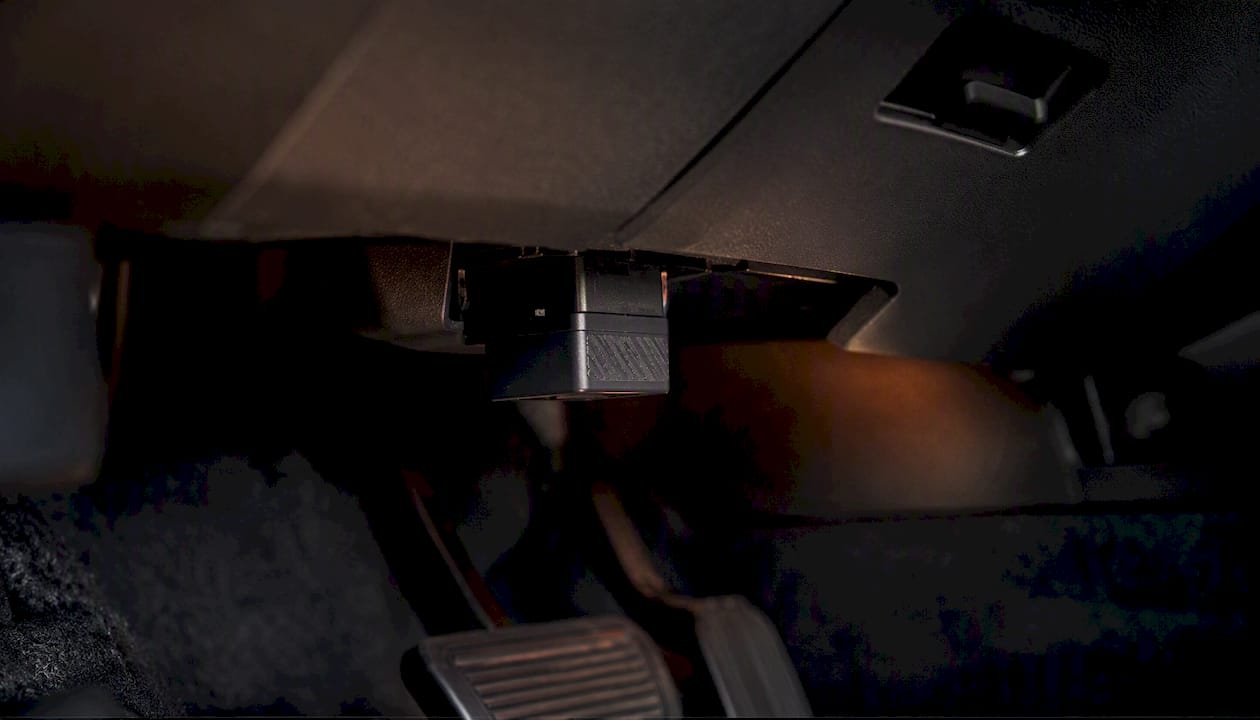
A plug-in OBD tracker takes minutes. You locate the OBD port (usually under the dashboard), insert the device, and it begins reporting. No tools, no labour cost. The trade-off is that any thief who knows what they are looking for can unplug it in seconds. No Thatcham approval is possible for a plug-in device.
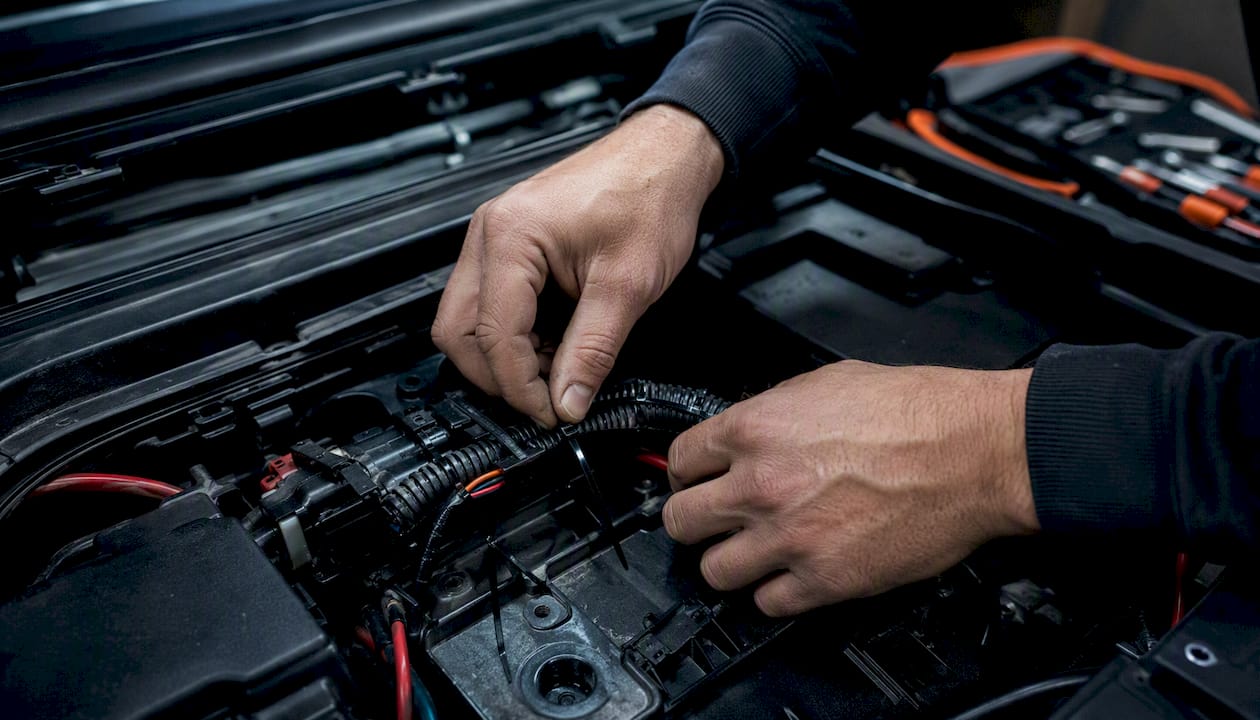
A professionally hardwired tracker is concealed within the vehicle’s wiring loom. A trained installer routes power, grounds the unit, and integrates any immobiliser or driver ID wiring. This takes one to three hours for a standard vehicle. A Land Rover with complex electronics, or one requiring immobiliser and driver ID tag wiring, can take longer.
Typical installation cost bands
- Self-fit plug-in: £0
- Basic hardwired GPS: £50–£100 labour
- Hardwired with immobiliser integration: £100–£150 labour
- VHF/dual-tech with full S5 wiring: £120–£200 labour
Factors that push installation cost upward include: older vehicles with non-standard wiring (classic Defenders are a common example), fitting in a remote location, and same-day or priority booking.
Typical timeline from order to active monitoring
- Order placed: Hardware dispatched, typically within one to three working days.
- Installation booked: Appointment scheduled with an accredited installer; lead time varies by location and demand.
- Fitting completed: Device installed, immobiliser and driver ID wiring confirmed.
- Activation: Device registered to your account, SIM activated, monitoring centre notified.
- Insurer notification: You provide your insurer with the Thatcham certificate and monitoring confirmation.
The full process from order to active cover typically takes three to seven working days, depending on installer availability and your location.
What are the ongoing running costs for a car tracker?
Hardware is a one-off. Subscription is forever, or at least for as long as you own the vehicle and want it monitored. This is the cost most buyers fail to model properly.
Billing models
- Monthly rolling: Maximum flexibility, highest annualised cost. Typical range: £5.99–£12.99/month for GPS-only; higher for police-monitored systems.
- Annual prepay: Usually 10–20% cheaper than paying monthly. Typical range: £59.99–£129.99/year.
- Multi-year prepay: Two or three years paid upfront. Often the lowest annualised cost and removes renewal admin. Multi-year packages can reduce annualised cost noticeably compared with single-year renewals.
What subscription fees cover
- SIM card and data transmission
- Platform access (app, web portal, alerts)
- 24/7 monitoring centre staffing
- Police liaison and recovery coordination
- Tow-away and tamper alerts
- Driver ID monitoring (S5 systems)
Budget devices can provide geofencing and basic location tracking, but they typically lack rapid update rates, tamper protection, and police-monitored recovery protocols. Those features are what the higher subscription tiers are paying for.
Reducing long-term cost
- Pay annually or multi-year from the start rather than defaulting to monthly.
- Bundle hardware and installation through a single supplier to avoid double-handling fees.
- Ask whether the first year’s subscription is included in the hardware/install package price, as some suppliers bundle it.
Pro Tip: Run a three-year total cost of ownership calculation before you buy. Hardware price is often the smallest number in that sum. A £50 tracker with a £10/month subscription costs £410 over three years. A £299 S5 system with a £120/year subscription costs £659 over three years, but it is the one your insurer will actually accept.
How do you choose the right tracker for your vehicle?
The right tracker is the one your insurer accepts, your vehicle can accommodate, and your budget can sustain over three years. Work through this checklist before you spend anything.
Step-by-step decision checklist
- Check your insurer’s requirement first. Ask specifically: which Thatcham category do they require? S7 or S5? Do they require police monitoring?
- Assess your vehicle’s value. Higher-value vehicles justify higher subscription tiers because the recovery stakes are greater.
- Decide on immobiliser and driver ID. If your insurer requires S5, you need both. If S7 is sufficient, driver ID is optional.
- Confirm reporting speed requirements. Some insurers specify minimum update frequencies (e.g. 20-second or 60-second GPS reporting intervals).
- Verify police liaison. Does the monitoring centre have a formal NPCC agreement, or do they simply call 999? The difference matters in a real theft event.
- Check warranty and refund policy. A reputable supplier offers a clear device warranty and a defined returns process.
Red flags to avoid
- No professional installation option for a system claiming Thatcham approval.
- Vague or unverifiable Thatcham certification claims (ask for the certificate number).
- Hidden SIM activation fees or mandatory first-month charges not disclosed upfront.
- No documented recovery protocol or monitoring centre contact details.
- Subscription cancellation terms that lock you in with no exit clause.
Questions to ask any supplier
- What is the Thatcham approval category and certificate number?
- Who operates the monitoring centre, and what are their response time commitments?
- What happens to monitoring if I miss a subscription payment?
- Is installation covered by a workmanship warranty, and for how long?
- Can I cancel the subscription if I sell the vehicle?
If a supplier cannot answer all of these clearly, that is your answer.
Lrd-track S5 and S7 trackers for Land Rover owners
Lrd-track builds Thatcham-approved GPS tracking systems specifically for Land Rover models: Defender, Discovery, Range Rover, and Grenadier. That model-specific focus matters because the wiring architecture, theft vectors, and insurer requirements for these vehicles differ from a standard hatchback.
What Lrd-track offers
- ✅ Thatcham S5 tracker with driver ID: immobiliser integration, driver recognition tags, 24/7 monitored recovery, real-time alerts via mobile app.
- ✅ Thatcham S7 tracker: professionally hardwired GPS tracking with monitoring centre support, suited to classic Defenders and vehicles where S7 satisfies insurer requirements.
- ✅ Professional installation by accredited fitters with Land Rover-specific experience.
- ✅ 24/7 monitoring with police liaison and recovery coordination.
- ✅ Mobile app with live tracking, geofence alerts, and tow-away notifications.
- ✅ Warranty on hardware and installation workmanship.
Typical all-in costs for Lrd-track products
For exact pricing on your specific vehicle, use the Lrd-track product finder to get a tailored quote. Costs vary by model, installation complexity, and subscription term chosen.
The value of manufacturer-specific fitment is not just convenience. An installer who knows a Defender’s wiring loom conceals the device more effectively and integrates the immobiliser correctly the first time. That reduces the risk of a thief defeating the system and reduces the risk of an insurer querying the installation quality.
Can you finance a car tracker, and are payment plans available?
Most tracker suppliers, including those operating in the Land Rover security space, price hardware as a one-off upfront purchase rather than a financed product. That said, there are practical ways to spread the cost.
Some suppliers offer the option to pay for hardware and installation upfront while choosing a monthly rolling subscription rather than an annual prepay. This reduces the day-one outlay at the cost of a higher annualised subscription total. For a system with a £299 device and £80 installation, choosing monthly billing at £12.99 rather than annual billing at £99 adds roughly £57 to your annual running cost, but reduces the initial payment.
This is a personal finance decision rather than a supplier-led option, but it is worth factoring into your planning.
Some Land Rover dealerships and specialist garages that fit trackers as part of a vehicle purchase or service package may include the tracker cost within a broader finance arrangement. If you are buying a new or used Land Rover through a dealer, ask whether tracker fitting can be included in the purchase finance.
Trade and reseller routes are also available through Lrd-track for garages and installers who want to offer tracking as part of a service package. Details are available on the Lrd-track trade page.
Does your location in the UK affect tracker pricing?
Geography affects car tracker costs in the UK in two ways: network coverage and installer availability.
GPS tracking relies on mobile network data to transmit location. Coverage across the UK is strong in urban and suburban areas, but rural Scotland, parts of Wales, and remote areas of Northern Ireland can experience gaps. VHF dual-technology systems address this directly: the radio-frequency element continues to function even in areas with no mobile signal, which is why they are the preferred choice for vehicles that travel or are stored in rural locations. That capability is part of why VHF systems carry a higher price.
Installer availability is the more immediate pricing factor for most buyers. Urban areas, particularly London, the Midlands, and the South East, have higher concentrations of accredited installers, which tends to keep labour costs competitive. In more remote areas, you may face a higher call-out fee or a longer wait for an appointment. Some suppliers offer mobile installation where a fitter travels to your location; this convenience typically carries a premium.
For Land Rover owners in rural areas, a VHF-capable system is not just a premium option. It is the one that will actually work if your vehicle is taken to a location with no mobile signal, which is precisely the kind of location organised theft gangs use to strip vehicles.
Total cost of ownership: what you pay over three years
The true cost of a car tracker is not the price on the product page. It is the sum of hardware, installation, subscriptions, and any penalty or replacement costs over the life of the device.
Three-year TCO examples
For a mid-range S7 system: hardware and installation at roughly £300, plus two further years of annual subscription at £90 each, gives a three-year total of approximately £480. For a premium S5 system: hardware and installation at roughly £450, plus two further years at £130 each, gives approximately £710.
Costs that catch owners out
Early cancellation: Many monitoring subscriptions are sold on annual contracts. Cancelling mid-term may result in a cancellation fee or forfeiture of the remaining subscription period. Always read the cancellation terms before signing up.
Device loss or damage: If the tracker is damaged in an accident or removed by a thief, replacement hardware costs apply. Some suppliers include a device replacement clause in their warranty; others treat it as a new purchase. Confirm this before buying.
Subscription price increases: Annual renewal prices can increase. A system that costs £99/year at purchase may cost more at renewal. Ask whether the supplier offers a price-lock option for multi-year prepay.
Reinstallation after vehicle change: If you sell your Land Rover and want to transfer the tracker to a new vehicle, reinstallation labour applies again. Some suppliers charge a transfer or re-registration fee as well.
Running a three-year TCO calculation before purchase, rather than focusing on the hardware price alone, is the single most useful thing you can do to avoid cost surprises.
Why professional installation matters more than most buyers realise
There is a version of this conversation where someone points out that a £40 plug-in tracker does the same basic job as a £500 professionally fitted S5 system. They are not entirely wrong about the technology. GPS is GPS. But that framing misses what you are actually buying.
For a high-value Land Rover, the tracker is not just a location device. It is the thing that determines whether your insurer pays out, whether the police can act quickly enough to recover the vehicle intact, and whether a thief can defeat the system in the first 90 seconds after stealing it. A plug-in OBD device fails all three of those tests. A thief who steals Land Rovers for a living knows exactly where the OBD port is.
The real payoff of a professionally fitted, police-monitored S5 system is speed and credibility. A monitoring centre with an NPCC agreement can task police directly rather than waiting for a 999 call to be processed. That difference in response time is often the difference between a recovered vehicle and a stripped shell. The installation quality also matters to your insurer: a Thatcham-certified installation by an accredited fitter is a documented, verifiable security measure. A self-fitted device is not.
The cost trade-off is real. A premium system costs more in year one. But for a vehicle worth £40,000–£100,000, the maths are not complicated.
Get a quote and book your Lrd-track installation
Your Land Rover is a target. The good news is that getting the right protection in place is straightforward when you know what you need.
Lrd-track offers Thatcham S5 and S7 systems fitted by accredited installers with Land Rover-specific experience, backed by 24/7 monitored recovery and a clear warranty. Here is how to get started:
- Use the Lrd-track product finder to identify the right S5 or S7 system for your Defender, Discovery, or Range Rover.
- Have your vehicle details ready: model, year, VIN/chassis number, and your insurer’s Thatcham requirement.
- Select your installation option and preferred dates. Lrd-track’s team will confirm availability and provide a full quote covering hardware, fitting, and subscription.
- Notify your insurer once installation is complete and your Thatcham certificate is issued.
For trade and reseller enquiries, visit the Lrd-track trade page. For the S5 with driver ID and immobiliser, the product page has full specification details.
Sources
- GPS Car Tracker Price UK: A 2026 Cost GuideSentry Private Investigators Ltd
- Car Tracker: Do I Need One and How Much Does It Cost? | Carwow
- 7 Best Car Trackers UK 2026: Security & Fleet GPS Compared
- Car trackers: best GPS car trackers (What Car? review)